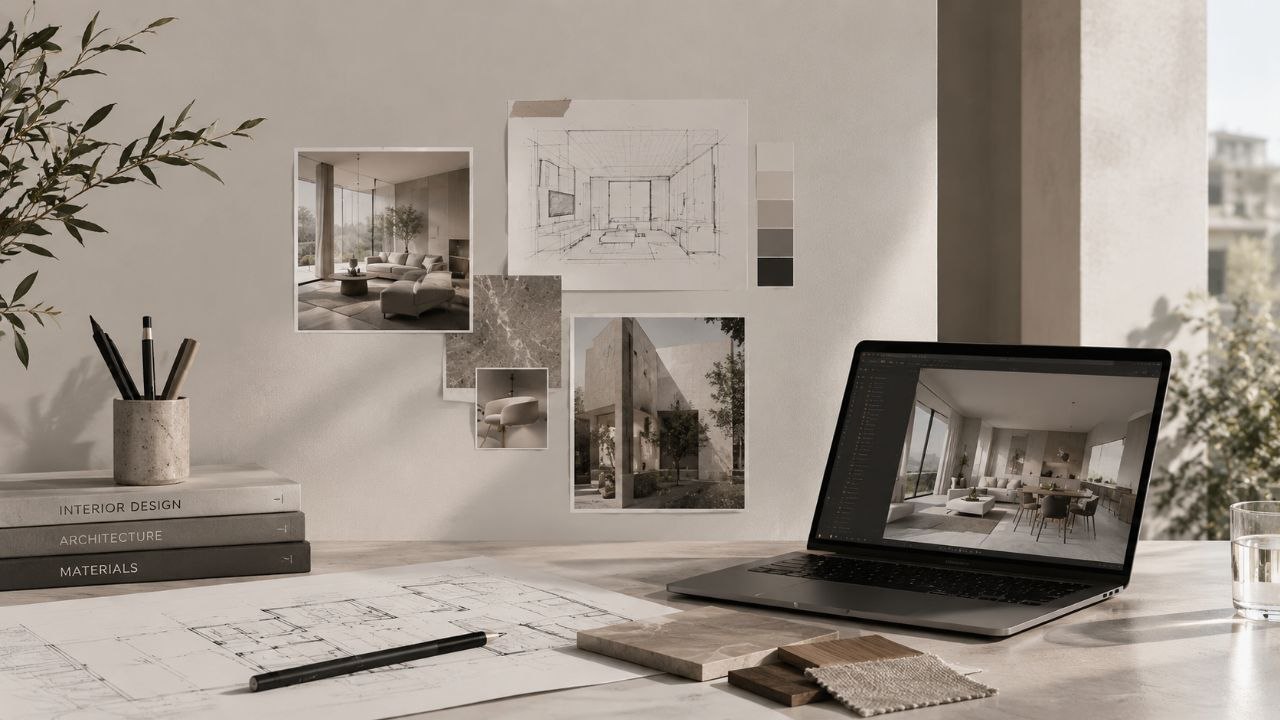
The media’s goal is to create an original project about interior and environmental design that will combine visual content, practical advice, and a demonstration of the designer’s creative process.
Media must not only inspire the audience with beautiful spaces but also explain why certain design decisions are effective, how to organize a space correctly, and the process of creating an interior from the initial concept to visualization. An additional goal is to help students build a personal design brand, create a professional portfolio, and attract potential clients and employers.
Future Media Topics
The future of media focuses on interior and environmental design, emphasizing functional, aesthetic, and well-conceived spaces. The project’s niche theme is the entire process of creating a contemporary interior—from initial concept and layout to visualization and detailing. The media will cover spatial planning solutions, visualization, furniture, lighting, materials, color palettes, storage organization, small spaces, common interior design mistakes, and modern trends. The primary feature of the content is that it will showcase not only finished, beautiful interiors but also the logic behind the design decisions.
Competitors
The primary competitors in the media space include private interior designers, design studios, architectural bureaus, and specialized interior media outlets. Private designers possess strong portfolios and showcase completed projects, but their content is often primarily geared toward service promotion.
Design studios possess high levels of expertise and professional polish, but their communication can sometimes come across as more formal and commercial.
Architectural firms work on large-scale projects and possess high professional reputations; however, their content is often aimed at a narrower audience.
Interior media offer a wealth of visual content and trend information, but they usually fail to showcase the personal perspective of a specific designer or the project creation process. The potential for new media lies in integrating a professional portfolio, educational content, and the personal viewpoint of an emerging designer.
Distribution Channels
Instagram (banned in the Russian Federation) will be the primary distribution channel, as interior design is a highly visual field. This platform will feature posted projects, 3D visualizations, Reels, carousels, material selections, interior analyses, and glimpses into the project workflow.
Threads (banned in the Russian Federation) will serve as an additional channel, allowing the publication of short professional observations, tips, and opinions, as well as interaction with the audience to drive them to the main account. Behance can be used for showcasing complete projects and building a professional portfolio.
Target Audience
The media’s target audience consists of four main segments. The first segment is private clients who are planning renovations and want a beautiful and functional space, but do not know how to properly unify their ideas into a single interior design. Their goal is to create a comfortable space and avoid costly mistakes.
The second segment consists of people looking to improve their living space on a limited budget. They are interested in affordable solutions for small apartments and rooms—including storage organization, furniture, lighting, and ways to make the space visually more appealing without major expenses.
The third segment comprises design studios and architectural firms that may require entry-level specialists for specific project tasks, such as 3D modeling, visualization, graphic design, and presentation preparation.
The fourth segment consists of students and aspiring designers who are interested in observing real-world workflows and gaining practical knowledge about the profession.
Unique Selling Proposition
The unique selling proposition of the media is that it doesn’t just display beautiful interiors; it showcases the design thinking behind every decision. The first advantage is explaining why a specific layout, material, color, furniture piece, or lighting scheme functions within the space.
The second is a demonstration of the entire project creation process: from the initial idea and planning through concept development, 3D visualization, and the final result.
The third element is the combination of a professional portfolio, educational content, and the personal journey of an emerging designer. Thus, the media platform becomes more than just a page showcasing beautiful interiors—it becomes a space where the audience can simultaneously gain inspiration, practical information, and observe the designer’s development.