ABOUT
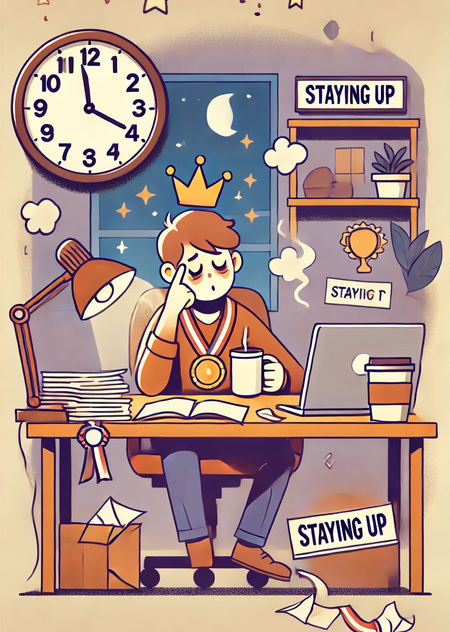
As one of the largest groups prone to staying up late, young people often joke about becoming 'champions of staying up.' This lighthearted competition has even spawned countless memes on the internet, reflecting how widespread and relatable the experience of staying up late has become in modern culture.
But who is the real champion of staying up late?
Randy Gardner was born in California, USA, and in 1964, he was a 17-year-old high school student. At the time, he and his classmate Bruce McAllister decided to undertake an extraordinary experiment: to challenge the world record for the longest time without sleep, as part of a school science fair project.
In December 1963/January 1964, 17-year-old Gardner stayed awake for 11 days and 24 minutes (264.4 hours), breaking the previous record of 260 hours held by Tom Rounds.Gardner’s record was then broken multiple times until 1997, when Guinness World Records ceased accepting new attempts for safety reasons.
Randy Gardner’s Challenge Experience and Interesting Phenomena
On the third day of the challenge, Randy began to experience mild cognitive confusion and hallucinations. He mistook a streetlight for a person and even thought that patterns on the wall were moving. These hallucinations demonstrate that prolonged sleep deprivation can severely impair normal brain function.
Interestingly, despite Randy’s cognitive decline, his bowling performance actually improved during the challenge. He even went bowling with friends and scored better than usual. This phenomenon is quite unusual and may be linked to him entering a sort of «autopilot» mode.
On the final day of the challenge, Randy attended a press conference. Although he was extremely fatigued, he was still able to answer the reporters' questions clearly and maintain his sense of humor. This shows his strong willpower despite the extreme sleep deprivation.
After breaking the record, Randy only slept for 14 hours before waking up, rather than the several days many people expected. Although he didn’t immediately return to a normal sleep cycle, he gradually resumed a regular schedule over the next few days and didn’t suffer any long-term health issues.