LINER NOTES — a Russian-language Telegram media focused on music for reading.
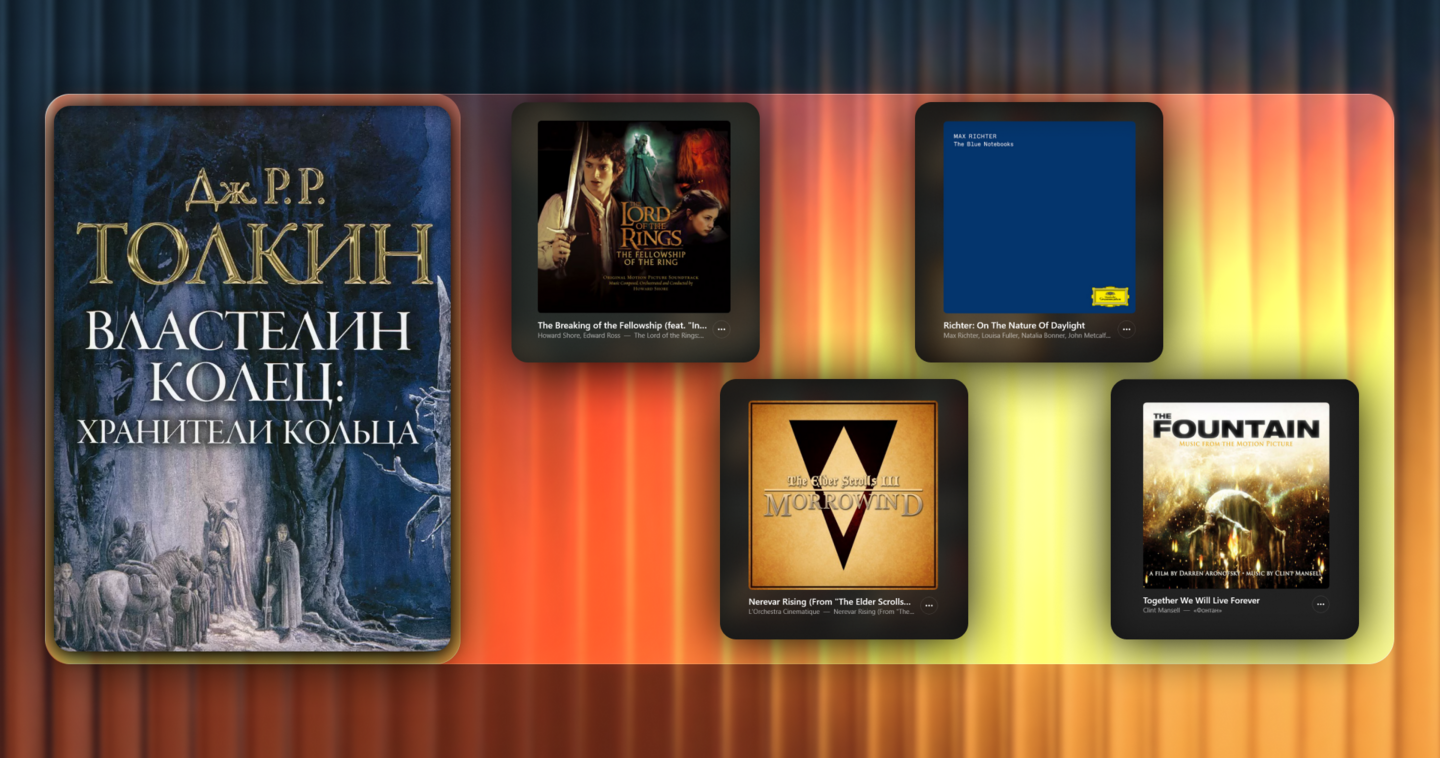
The project compiles musical selections for specific books, authors, literary genres, and individual scenes.
Unlike standard mood playlists, the music here is curated based on the reading experience itself: it must support the atmosphere of the piece without distracting from the text.
Music Selection Principles
Each selection is created as a standalone accompaniment to reading and takes several requirements into account:
Duration: Approximately 45–60 minutes—one full reading session.
Sound: Primarily instrumental music without distinct vocals or sudden dynamic shifts.
Intensity: Playlists are assigned a level of musical density.
Spoiler-Free: The music description does not reveal plot twists.
Independent Interpretation: Soundtracks from screen adaptations are generally avoided so as not to impose a preconceived visual reading of the book on the reader.
Every track undergoes an editorial review before publication.
Data Sources
LINER NOTES utilizes several groups of sources to prepare materials.
What data is collected:
Editorial Model
Working on publications involves two types of operations.
Machine processing helps gather and systematize information, search for compositions based on defined parameters, validate metadata, generate drafts, and transfer prepared materials between services.
Human processing is responsible for the conceptual interpretation of the book, selecting the musical direction, listening to compositions, assessing their compatibility with the text, and making the final decision on publication.
Automation reduces time spent on routine tasks, but it does not replace editorial judgment.
General Data Processing Scheme
Result: a finished playlist and publication on Telegram.
Service Interaction
Telegram
Channel for distributing materials and receiving feedback. Subscribers can suggest books, vote on future topics, and discuss published selections.
Table or Database
The central repository for the project. It contains records for books, compositions, playlists, and published materials. For the prototype, you can use Google Sheets or Airtable.
Music Platforms and Catalogs
Yandex Music, VK Music, YouTube, and MusicBrainz are used to search for compositions, obtain metadata, and verify links.
Neural Network
Assists in analyzing literary descriptions, identifying thematic and atmospheric characteristics, suggesting musical directions, and drafting text outlines.
Automation Service
Make or n8n connects individual stages: it transfers data to a spreadsheet, runs checks, generates notifications for the editor, and prepares materials for publication.
Database Structure
The LINER NOTES database consists of four interconnected entities.
Relationships between entities allow you to use one composition in several collections, maintain a publication history, and avoid collecting duplicate data.