People typically categorize mushrooms into two groups: edible and poisonous. However, for mycologists, this is merely a superficial view. Some mushrooms aid in the search for new medicines, others could serve as a substitute for meat and plastic, and a third group has gained fame thanks to zombie television series. Together with mycologist Elina Mironova, we discuss the most unusual mushrooms and what has captured scientists' interest in them.
Lion’s Mane mushroom is a fungus studied for its impact on the nervous system.
This mushroom bears no resemblance to familiar button or birch bolete mushrooms. Its fruiting body resembles a white, fluffy ball covered in long spines, which makes it difficult to identify as a mushroom at first glance.
In recent years, Lion’s Mane has become one of the most popular fungi featured in dietary supplements. The interest in it is linked to the substances hericenones and erinacines, which, according to research, are capable of stimulating Nerve Growth Factor (NGF). This is why scientists are studying its potential effects on memory, cognitive functions, and nerve tissue repair. However, it is too early to claim that Lion’s Mane is a substance with proven efficacy—most research is still ongoing.
Cordyceps—a fungus that zombifies ants, but not people.
Cordyceps gained widespread fame far beyond the scientific community following the release of the series The Last of Us. In nature, some species of this fungus do indeed parasitize insects and alter their behavior to aid in the fungus’s dispersal. However, according to mycologist Elena Mironova, humans should not fear this scenario. Our nervous system is incomparably more complex than that of insects, so turning into a zombie due to cordyceps is impossible. Furthermore, the fungus has long interested scientists for a different reason: cordycepin, contained within it, is being studied as a compound that can influence energy metabolism and increase physical endurance.
The Smorchok is a fungus that we have not yet learned to cultivate.
Button mushrooms and oyster mushrooms have long been grown on farms, but many wild mushrooms present a much greater challenge. Morel mushrooms are one such example. For a long time, scientists did not understand why this fungus was so difficult to cultivate in a laboratory setting. It was later discovered that specialized symbiotic bacteria are necessary for the formation of fruiting bodies. Once researchers learned to add these bacteria to the nutrient medium, the likelihood of a successful harvest increased significantly. This story illustrates the complex relationships that can exist between fungi and other microorganisms.
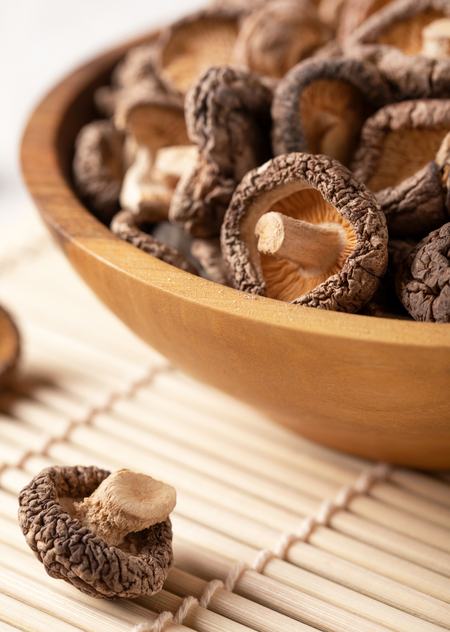
Shiitake is a mushroom that begins to reproduce in stressful soil.
Shiitake is one of the world’s most well-known cultivated mushrooms, yet its biology continues to amaze. To begin forming fruiting bodies, it requires stress. In nature, a thunderstorm or mechanical damage to the wood can serve as this signal. Therefore, during extensive cultivation, farmers sometimes intentionally strike the logs with sticks, mimicking the impact of a lightning strike. Following this, oxygen begins to penetrate the wood, and the mushroom transitions into reproduction.
Elina Mironova shared insights into her favorite mushrooms and contemporary mycological research in a large interview with «Tsekh,» which you can read here.