I. Core Research Idea
II. Objective
III. The Paleolithic Era — Woman as a Symbol of Life and Fertility
IV. Ancient Egypt — Woman as the Embodiment of Divinity and Motherhood
V. Minoan Civilization — Woman as a Participant in the Sacred World
VI. Ancient Greece — Woman as the Ideal of Harmony and Beauty
VII. Comparative Analysis: The Evolution of the Female Image
VIII. Conclusion of the Research
I. Core Research Idea
The depiction of women in art reflects various epochs’ perceptions of beauty, fertility, divine power, and the ideal human form. From schematic figures of early humankind to realistic ancient sculptures—the female image has constantly transformed alongside cultural and societal worldviews.
II. Objective
Objective: To trace how the portrayal of women in art evolved from the Paleolithic period to Ancient Greece, and to determine what values of each era it reflected.
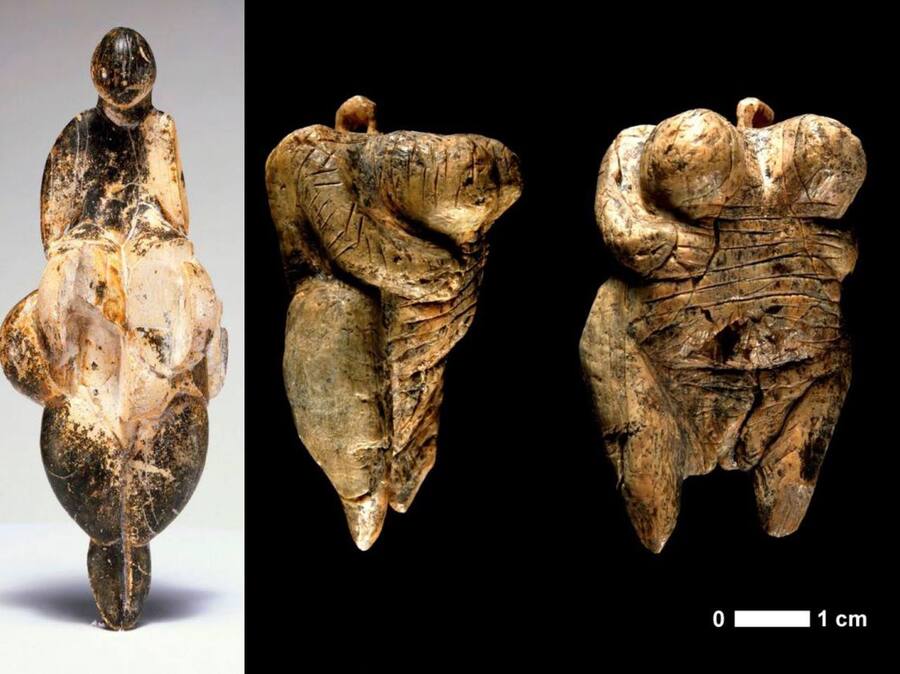
40,000–10,000 BCE · PREHISTORIC ART
III. Paleolithic Era—Woman as a Symbol of Life and Fertility
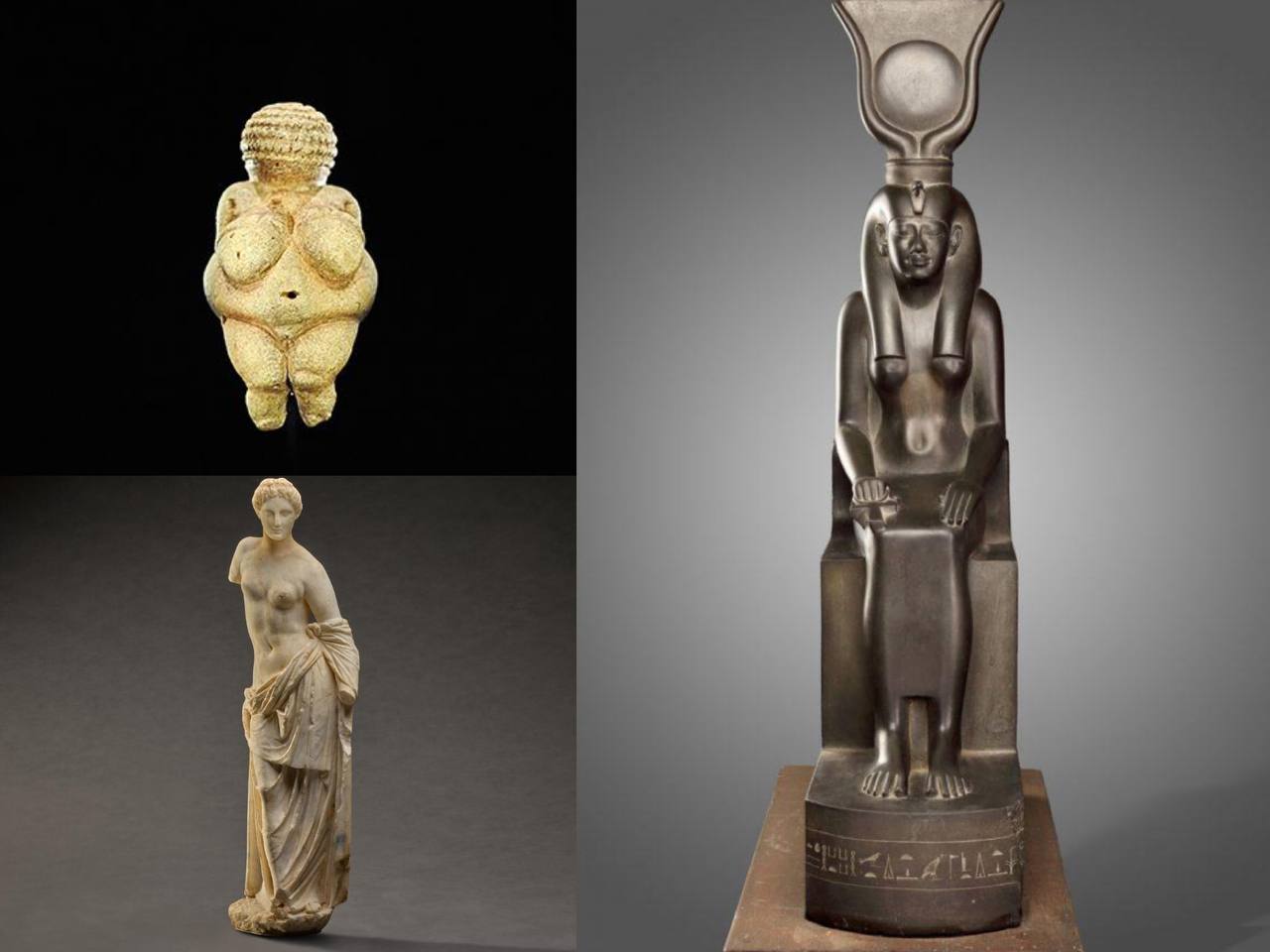
Among the most well-known depictions of the female body in Paleolithic art are the so-called Paleolithic Venus figurines.
What does this image symbolize?
Researchers hypothesize that such figurines are connected to fertility, motherhood, and concepts of life continuation. However, the exact purpose of the statuettes remains unknown.
Artistic characteristic: The female body becomes the primary subject of the image, and individual appearance recedes into the background.
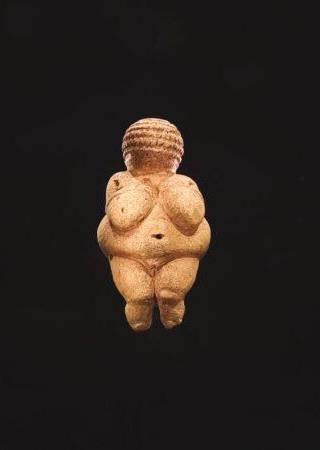
The primary example is the Venus of Willendorf (dating back approximately 29,500 years).1. A small statuette, about 11 cm in height. 2. The breasts, abdomen, and hips are accentuated. 3. Facial features are almost unrefined. 4. The body lacks realistic proportions.
IV. Ancient Egypt—Woman as Embodiment of Divinity and Motherhood
In Egyptian art, the female figure acquires more recognizable characteristics. Women were depicted in mural painting, reliefs, and sculpture.
Artistic Feature: feminine beauty becomes part of the religious and royal ideal. The representation adheres to established canons while retaining symbolic expressiveness.
The goddesses held a special place:
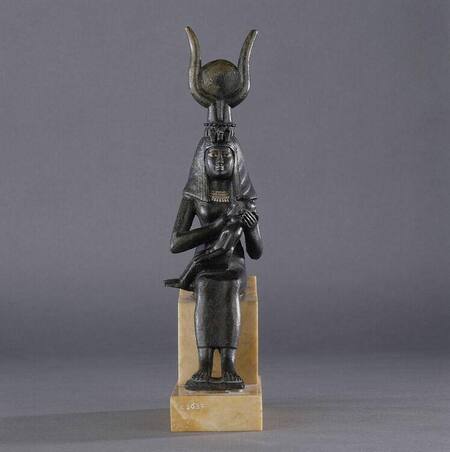
Isis Isis (ancient Egyptian Aset/Ishet) is one of the most vital goddesses of ancient Egyptian religion, associated with motherhood, magic, protection, healing, and rebirth. She was the consort and sister of Osiris, the mother of Horus, and over time, her cult became so significant that it spread far beyond Egypt.How she was depicted: Her most characteristic image is a woman wearing the hieroglyph of a throne on her head; the goddess’s name was closely tied to the concept of the throne and royal power. Later, Isis was often shown with a solar disk between cow horns, and a very common motif became Isis seated, nursing or holding the infant Horus on her lap.From Egypt to the Roman Empire: The worship of Isis underwent a massive evolution: from an ancient Egyptian goddess of royal and funerary matters to a deity with almost universal functions. During the Hellenistic and Roman periods, her cult spread across the Mediterranean and further; evidence of her veneration is known even in Roman Britain. The temple cult of Isis in Philae continued until the 6th century CE.
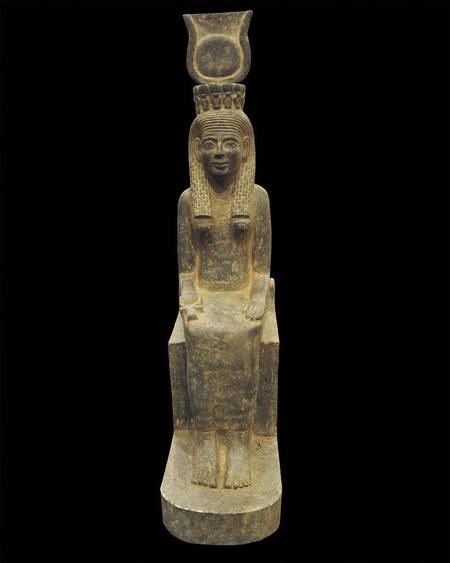
Hathor:Hathor is one of the most ancient Egyptian goddesses, patroness of love, beauty, motherhood, music, and joy. Her cult existed as early as the 3rd millennium BCE.Imagery and Symbols: Hathor was depicted as a cow or as a woman with cow horns and a solar disk. Her symbols included motherhood, the sun, and the sistrum musical instrument.Goddess of Love and Joy: Hathor embodied love, beauty, fertility, dance, and merriment. Festivals featuring music and singing were held in her honor.Motherhood and Royal Power: The goddess was connected to the Pharaoh and was considered his mother or consort. She was also portrayed as the nursemaid of the pharaohs, imparting divine power to them.The Dual Nature of Hathor: Hathor possessed not only a benevolent side but also a formidable one. As the «Eye of Ra, ” she could act as a protector or a destructive force, similar to the goddess Sekhmet.
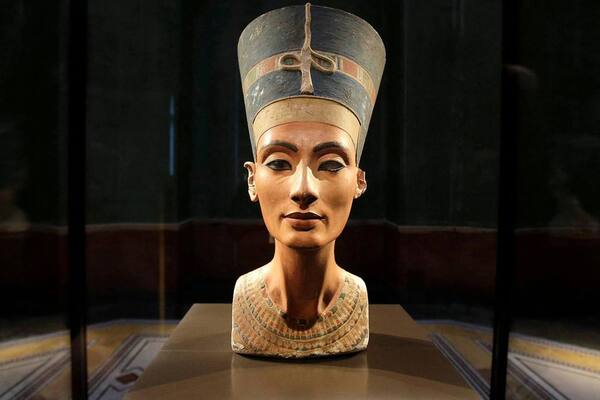
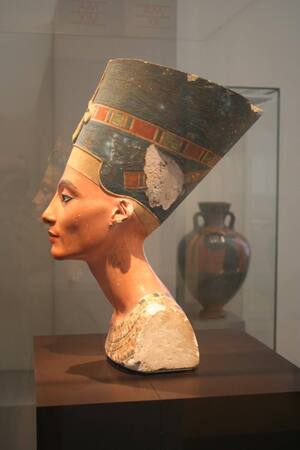
The bust of Queen Nefertiti deserves particular attention: her elongated neck, expressive facial features, and harmonious proportions create an image of regal dignity.
Significance
Nefertiti became the embodiment of female beauty, power, and elegance in the art of Ancient Egypt.
4th–1st millennia BCE · ANCIENT KINGDOM — LATE PERIOD
V. Minoan Civilization — Women as Participants in the Sacred World
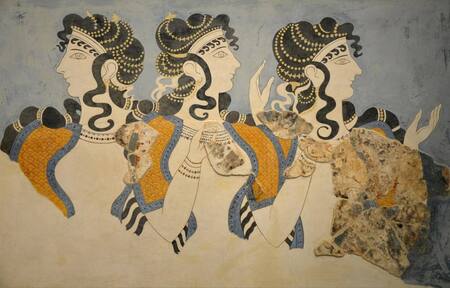
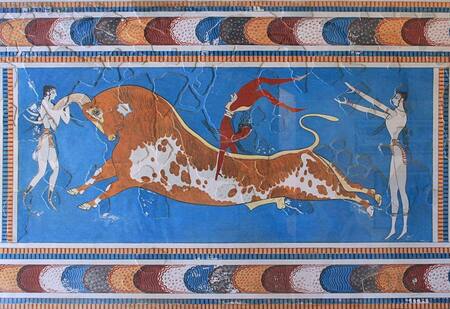
In the art of Minoan Crete, the female image becomes particularly vibrant and decorative.
Women are also frequently found in Minoan frescoes, where they participate in rituals and communal life.
Artistic characteristic: the female figure acquires brightness, plasticity, and a complex decorative character.
AROUND 2000–1450 BCE · KNOSSOS
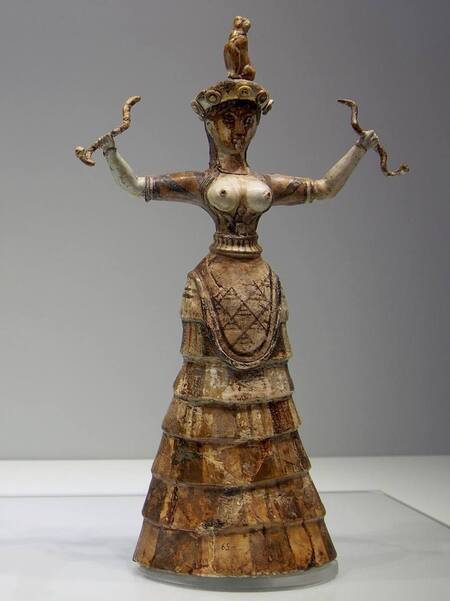
One of the most famous monuments is the statuettes known as the «Goddesses with Snakes» (c. 1600–1500 BCE).They are characterized by:
- An open bodice and a defined waist.
- A long, tiered skirt.
- Ornate jewelry and complex hairstyles.
- The snakes held in their hands—an important religious symbol.
VI. Ancient Greece — Woman as the Ideal of Harmony and Beauty
In Ancient Greece, the female image gradually evolves into the embodiment of an aesthetic ideal. Artists study the anatomy, proportions, and naturalness of the human body.
Artistic characteristic: woman transforms into the epitome of harmony, perfection, and aesthetic ideal.
The goddesses become especially important:
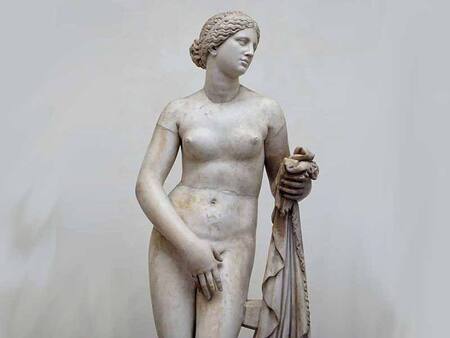
A crucial example is the Aphrodite of Knidos, created by the sculptor Praxiteles around 350 BCE.Aphrodite embodies love, beauty, and sensuality.It became a groundbreaking work because the goddess was presented nude in monumental Greek sculpture for the first time.
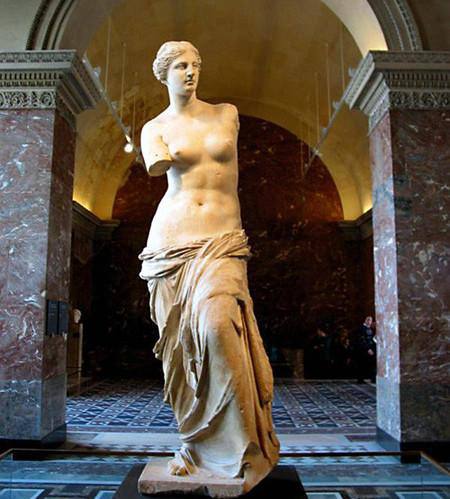
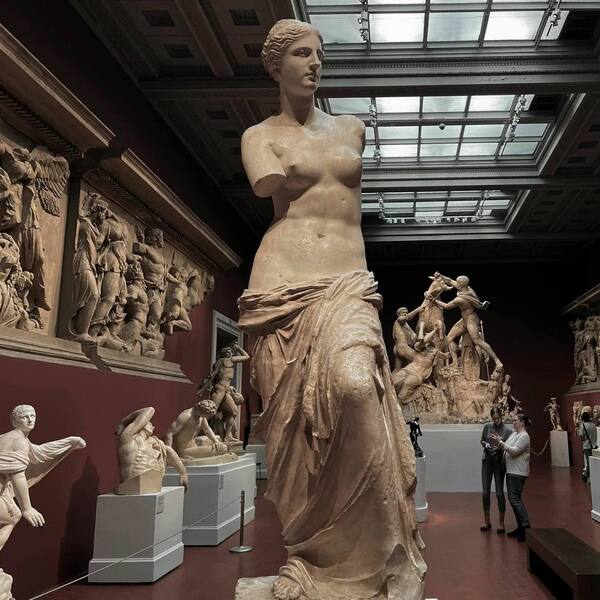
Another famous example is the Venus de Milo (circa 130–100 BCE). Its form demonstrates idealized body plasticity and harmonious proportions.
8th–1st Centuries BCE · ANTIQUITY
VII. Comparative Analysis
In the Paleolithic era, the woman was a symbol of fertility and motherhood. In Ancient Egypt, her image was associated with divinity, beauty, and royal power. In Minoan culture, the woman embodied the connection to nature and religion. In Ancient Greece, the primary ideal became harmony, proportion, and bodily beauty. Thus, the image of woman evolved from a symbol of life to an embodiment of beauty, strength, and wisdom.
From 29,500 BCE to the 4th century BCE
VIII. Conclusion of the Research
The depiction of women in art has changed throughout the millennia. In the Paleolithic era, she symbolized fertility; in Egypt, motherhood and divinity; in Minoan culture, religiosity; and in Ancient Greece, beauty and harmony.
Thus, art reflected society’s evolving perceptions of femininity and beauty.
Venus-Research // Naturhistorisches Museum Wien: Official Website. — URL: https://www.nhm.at/en/research/prehistory/research/venus-research (Accessed: November 16, 2026).
The Bust of Nefertiti // Ägyptisches Museum und Papyrussammlung: Official Website. — URL: https://www.smb.museum/en/museums-institutions/aegyptisches-museum-und-papyrussammlung/collection-research/bust-of-nefertiti/ (Accessed: November 16, 2026).
The «Snake Goddesses» // Heraklion Archaeological Museum: Official Website. — URL: https://www.heraklionmuseum.gr/en/exhibit/the-snake-goddesses/ (Accessed: November 16, 2026).
Knidian Aphrodite // Uffizi Galleries: Official Website. — URL: https://www.uffizi.it/en/artworks/knidian-aphrodite (Accessed: November 16, 2026).
Divine Egypt // The Metropolitan Museum of Art: Official Website. — URL: https://www.metmuseum.org/exhibitions/divine-egypt/inside-the-exhibition (Accessed: November 16, 2026).
Head of a Statuette of Athena // Acropolis Museum: Official Website. — URL: https://www.theacropolismuseum.gr/en/head-statuette-athena (Accessed: November 16, 2026).
Aphrodite of Knidos // Museum of Classical Archaeology, University of Cambridge: Official Website. — URL: https://museum.classics.cam.ac.uk/collections/casts/aphrodite-knidos (Accessed: November 16, 2026).