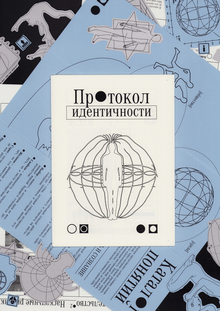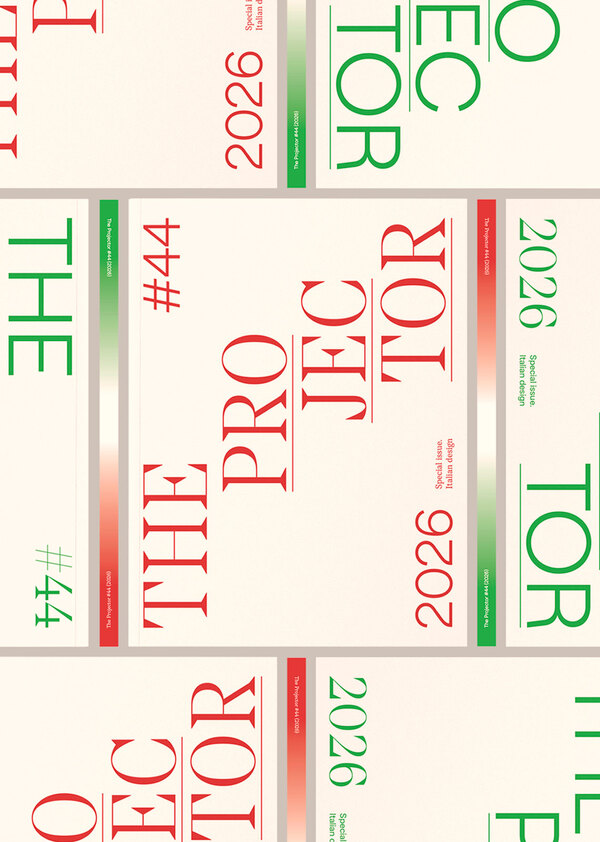
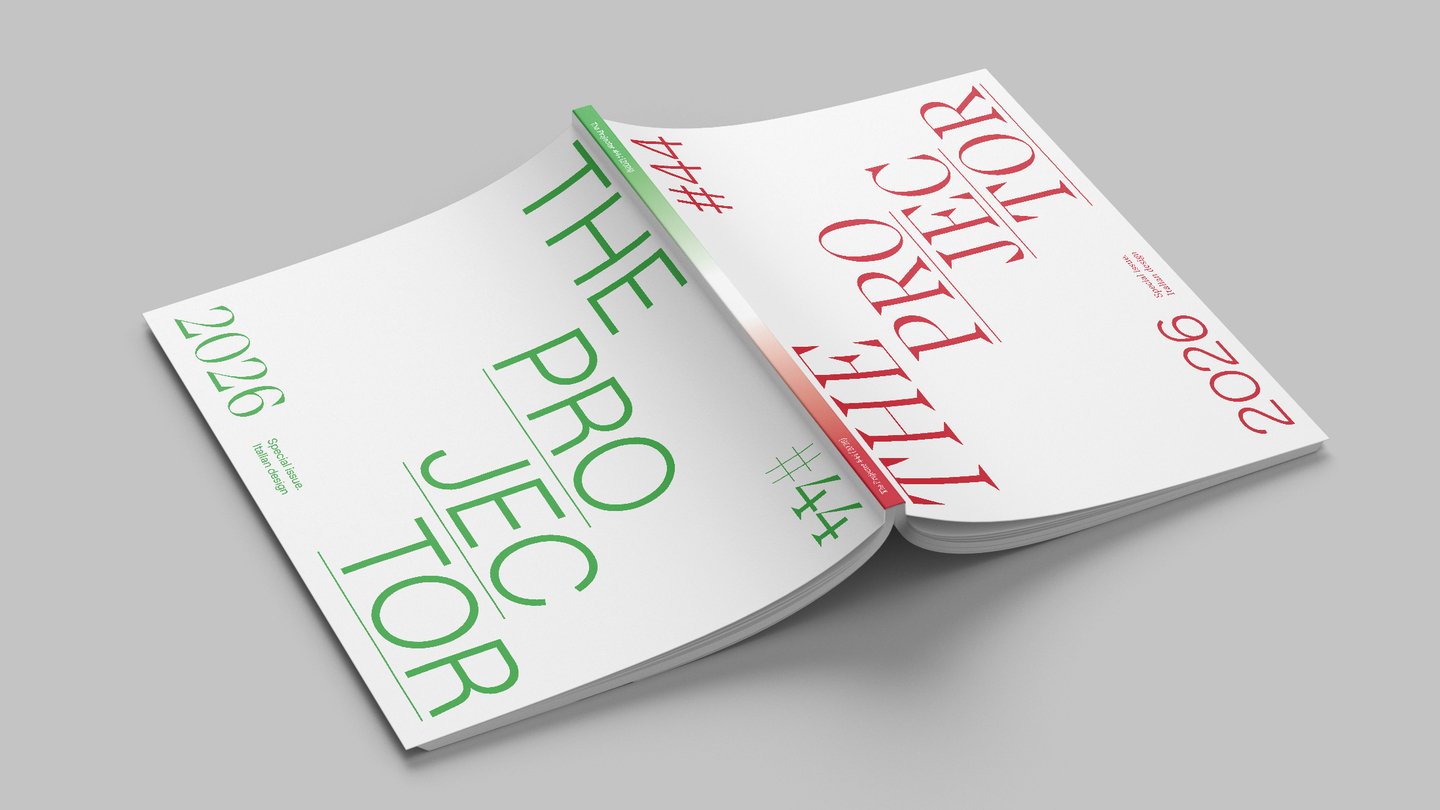
IL PROIETTORE ITALIANO! The fresh issue of The Projector magazineis issued with the support of the Italian Cultural Institute in Moscow. This issue has two covers — one for the «Old Masters», another — for the best contemporary Italian graphic designers. Enjoy!
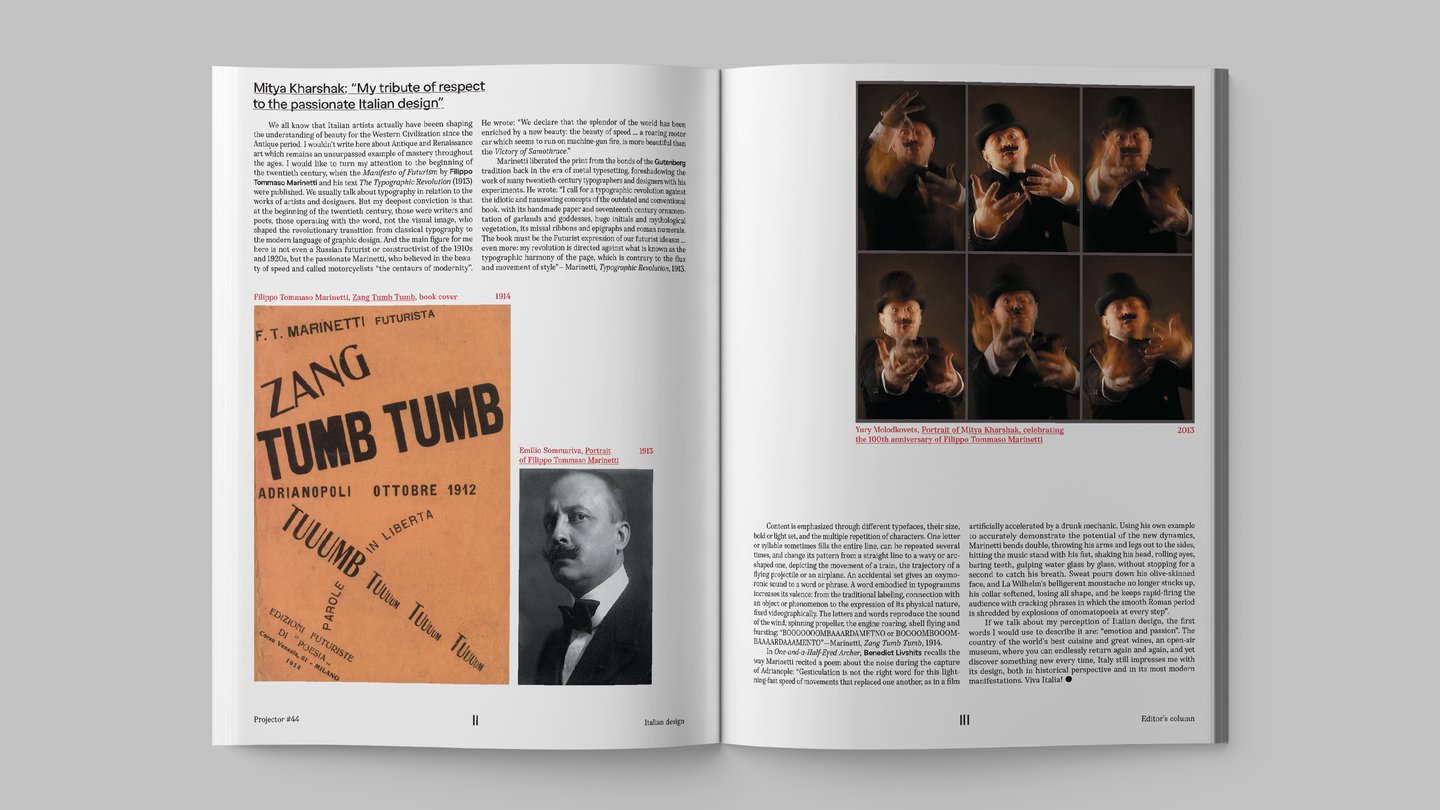
In my editors' column I pay a tribute of respect to one of the key-figures of the Futurism — passionate Filippo Tommazo Marinetti! He indeed shaped the future of the typography for the XX century! If we talk about my perception of Italian design, the first words I would use to describe it are: emotion and passion. The country of the world’s best cuisine and great wines, an open-air museum, where you can endlessly return again and again, and yet discover something new every time, Italy still impresses me with its design, both in historical perspective and in its most modern manifestations. Viva Italia!
The word CULT has recently been used quite extensively: it stands for success, popularity, etc. Meanwhile, cult status implies a moment of spiritual unity or devotion, in any case — a feeling of brotherhood. It is in this elevated sense that we
want to talk about Memphis Group: in a museum or residential interior, their design objects are the ones of some cult.
Text by Alexander Borovsky and Lina Perlova
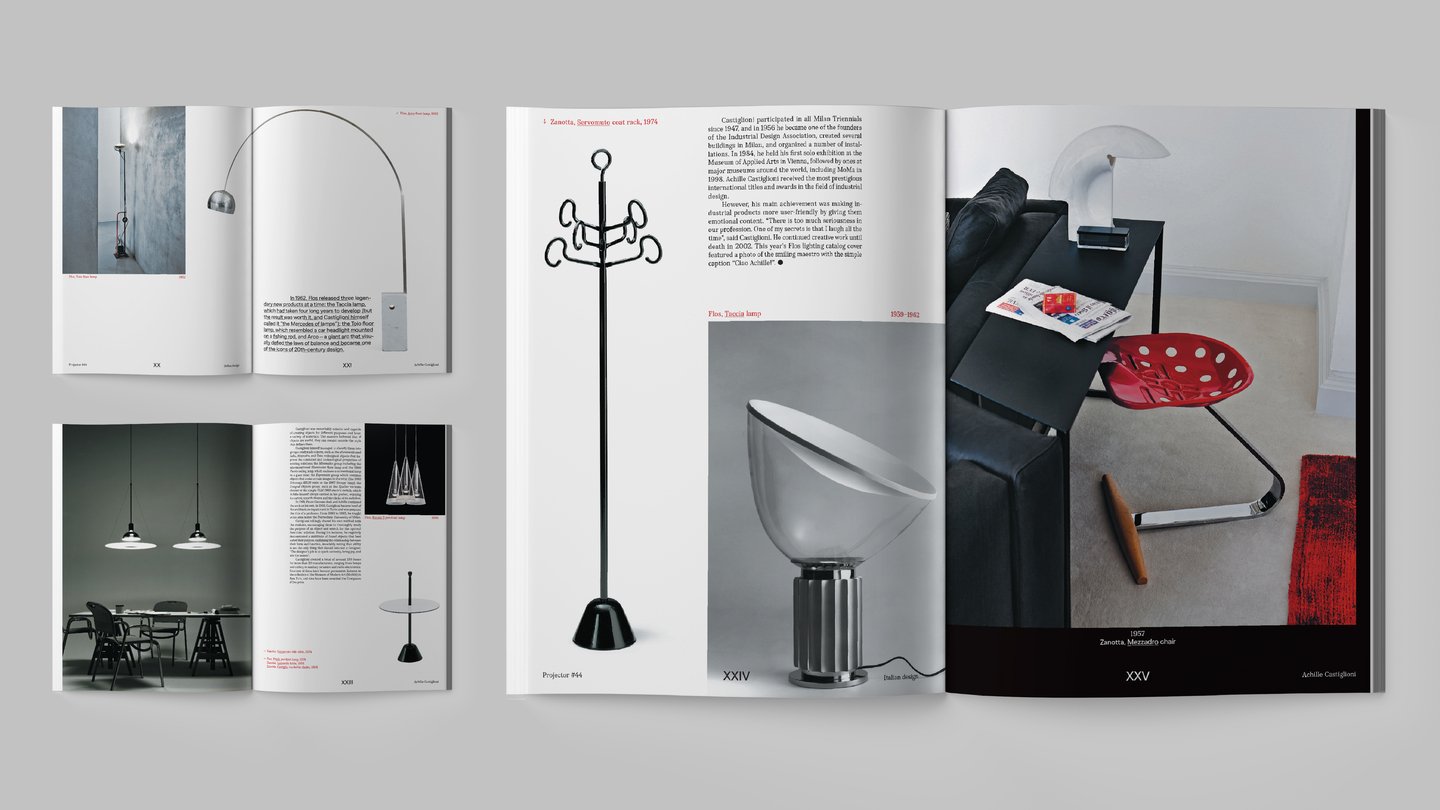
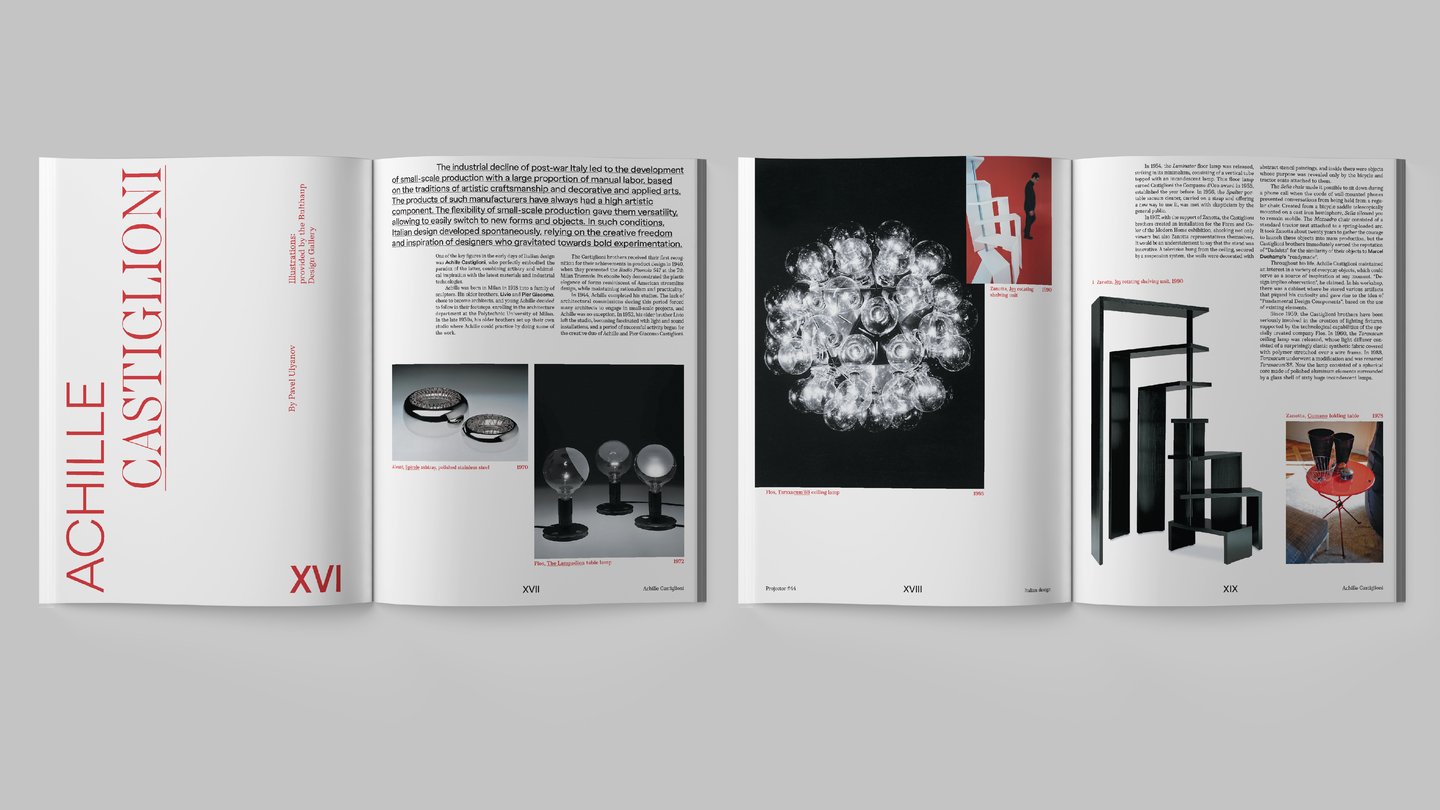
Throughout his life, Achille Castiglioni maintained an interest in a variety of everyday objects, which could serve as a source of inspiration at any moment. «Design implies observation», he claimed. In his workshop, there was a cabinet where he stored various artefacts that piqued his curiosity and gave rise to the idea of «Fundamental Design Components», based on the use of existing elements.
Text by Pavel Ulyanov
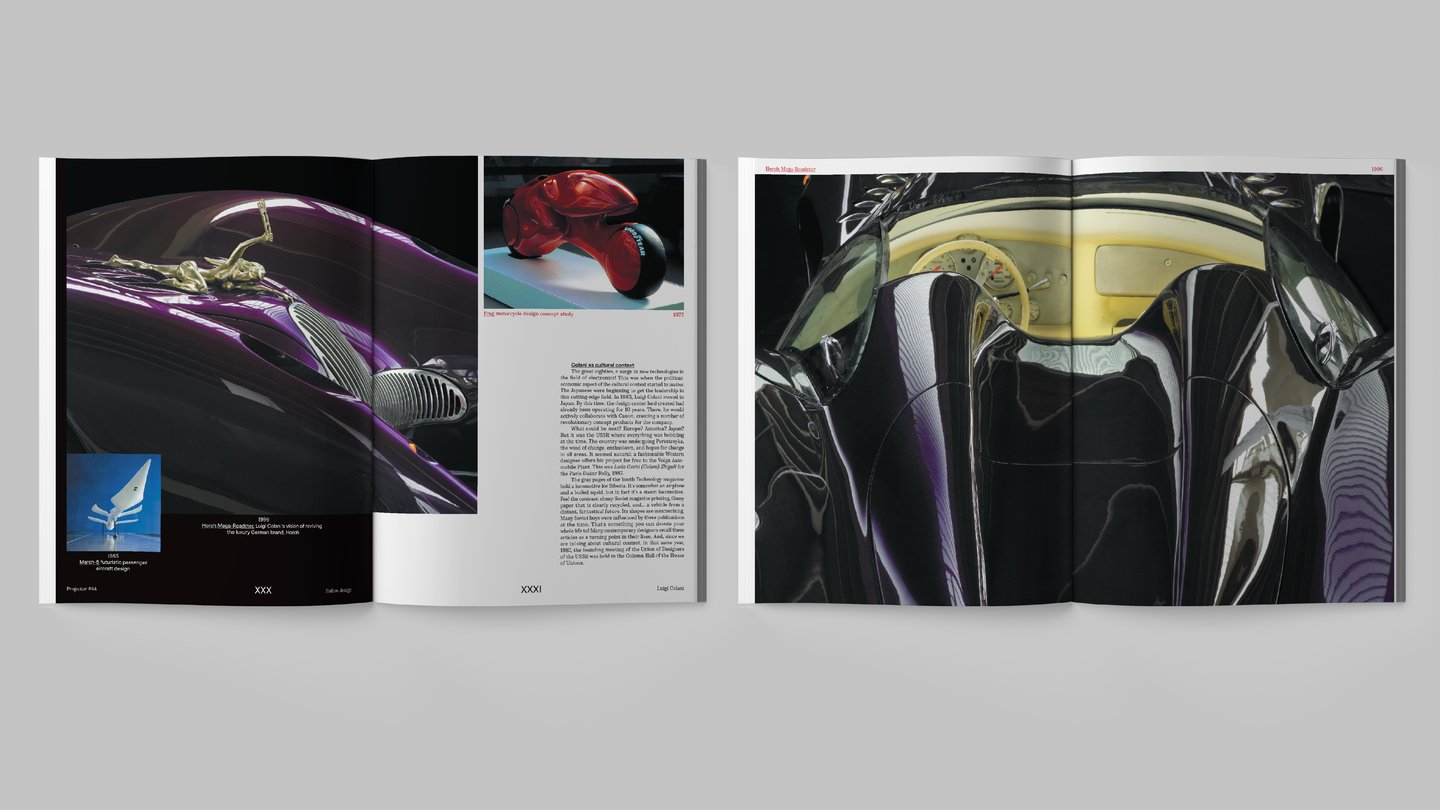
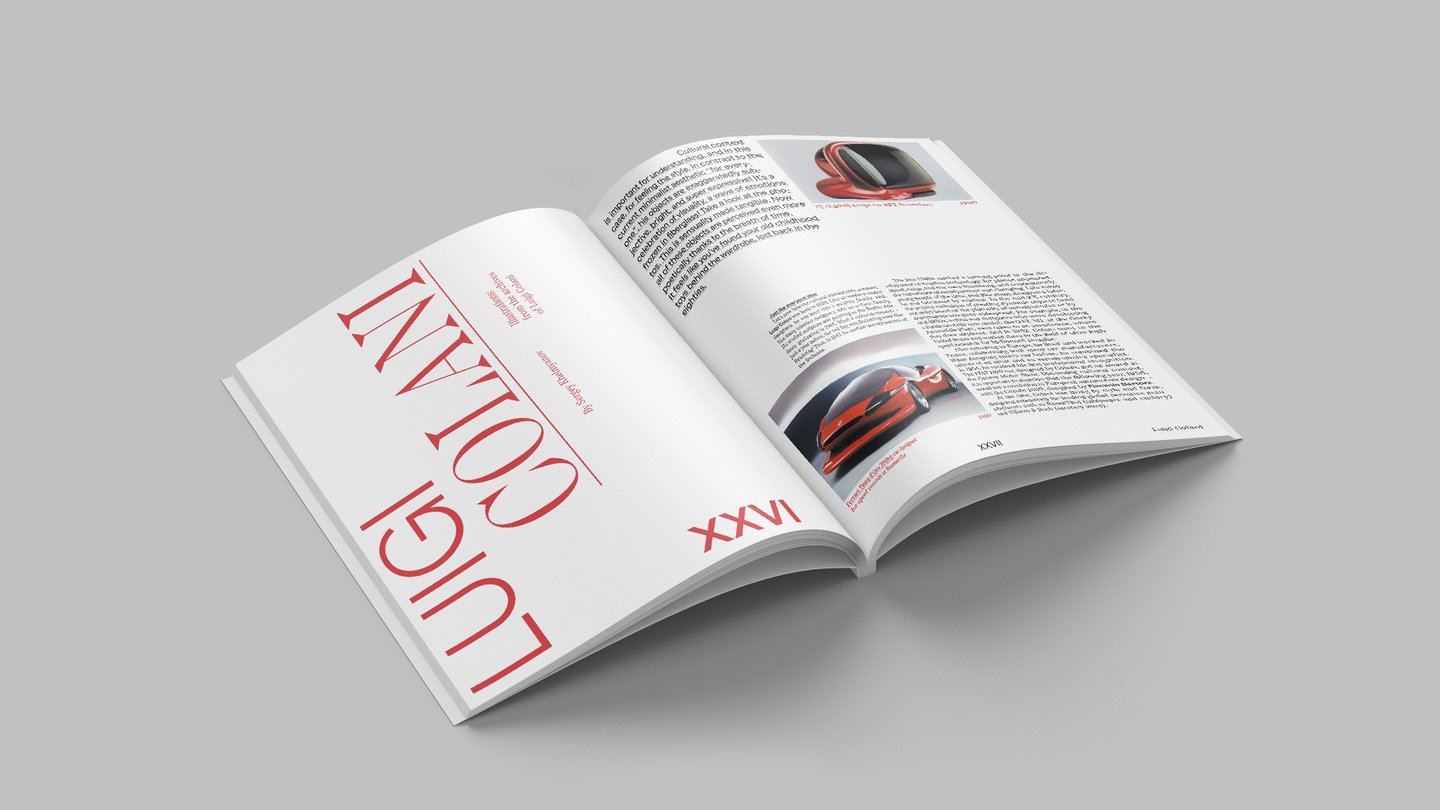
We view Luigi Colani in a specific context — the context of modernity. Yes, Colani’s products resemble props from 1970s science fiction films, just as the Charles de Gaulle Airport terminal in Roissy (1974, Paul André) resembles the sets of those films. Yes, his products are subjective to the utmost degree, while most industrial product designers strive for objectivity. But the more objective something is, the more seamless it becomes. Apple aesthetics are marching triumphantly across the world… There is less and less subjectivity in design.
Text by Sergey Helmyanov
Carlo Mollino remains one of the most enigmatic legends of 20th-century design. The enormous interest in his work on the part of researchers and collectors shows no sign of abating. The auction record for a piece of 20th-century furniture belongs to Carlo Mollino — a table created in 1949 was sold at Christie’s in 2005 for $3.8 million.
Text by Pavel Ulyanov
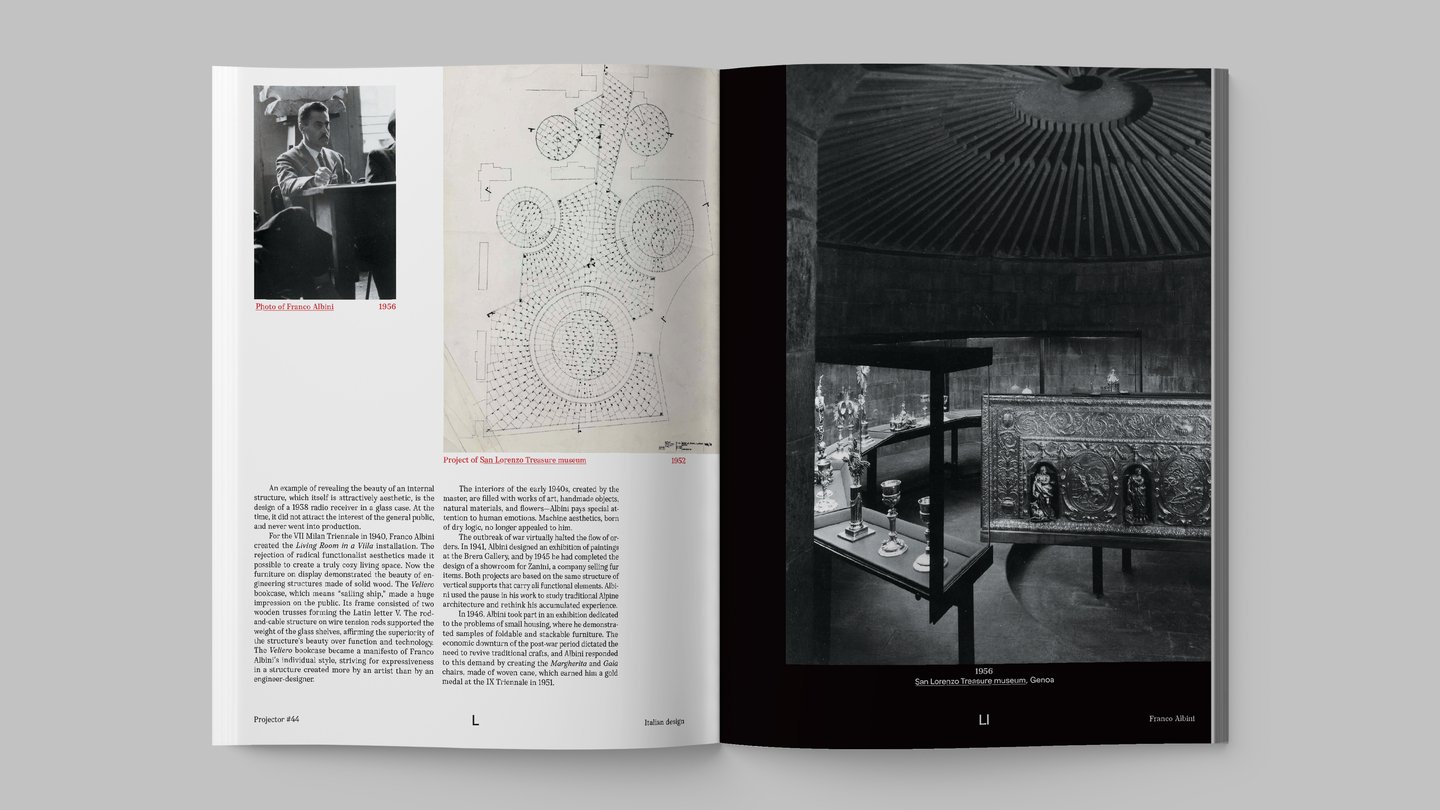
The creation of objects floating in space, using elegant structures that overcome the force of gravity, became Albini’s invaluable contribution to the formation of a school of national design, created by the individual styles of Italian masters. In 2007, Franco Albini’s work was declared a national treasure of Italy.
Text by Pavel Ulyanov
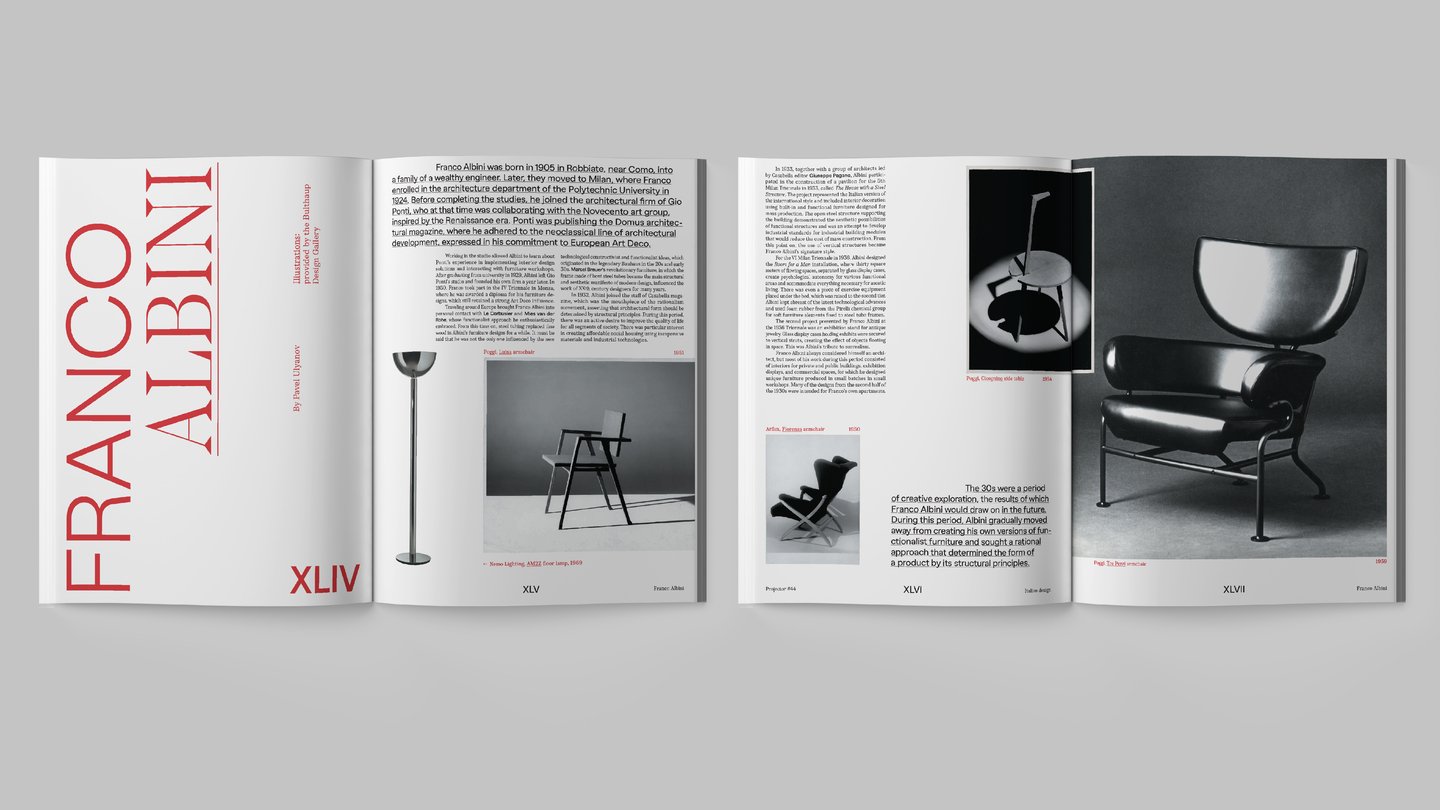
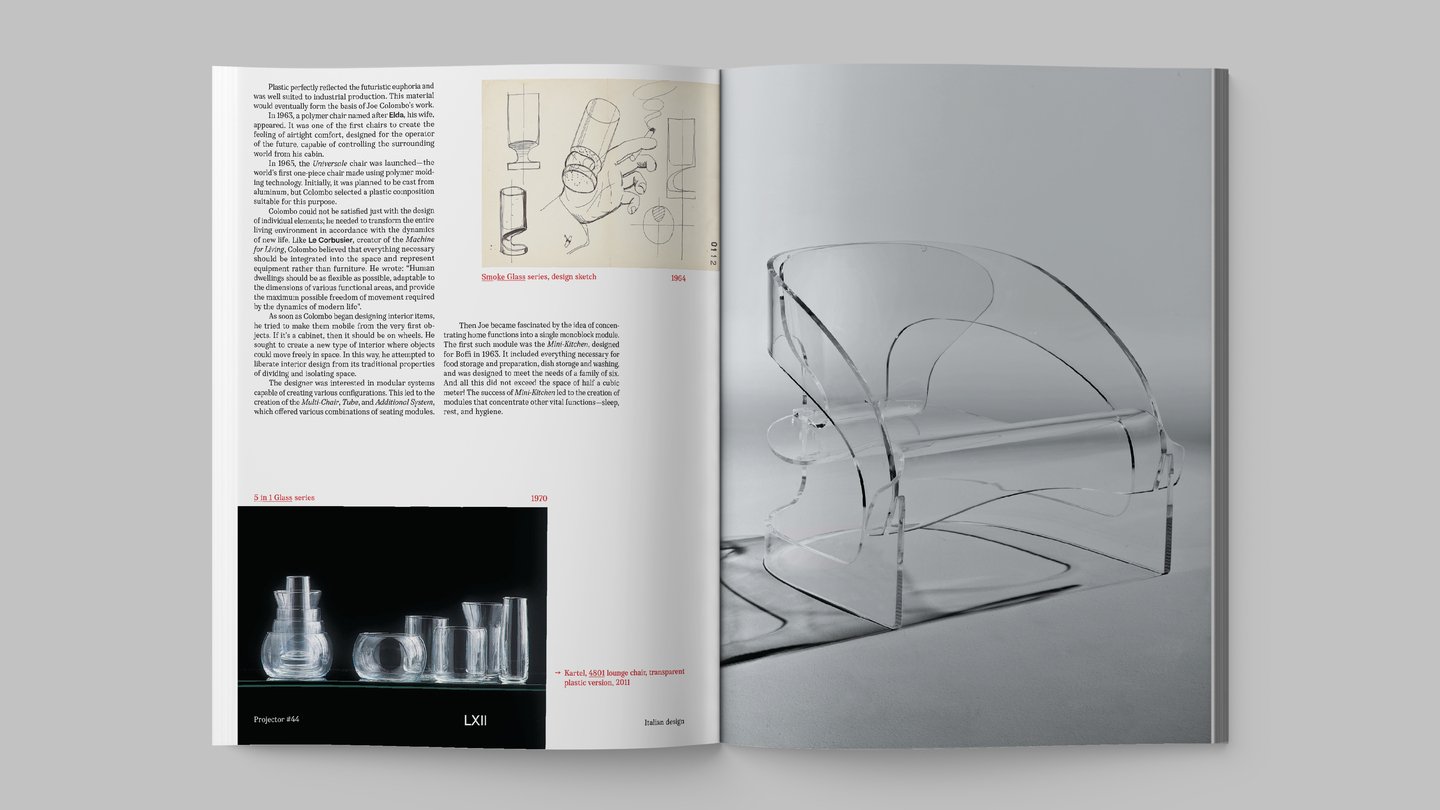
As Ettore Sottsass, leader and ideologist of the Memphis group, recalled: «He was the only Italian designer who realized that the world had changed». Colombo understood that media would become a central element of the technological world of the future. The ability to transmit information over long distances inspired him to create his first product design in 1962‑the Acrilica lamp, where light flows inside the smooth curve of acrylic glass, like electricity through wires. For it, he received the Gold Medal of the XIII Milan Triennale.
Text by Pavel Ulyanov
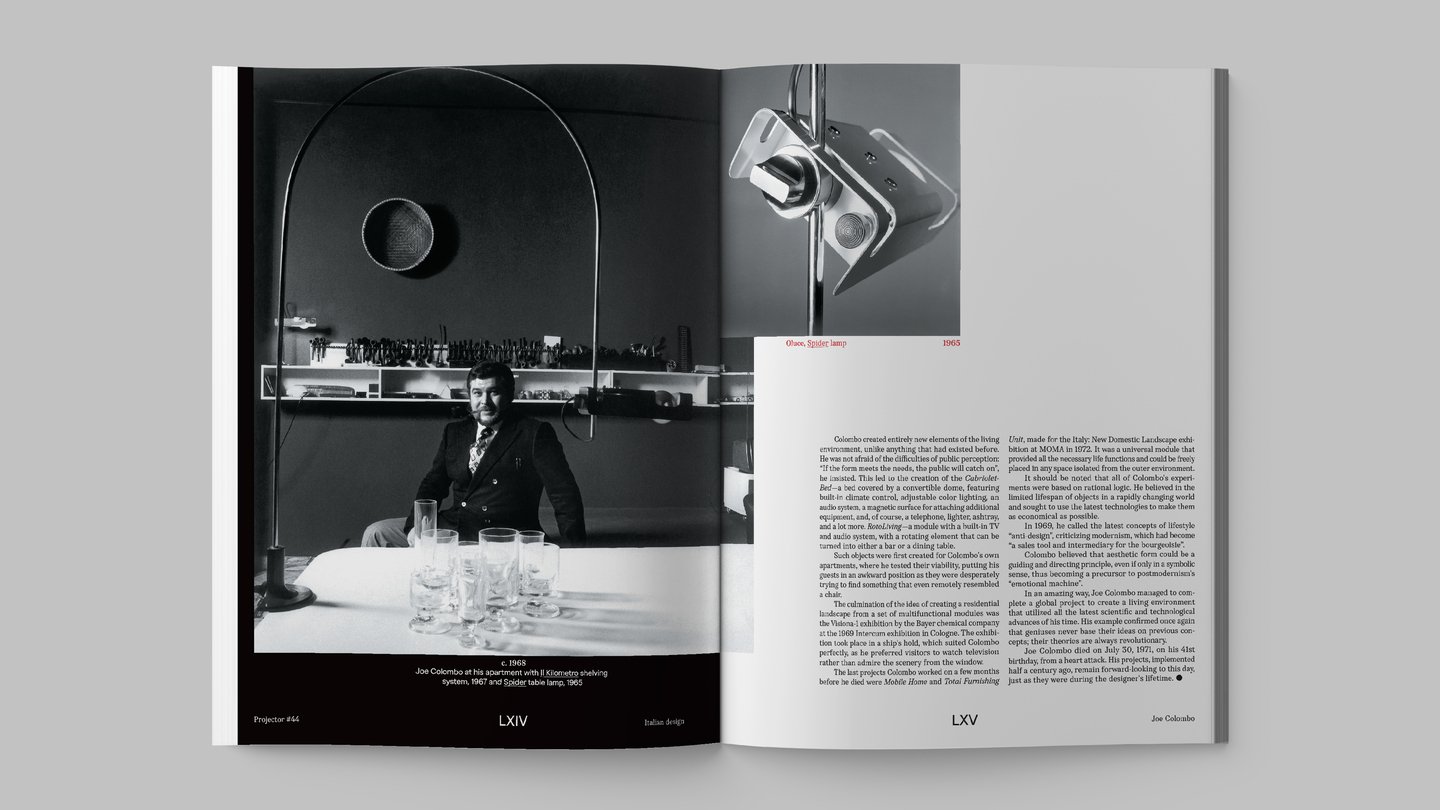
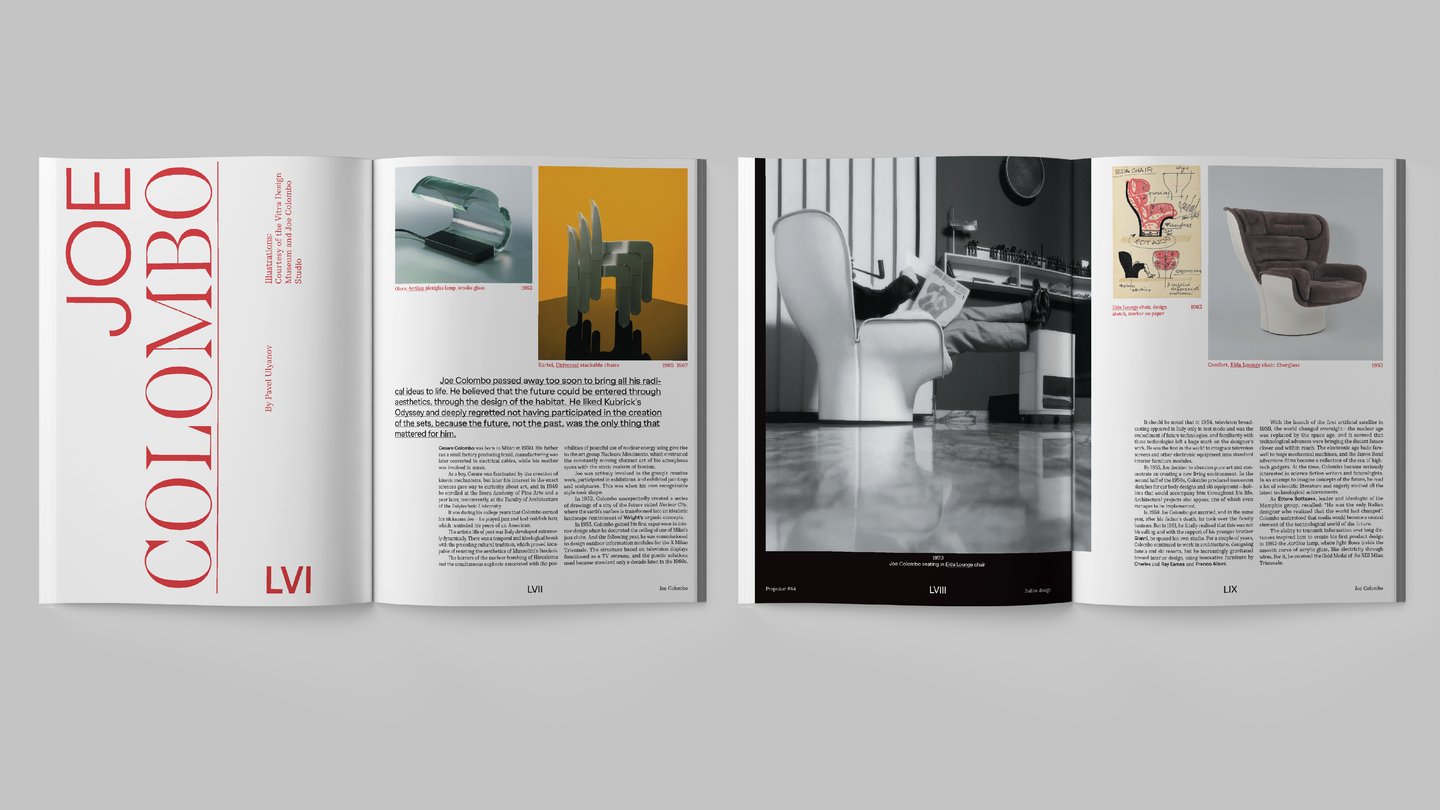
And the other section of the issue is dedicated to the brightest names of contemporary Italian graphic design. The PROJECTOR had a great chance to talk to them and publish the interviews. And their works of course!
— Do you have any particular methods or practices to help you keep your mind clear, curious, and full of ideas? What do you start your project with?
— Not really. The thing that keeps our curiosity always alive stems from our decision, from day one, not to limit ourselves — from choosing clients to diving into specific industries. Being often inexperienced in the sector we’re working in, we’re forced to study. Having a fresh mind, free of prejudice, is often the engine that allows us to be at our best.
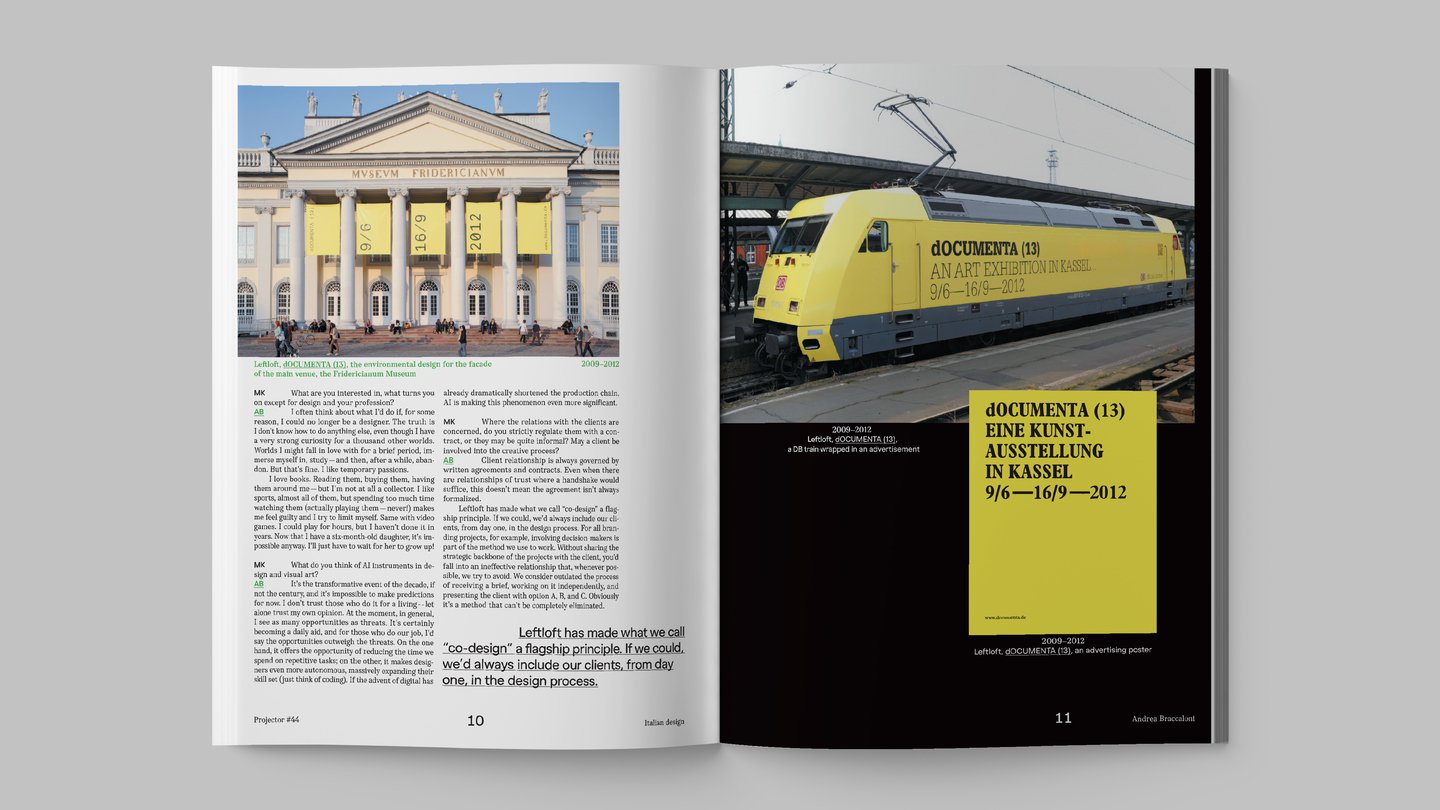
Andrea Braccaloni (Leftloft). Interview by Mitya Kharshak
— And what about your own sources of inspiration? I think it’s also about looking around.
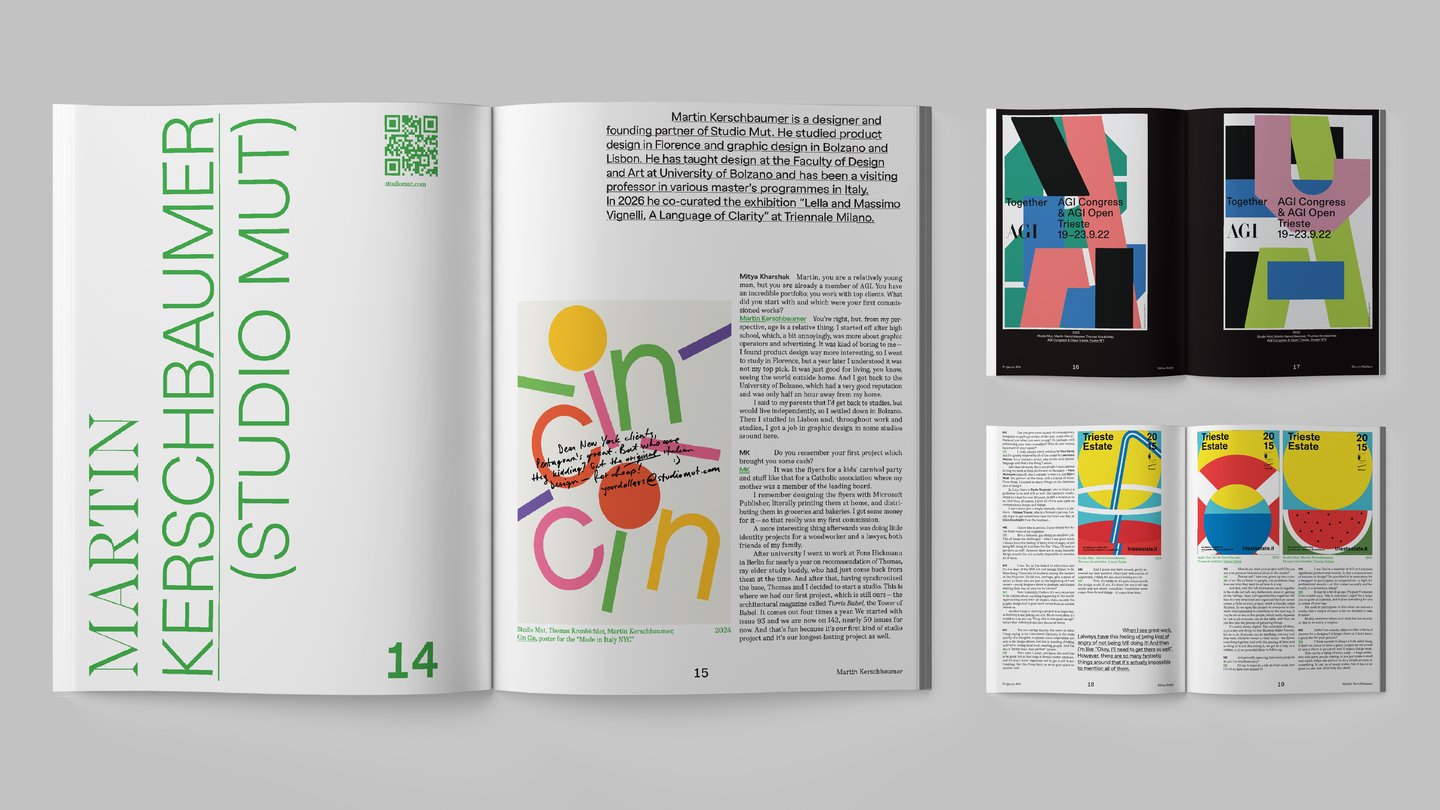
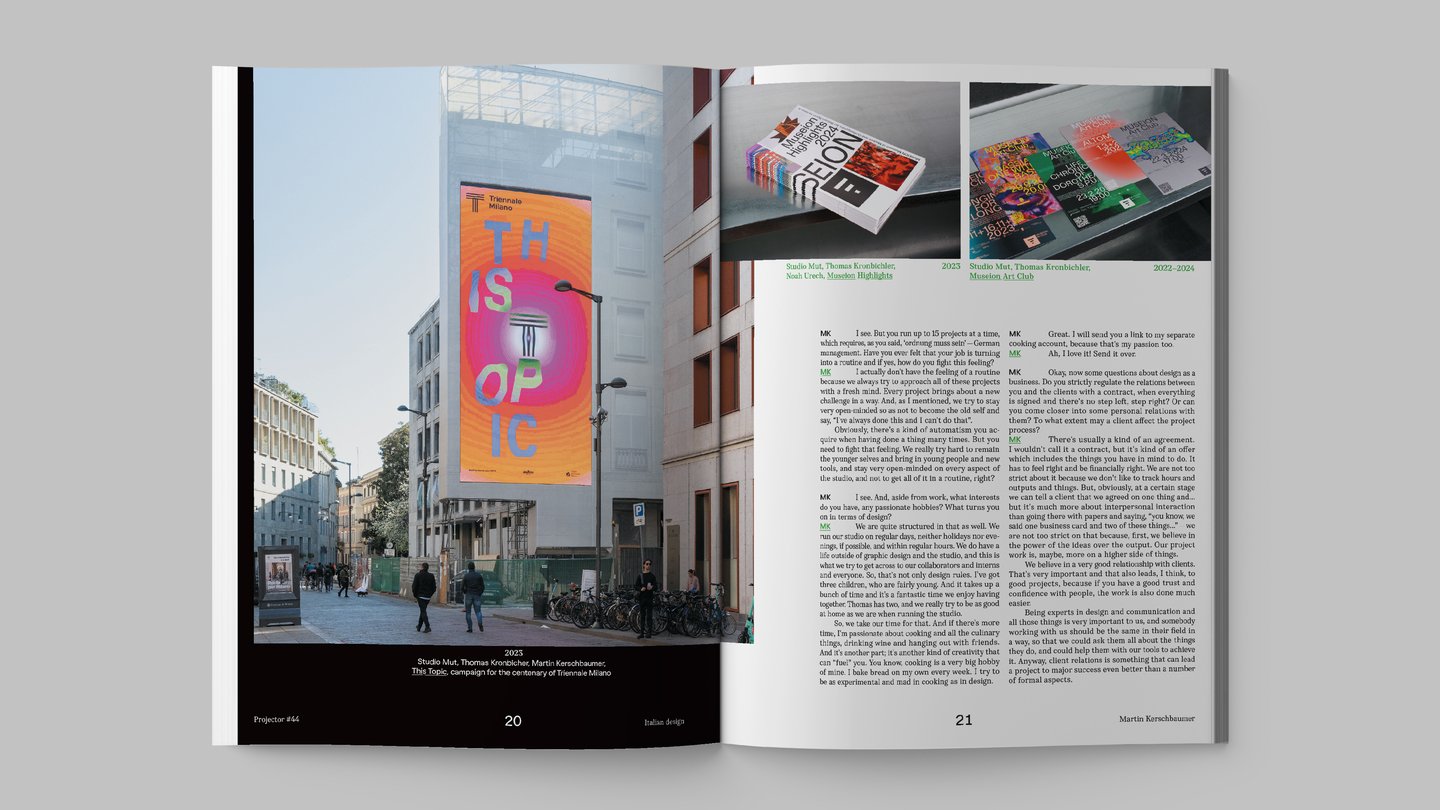
— Yeah, it’s totally so, it’s quite always outside the design world. If not, it’s about the way a solution works and not about formalities. Inspiration never comes from formal things — it comes from ideas. When I see great work, I always have this feeling of being kind of angry of not being ME doing it! And then I’m like «Okay, I’ll need to get there as well». However, there are so many fantastic things around that it’s actually impossible to mention all of them.
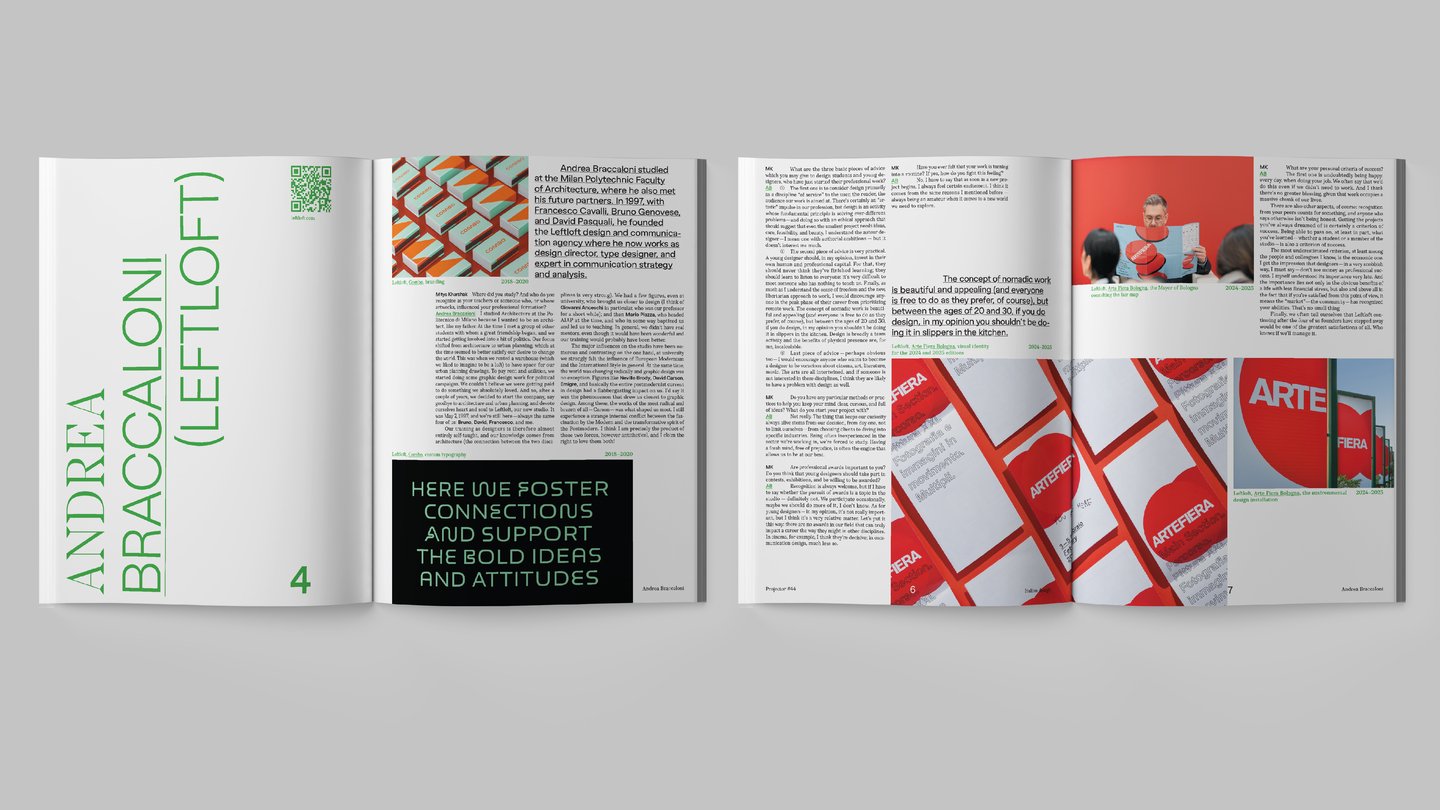
Martin Kerschbaumer (Studio Mut). Interview by Mitya Kharshak
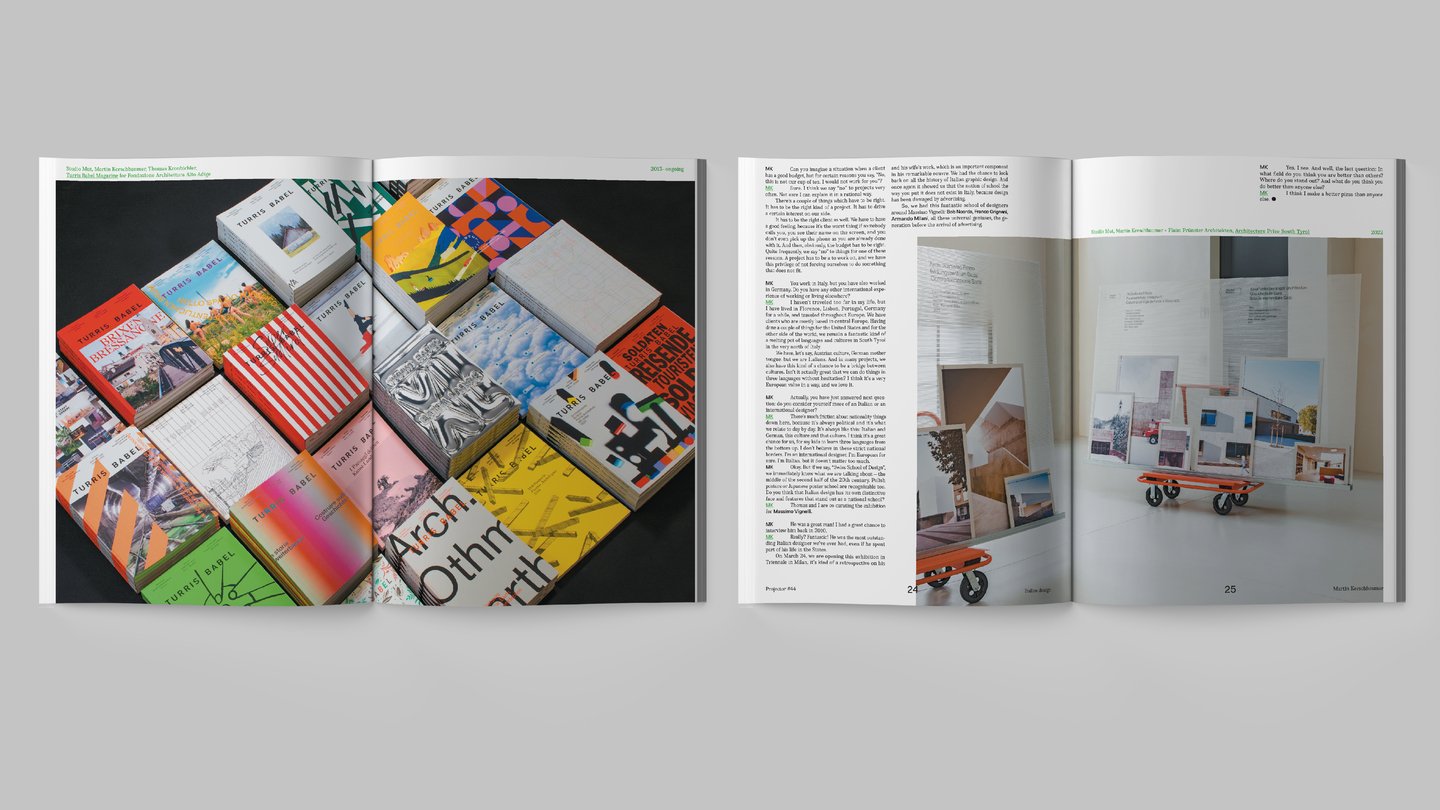
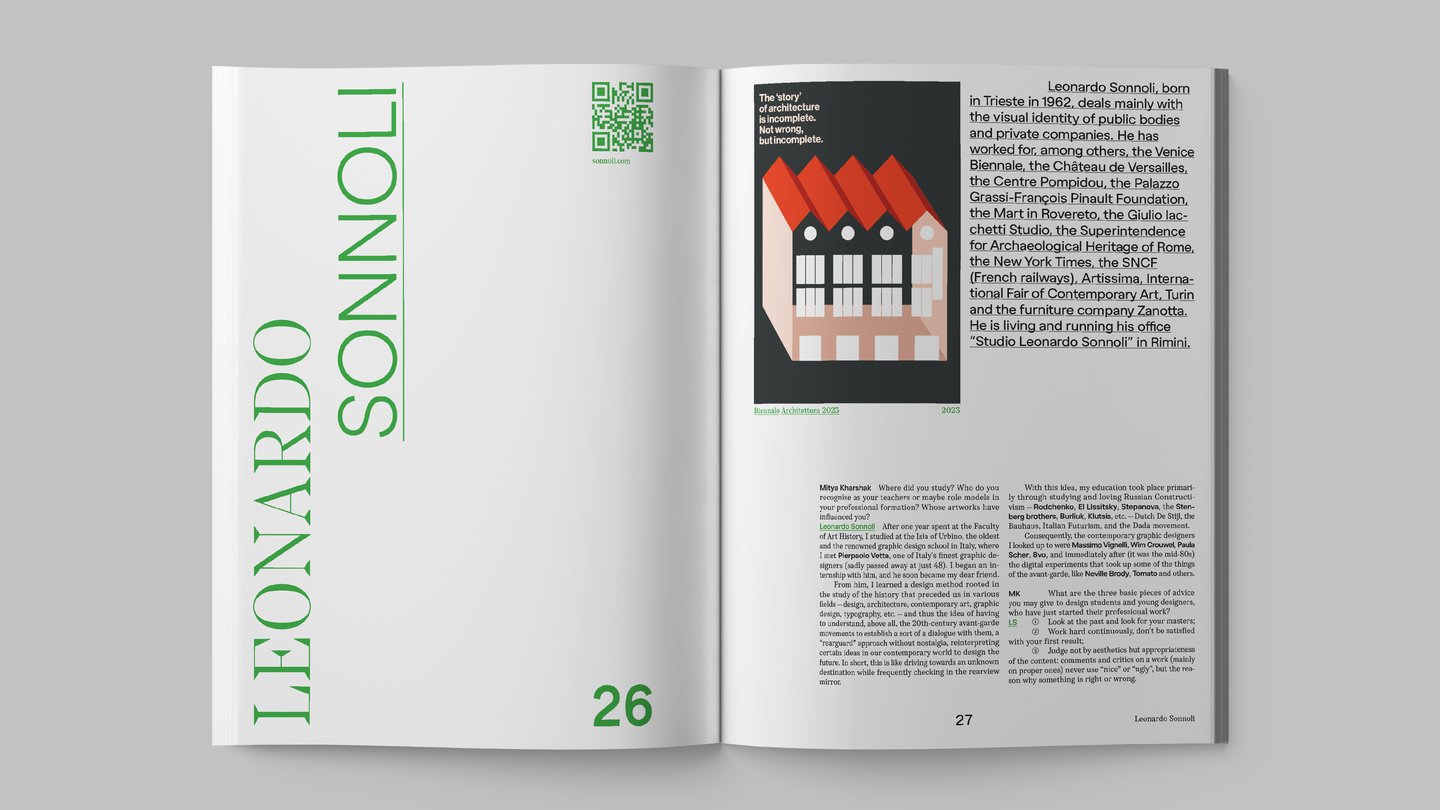
— Do you consider yourself more an Italian
artist linked to the national art school and traditions, or you’re more international?
— I grew up in a border town culturally influenced
by Germanic and Slavic cultures, and my initial
references were European and Russian. Then, after school, I realized I needed to engage with designers from abroad, far more talented than I am. I don’t know what one might read in my works, but it’s probably part of the Western culture.
Leonardo Sonnoli. Interview by Mitya Kharshak
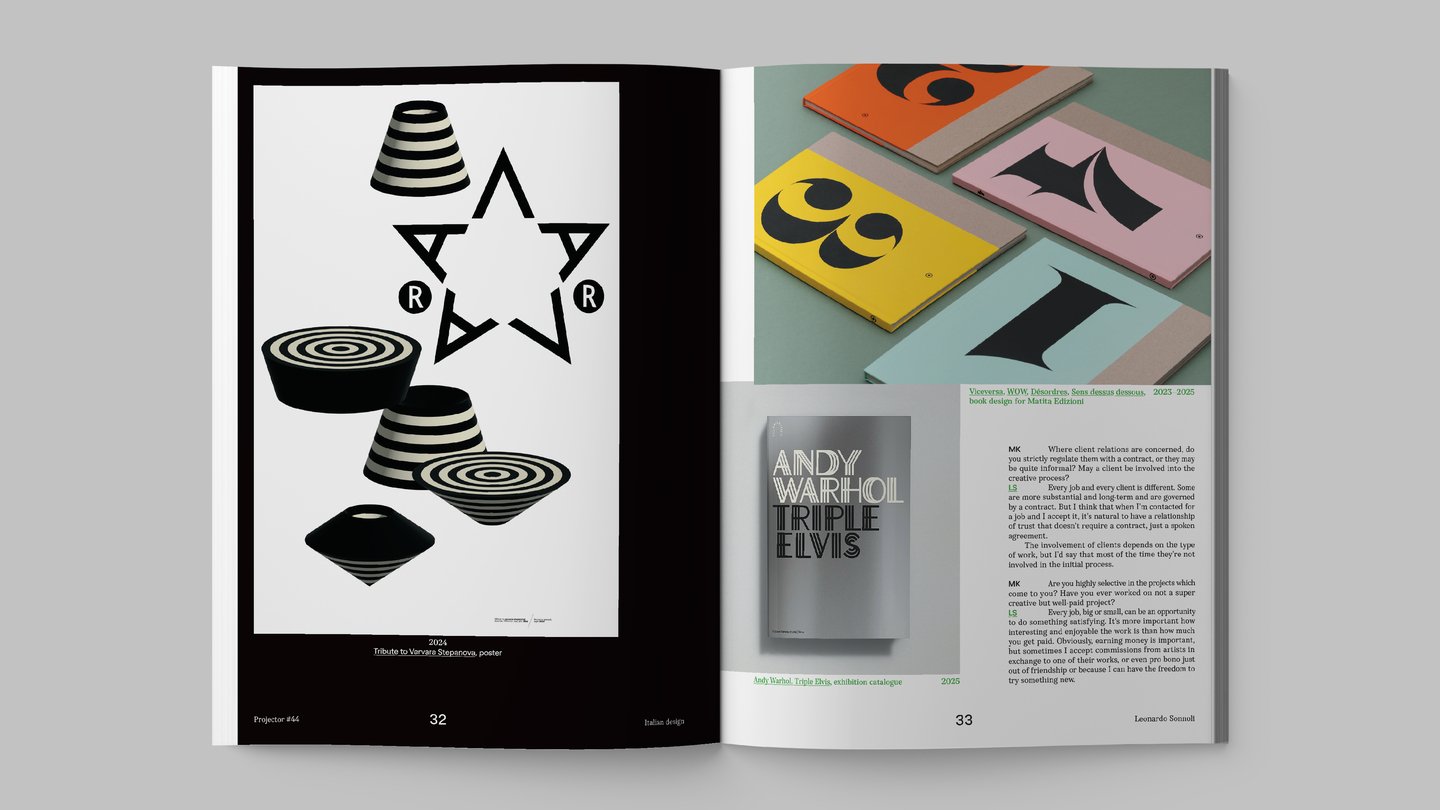
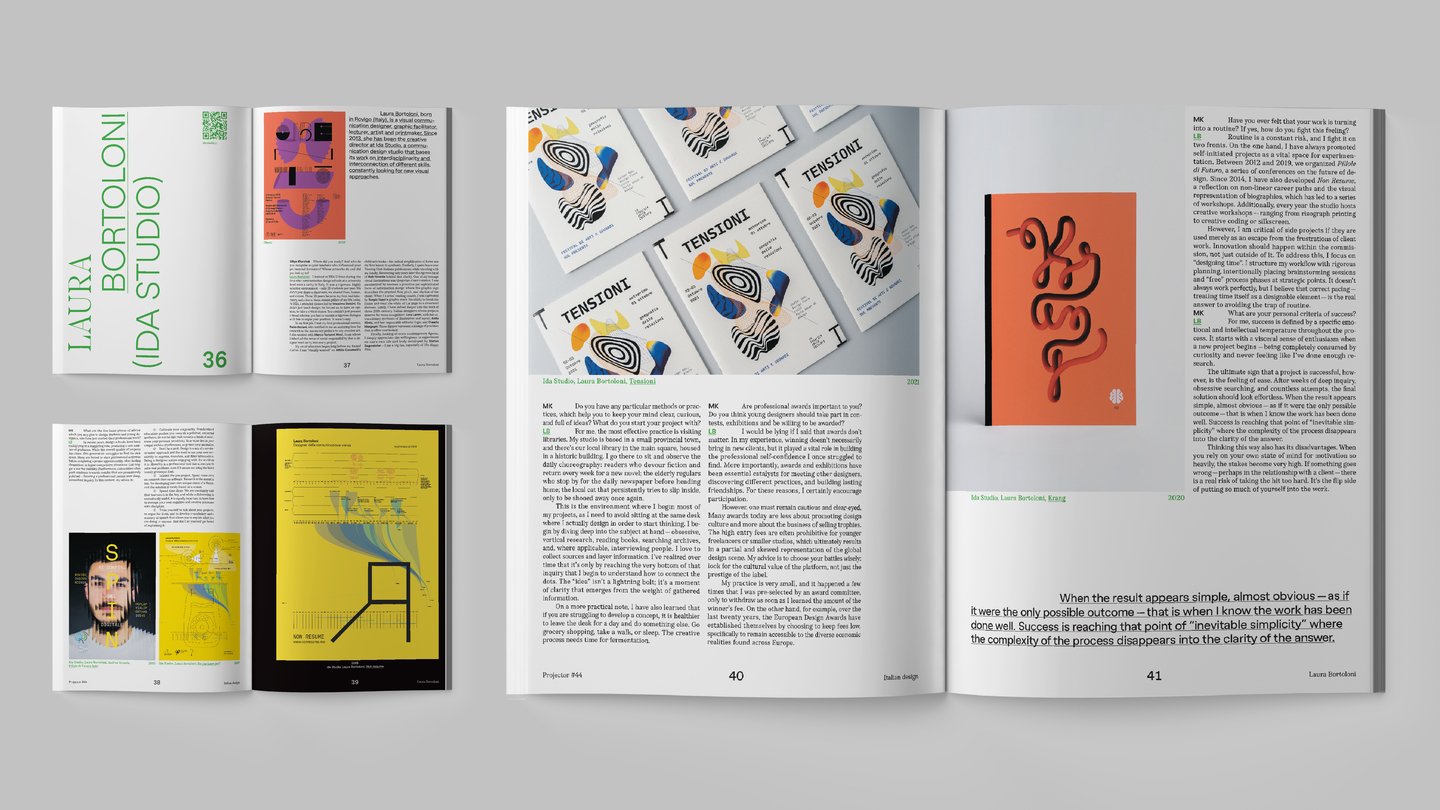
— What are you interested in, what turns you on alongside design and your profession? Are you, perhaps, a collector? Or do you badly need new impressions of travelling to different countries every two months?
— I am the kind of person who gets swept away by waves of obsession. Every five or six years, something completely takes over, and I feel a visceral need to study, deepen, and master everything about that world. It happened with tango — not just the dance, but the complex musicality of traditional and contemporary Argentine orchestras. It happened with tea: the intricate methods of production, preparation, and service. Lately, my practice of Japanese woodblock printing has taken me to Japan several times to study and refine the technique.
Laura Bortoloni (Ida Studio). Interview by Mitya Kharshak
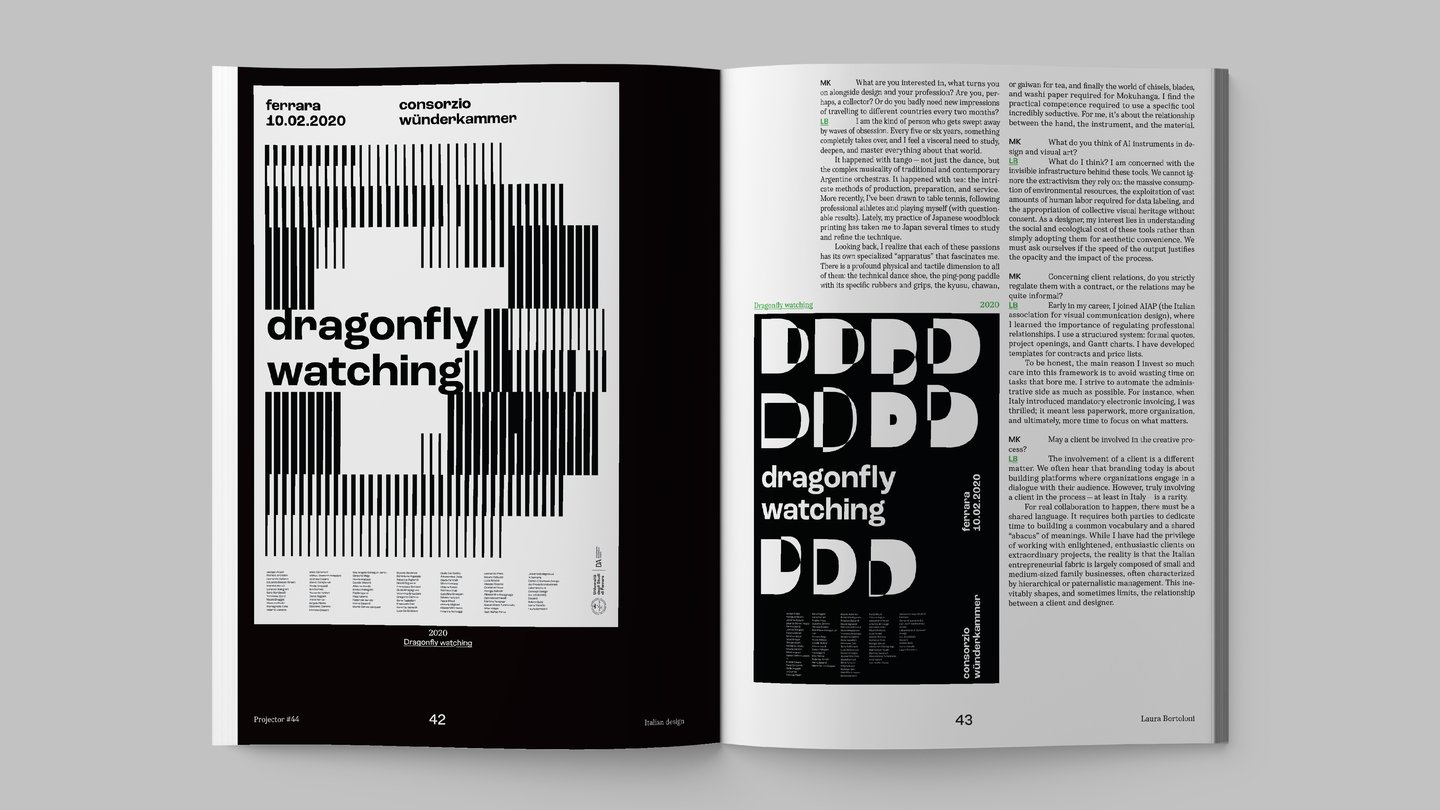
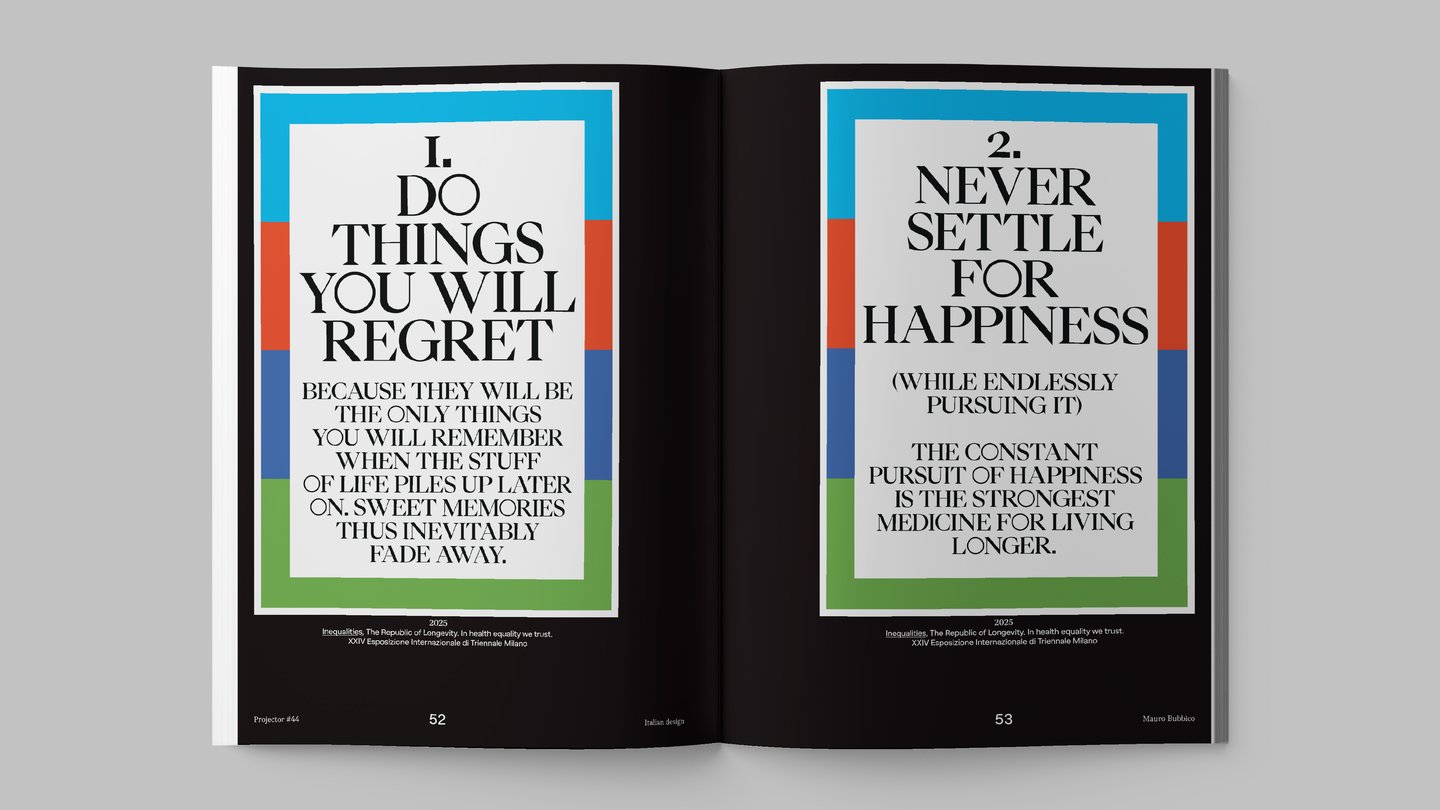
— What could be your five fundamental tips for design students and young designers who have just started their professional activity?
— ① Be curious, experiment and never settle down. Play, dare and have fun. ② It overcomes the theoretical rigidity and self-imposed constraints of «conventional» design. ③ Focus on the content, on the meaning appropriate to the context, the form will come by itself. ④ Get angry, develop empathy towards others, promote mutual understanding, practice non-violent communication. ⑤ Don’t talk to yourself, avoid self-referentiality at all costs.
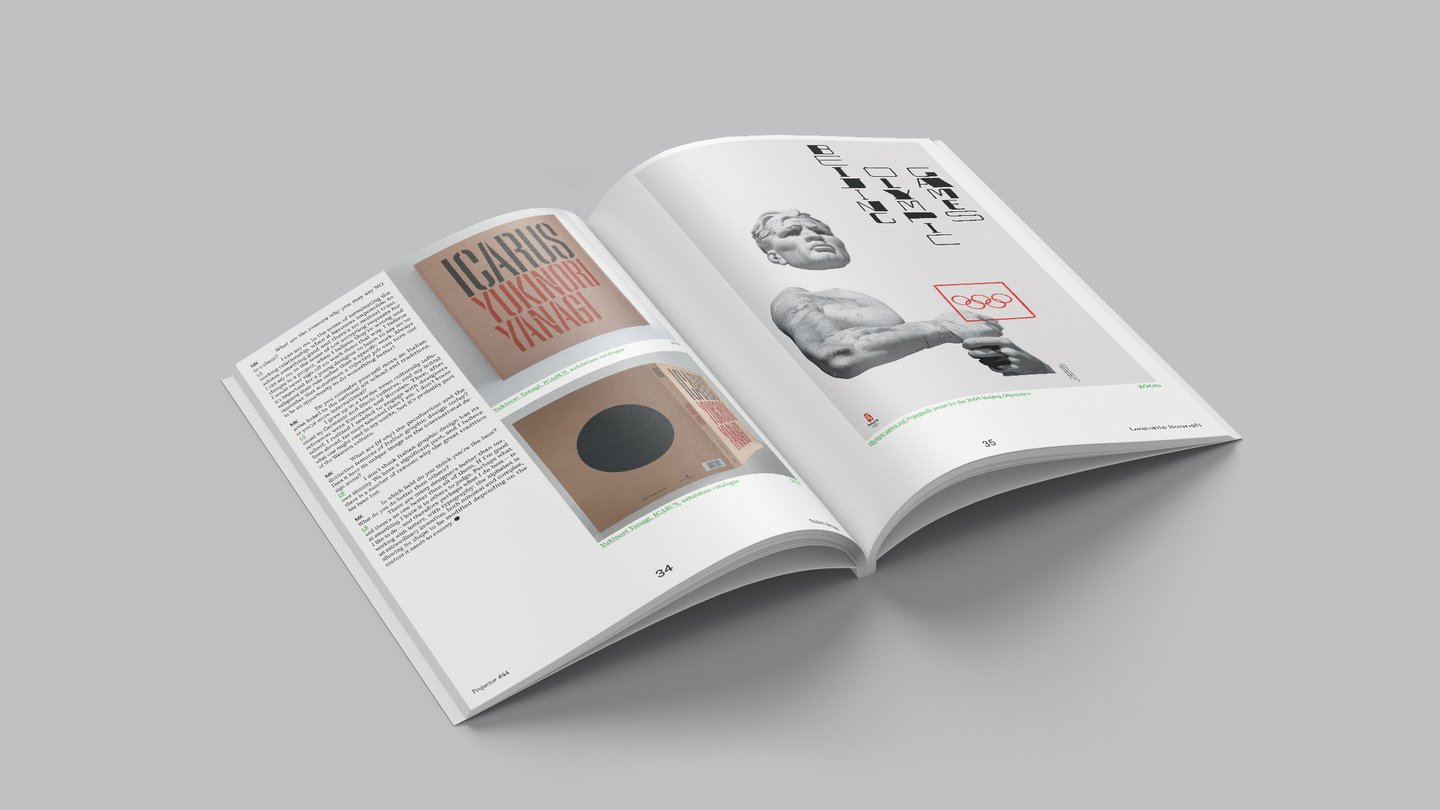
Mauro Bubbico. Interview by Mitya Kharshak
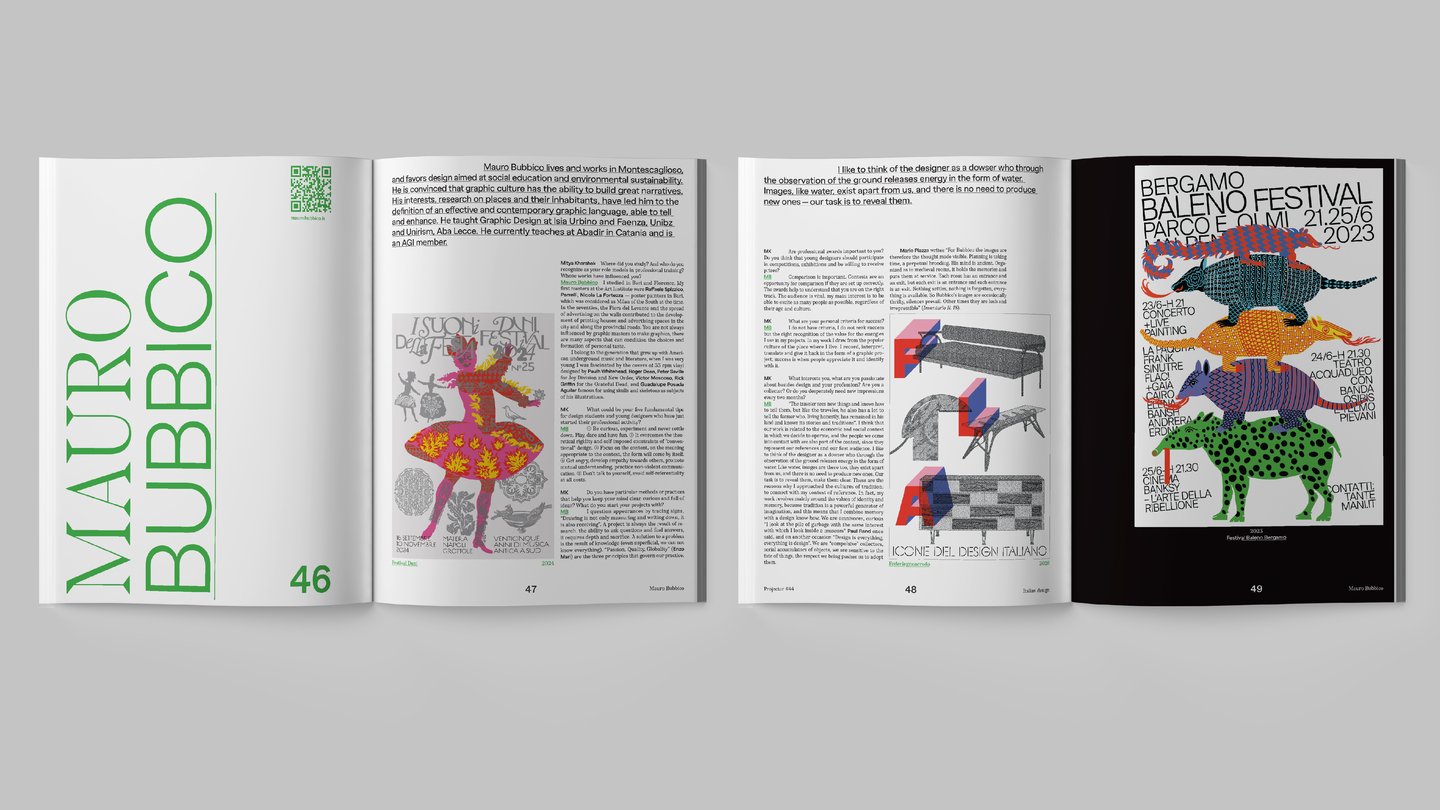
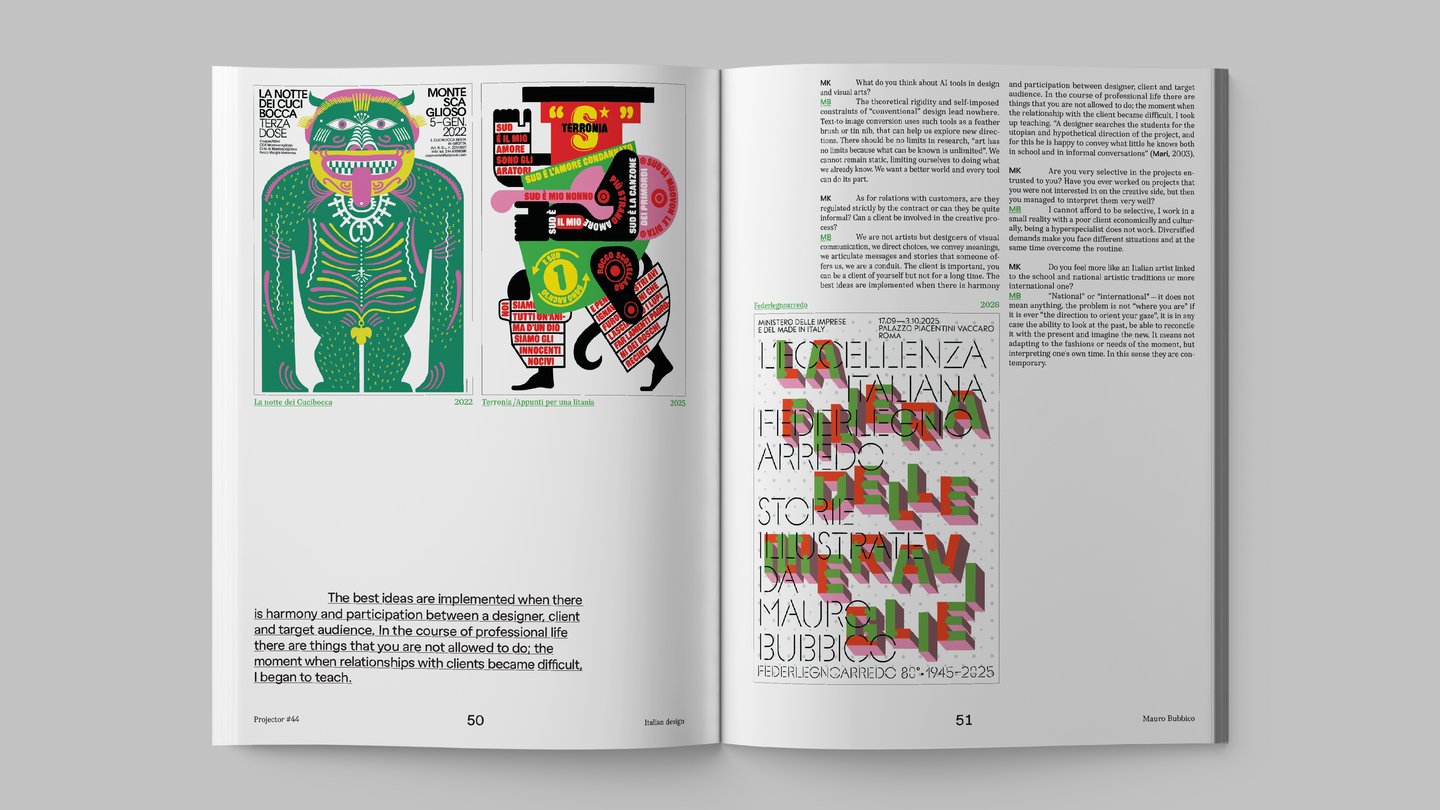
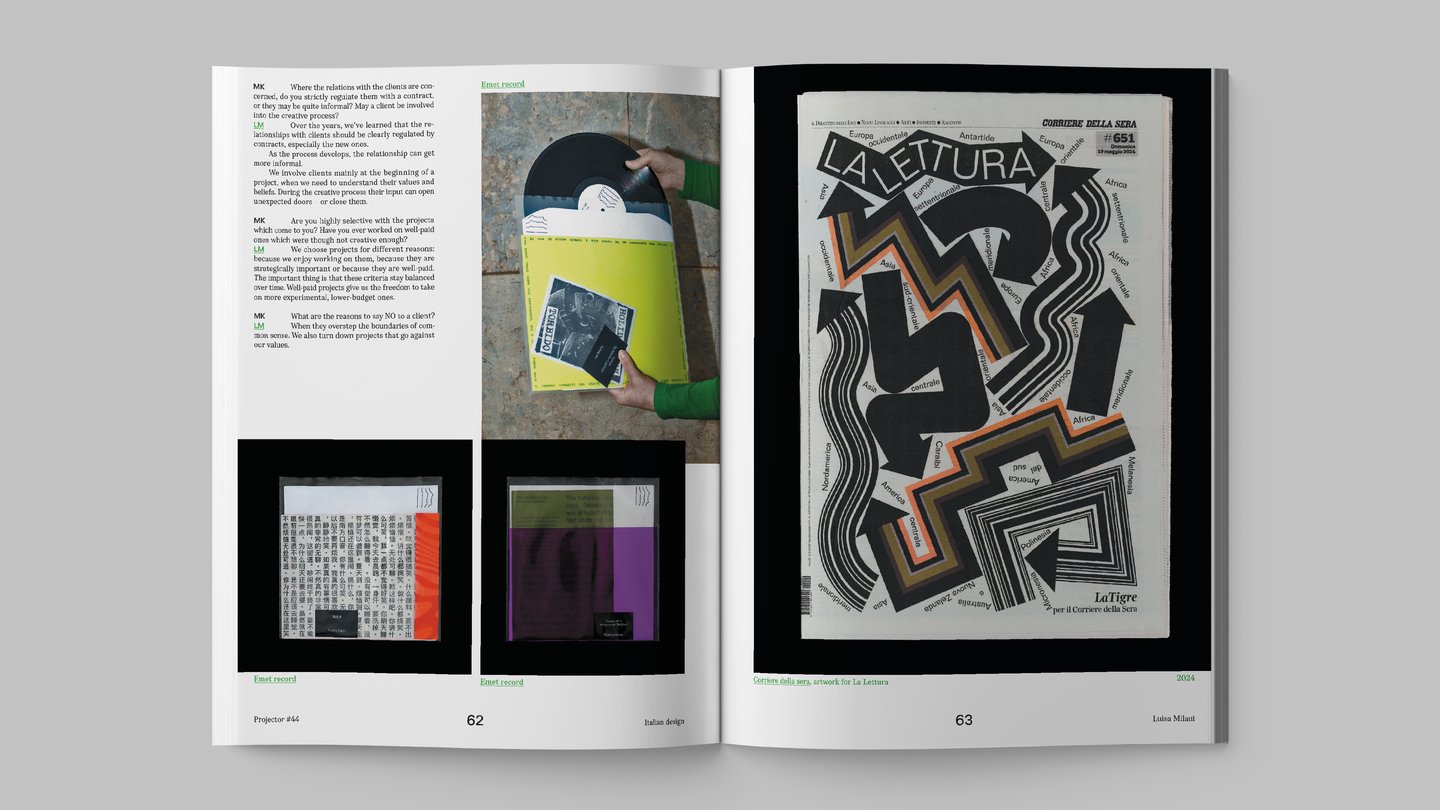
— Are you highly selective with the projects
which come to you? Have you ever worked on well-paid ones which were though not creative enough?
— We choose projects for different reasons:
because we enjoy working on them, because they are strategically important or because they are well-paid. The important thing is that these criteria stay balanced over time. Well-paid projects give us the freedom to take on more experimental, lower-budget ones.
Luisa Milani (La Tigre). Interview by Mitya Kharshak
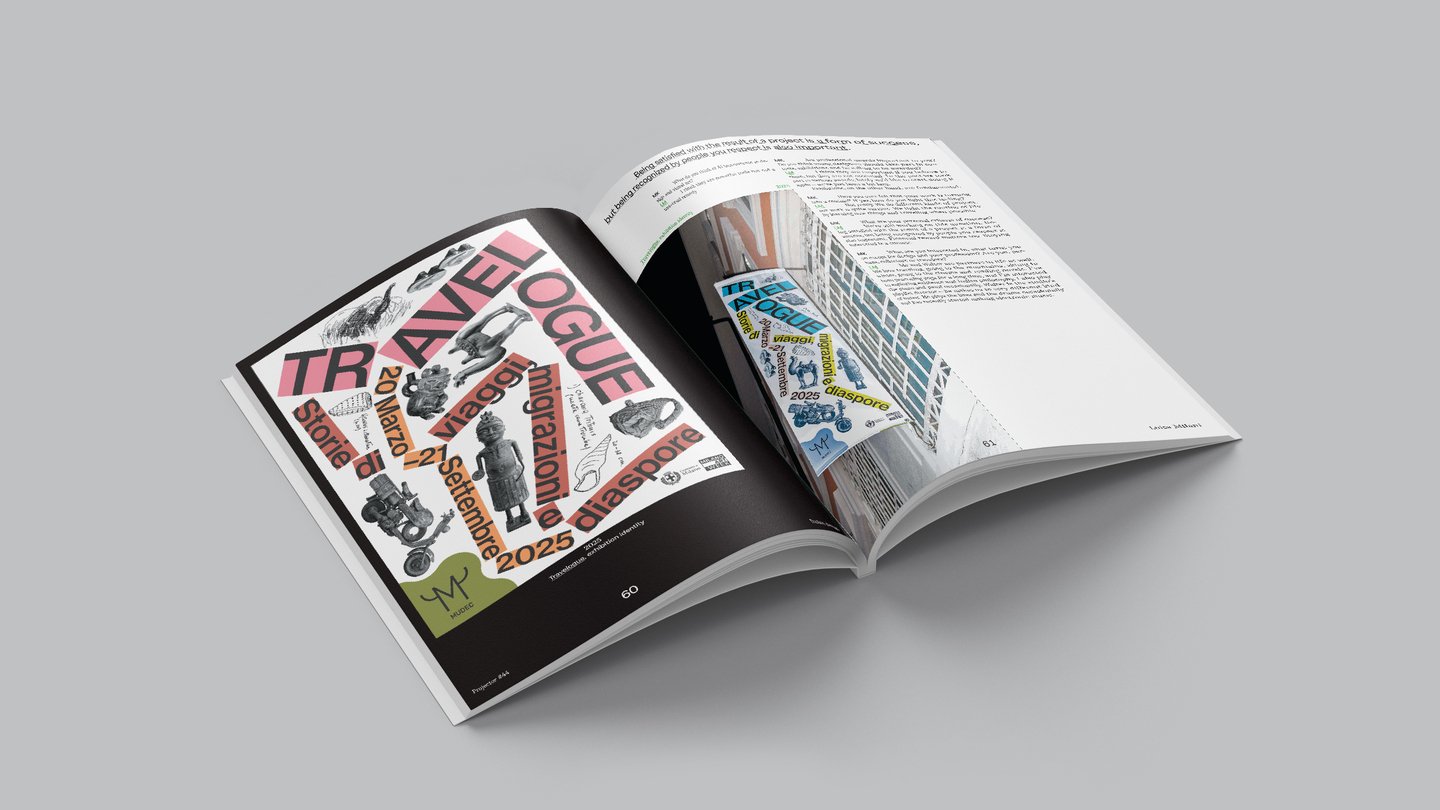
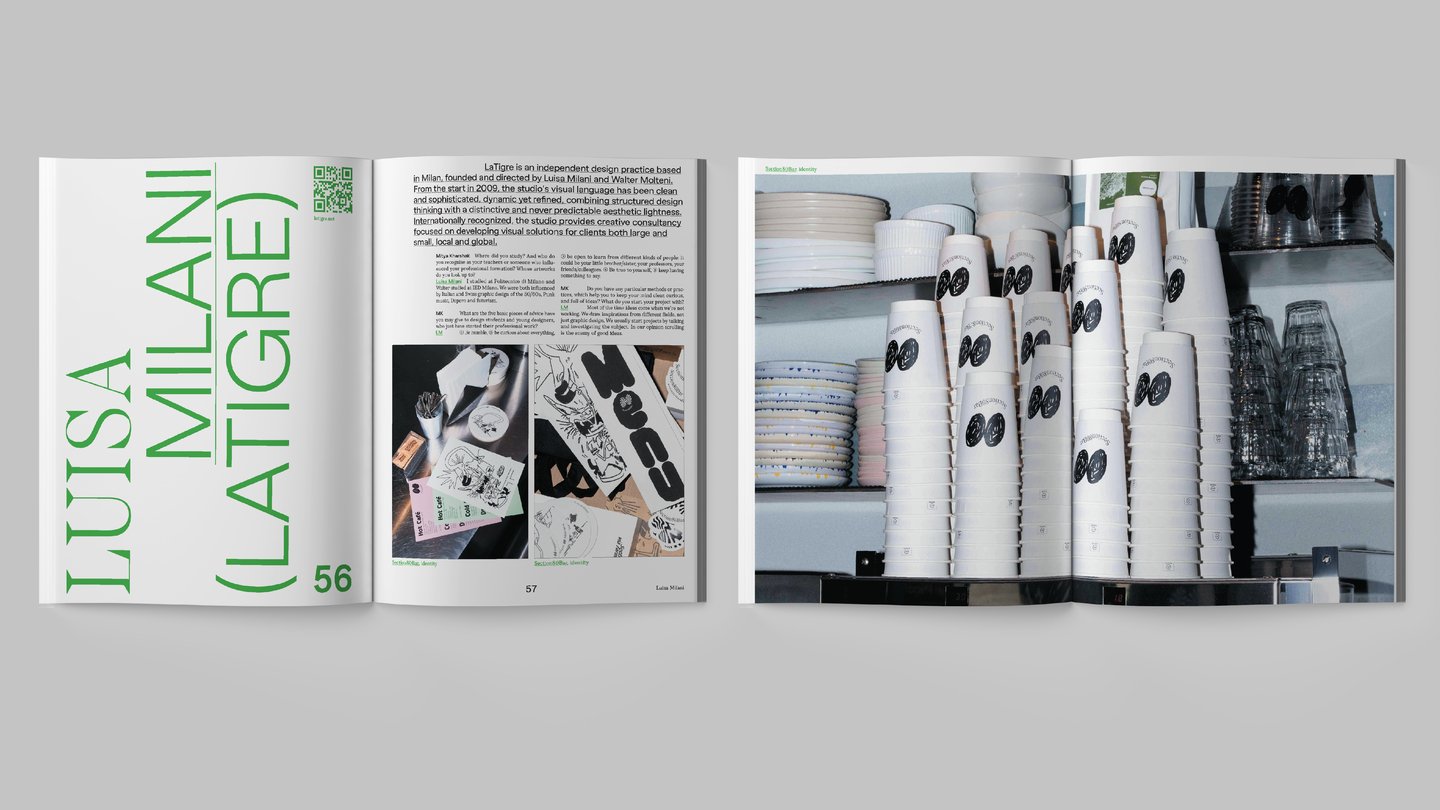
— What are your personal criteria of success?
— For me, success does not necessarily coincide with visibility or external recognition. I associate it rather with a form of coherence: when I feel that the work is right, that it does not betray the content, the process, my values and my language. It has to do with the opportunity to work without forcing, maintaining lucidity, broad vision and willingness to change. From a professional point of view, a project is successful when I feel I have built something authentic, when it is able to communicate with clarity and intensity, when the form is neither arbitrary nor decorative, but generated by the necessity of the content, the context and the intention that sustains it.
Lorella Pierdicca. Interview by Mitya Kharshak