Communication Theory in the Design Field
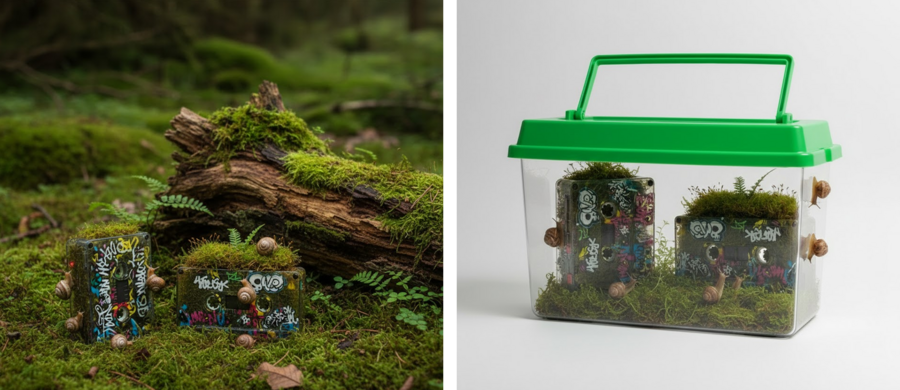
Empty cassette tapes with moss.
''[Communication is] the process through which people use messages to generate meanings within and across contexts, cultures, channels and media'' (McCornack, 2010, p. 6)
According to communication theory, graphic design is a deliberate process of visual meaning-making.
In this process, designers act as senders who encode ideas into symbols, such as color, typography, layout, and imagery. These symbols are decoded by audiences based on their cultural, emotional, and social contexts. Rather than transmitting fixed meanings, graphic design functions as an interactive system in which meaning is negotiated, not controlled. This approach aligns with core communication theory principles of process, feedback, context, and symbolic exchange.
- Through the application of semiotics, designs function as signs.
- Through cybernetic thinking, designers reduce visual noise to improve clarity.
- And through the lens of sociocultural theory, visuals reproduce and shape shared values.
Briefly About the Brand

Eco‑friendly pots for flowers and plants.
FORM: REVIVE is an eco-friendly brand of plant and home accessories made from recycled and restored materials. We find discarded objects, restore their functionality, and give them a new purpose through our signature design (color and logo). FORM: REVIVE operates at the intersection of sustainable design and social responsibility: we rethink waste as a resource and transform the traces of consumer culture into aesthetic, durable items.
Core Messages
•Rational message: We do not create new things. We bring existing ones back to life. •Emotional message: Every object deserves a second life, and the world deserves a brand that truly understands this. •Philosophical level: Design should serve responsibility, not fashion.
Core Values
• Environmental responsibility Using only reclaimed and secondary materials. Refusing the extraction of new resources. Ensuring transparent supply chains and minimizing the carbon footprint. • Mindful consumption Recognizing that every object has a story and a right to a second life. Emphasizing the real impact of individual choices. • Anti-disposability Prioritizing durability, repairability, and long-term use. Believing that objects should outlive their owners, not be thrown away after a short cycle.Brand Personality
• Intellectual — informed, reflective, and critically engaged with ecological issues. • Authentic — honest, transparent, and unafraid to show the traces of the past in every object. • Determined — firm in its stance against disposable culture and superficial consumption. • Inspiring — offering hopeful alternatives and motivating people to choose differently. • Contemporary — rooted in today’s cultural context, aware of sustainability discourse, but setting its own direction instead of following trends. • Approachable — human, warm, and accessible, avoiding elitism or a preachy tone.
The brand’s target audience consists of:
Primary Audience
FORM: REVIVE’s core audience consists of conscious urban consumers with above‑average income who are willing to pay for values and authentic design, not just for objects. They live with a minimalist «quality over quantity» mindset, and are deeply interested in sustainable design, plants, visual culture, and social responsibility. These people believe their personal choices can change the system, so every purchase is a statement.Secondary Segments
Eco‑activists (≈20%) — buy as a political act, with high potential to become brand advocates. Design enthusiasts (≈35%) — primarily driven by aesthetics and innovation; sustainability is a strong added value, but not the initial trigger. Plant parents (≈30%) — seriously invested in plant care, seeking functional yet visually distinctive planters. Conscious gifters (≈15%) — look for meaningful, value‑driven gifts and are ready to pay more for thoughtful packaging and presentation.FORM: REVIVE’s audience.
Brand voice
FORM: REVIVE’s voice is intellectually honest, inspiring, and genuinely accessible, speaking with clarity and warmth rather than jargon or hype. It communicates with calm, thoughtful confidence in a conversational, not lecturing, tone that is human, lightly humorous, and empathetic, inviting people into more sustainable choices without making them feel judged.
FORM: REVIVE builds its content ecosystem around four pillars: story, education, inspiration, and activism. Together, they create a narrative that feels personal, useful, and socially engaged rather than purely promotional.
Platforms and formats
Instagram* Daily workshop stories, three weekly posts mixing product stories, education, and inspiration, Reels with before/after transformations and quick tips, and Guides that collect evergreen how‑tos and themed selections. TikTok Short transformation clips turning ''trash'' into design objects, sustainability challenges, and playful eco‑living skits, plus direct replies to comments to keep the conversation open and human. YouTube Documentary‑style mini films like ''the life of a planter'', deep‑dive plant‑care tutorials, interviews with designers and activists, and vlog‑style trips for discarded materials that build trust and reveal the thinking behind the brand. Website / blog Long‑form pieces on sustainable design, a materials catalog with origin stories, in‑depth guides, and press resources that together form a reference library grounding all shorter social content in a richer editorial context. *the activities of the Meta organization are prohibited in the Russian FederationDeep‑dive plant‑care tutorials on the FORM: REVIVE YouTube channel.
The market and competitors
FORM: REVIVE operates at the intersection of the rapidly growing decorative planter category and the broader shift toward mindful e‑waste management and upcycling. The market for decorative planters and flower pots continues to expand steadily, driven by demand for aesthetically refined, sustainable solutions for homes and workspaces. In parallel, movements like ''urban mining'' and the creative reuse of electronics are gaining momentum, positioning the recycling and artistic upcycling of old gadgets as a promising direction that both reduces e‑waste volumes and provides designers with a new, meaningful material palette.
According to Yandex Wordstat, searches for the term ''upcycling'' in peak periods increased by roughly 14.8 times between 2018 and 2025, while searches for the term «planter» grew by about 3.2 times over the same period. These figures are our own calculations based on the raw Wordstat data[3].
Brand Presentation for a General Audience
FORM: REVIVE is a design-driven brand transforming discarded electronics and broken vintage objects into homes for plants. Each piece begins as a relic of the past—old cameras, radios, consoles, DVDs, toys—then is reimagined and turned into a functional item once again.
We believe one of the biggest problems of modern life is overconsumption. Spaces are filled with objects that mean nothing, are replaced too quickly, and disconnect us from nature and from ourselves.
FORM: REVIVE offers an alternative. By working with broken, and restored materials and living plants, we help people slow down, make their space truly theirs, and bring life back into everyday environments. A plant in a restored object creates a connection—it’s a relationship. It grows, changes, and requires care.
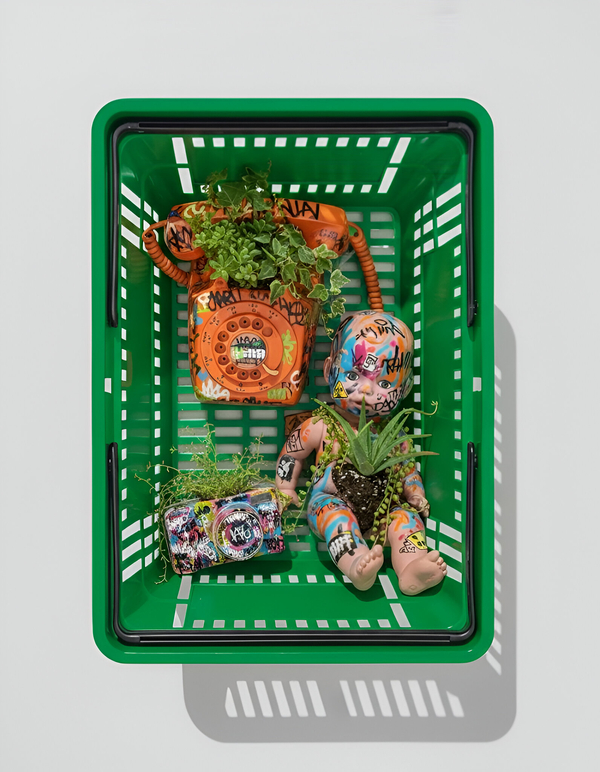
Stylized baby doll planter.
Our Products
FORM: REVIVE makes one-of-a-kind products for plants and living spaces out of thrifted, salvaged, and rescued materials. Every piece begins its life found, neglected, or discarded, after which our designers and artists meticulously restore and customize them by hand. We focus on finding broken items, rather than thrifting things that can still serve a purpose. We do not deal with the same manufacturer stock. Each object is chosen based on its structure, durability, and ability to reanimate. Moreover, each design is completed by hand with spray paint and detailing. This means that no two products are precisely the same. Variations in texture, color depth, shape, and surface blemishes are not defects; they are part of what distinguishes each object.Products available from FORM: REVIVE.
Our products are listed on our website. We offer a wide variety of plants and plant accessories, which include:
• Plant pots and planters • Decorative vases • Indoor and outdoor cachepots • Balcony and window planters • Containers for herbs and microgreens • Modular and vertical planting systems • Saucers, trays, and plant accessories • Plant stands, supports, and care tools • Curated plant kits and gift sets
Website product listings.
Brand Presentation for a Professional Audience
FORM: REVIVE’s core connection points are digital, physical, and through our products themselves.
Digital Communication Points
Digitally, the brand exists as a slow, narrative-driven presence. The website serves not just as a shop, but also as a platform for explanation and openness, allowing visitors to learn how products are found, restored, and redesigned. Social media platforms broaden this presence by displaying process rather than polish: scavenging, cleaning, spray painting, planting, and the quiet effort behind each piece. We do not utilize the digital environment to promote urgency or constant demand, but rather to sustain an ongoing interaction with the audience while normalizing slowness, recycling, and care.