Time in screen art is found in three components: (a) the timing of the film, (b) the time of history that heroes live, © how the viewer feels the duration of the viewing. These three aspects are almost never the same. And even if the director deliberately emphasizes that diet time (b) and timing (a) coincides, such as in the film «Cleo 5 to 7» by Agnes Vard, or in the video work by Christian Marklei «Chasa», the phenomenal perception of time by the spectator will not coincide with the reading of the chronometer.
By the way, that’s what built the aesthetic effect of the Clock project that the chorus produced in 2010 and is considered to be one of the best works of the video art.
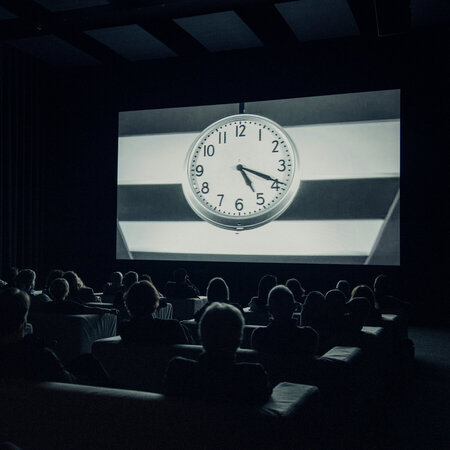
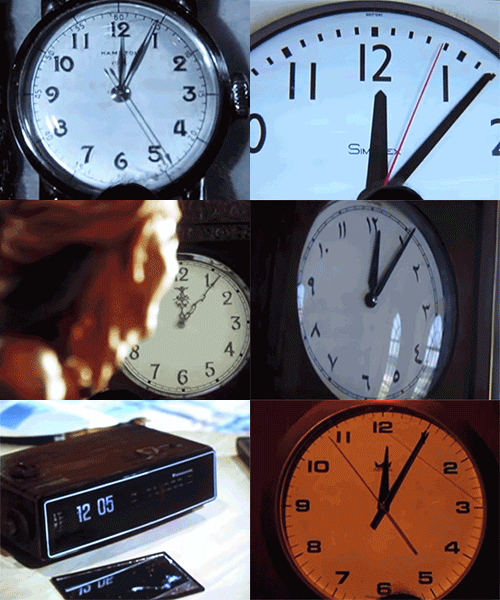
This project by Christian Markley is a unique 24-hour video installation, a collage of thousands of film and television spots where clocks appear or time is mentioned in one way or another, and these fragments are arranged in such a way that we have the feeling that clocks are going. The production is synchronized with real time, that is, the time on the screen always corresponds to the current time of the viewer, which makes it quite functional hours. Every second we know exactly what time it is, and we know how long it’s been since we started, but at the same time… we’re losing our sense of time. «Cinema Magic» in action. Photo on the left: type of installation in a gallery that worked 24 hours during the Markley exhibition.
The language of the film is based on a setup, the main task of which is to tell the story as best as possible. What does that require? So that the narrative can be made clear and logical, that the heroes can be active in the frame, and the camera can focus our attention on everything that’s important to the story. The time of inaction or, as they call it, «dead» time is cut out in the editing, only the images that move history forward remain, and their rhythm gives them a sense of the pace of narrative (a dynamic fighter or a measured course of detective history, for example). It is important to maintain the interest of the audience so that its attention can easily shift from one bright episode to another. Camera motion and installation make the screen image live, exciting, hypnotic.
But what happens if the director or video artist sets the opposite challenge? What if you shift the accent from a narrative to something else? What’s that? Maybe looking at it. When the story on the screen isn’t the main one, it’s the screen image itself. Then the viewer can see the beauty of the frame, the fine play of the actor, or the interesting sound effects. In that case, the film becomes a work of fine art. But that’s not all. What else is possible?
«Less means more.» The force of the artistic image can be increased if you cut off the extra. If a screen image leaves a story, it is possible to speak to an audience at a metaphor level. If you remove all the plot twists and leave only a few images where nothing seems to happen… in which case the diet time coincides with the phenomenal, i.e. the duration of events in the film world is synchronized with our experience of watching time. This strategy is chosen by slow film writers and many video artists who want the viewer to experience less than usual. To enable us not to dive into the world created by the author, but to see in the screen the reflection of our inner world, to look for ourselves.
Film from the film of Andrei Tarkovsky «Stalker» (1979)
Paul Schroeder, in his study «Transcendent style in cinema: Ozu, Bresson, Dreier» (1972), analyses a cinematic style that seeks to express a transcendent style — something that goes beyond normal human experience. This style, Schroeder believes, avoids traditional interpretations of reality, such as realism, naturalism or psychology, and instead focuses on creating a sense of the mystery of being. Transcendental style uses minimalistic tools to bring the viewer to experience something higher, be it God, Absolute or some other form of spiritual experience.
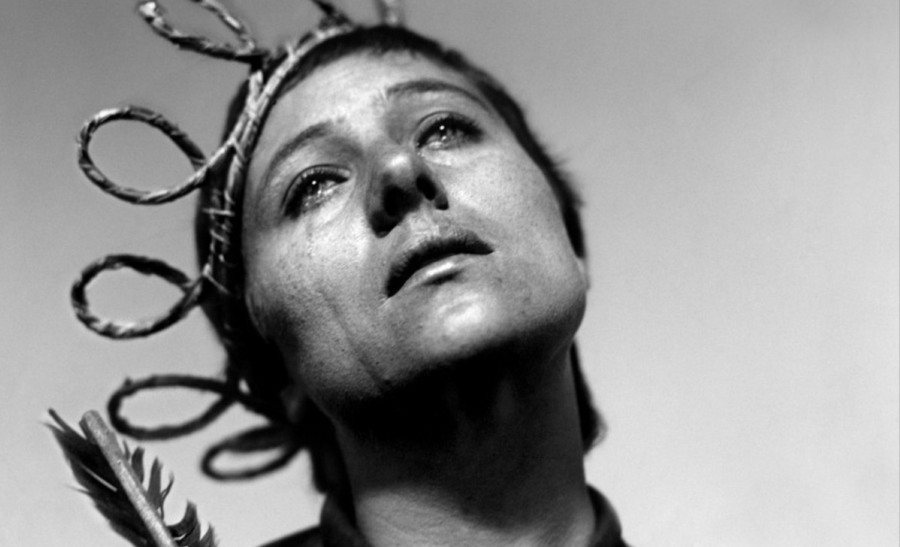
Film from the film «The Passion of Jeanne d’Arc» by Dreier (1928)
Schroeder begins with a philosophical rationale for his approach, based on the writings of André Basel and the concepts of Eastern (Zen-Buddhism) and Western (Christian existentialism) thought. It shows that the transcendent style in a movie is not based on the image of miracles or mystical events, but on a system of formal techniques that make the viewer feel different, something that goes beyond everyday. «Lower means more»: fewer events, less speed, fewer frames allow us to say more about reality outside and inside of us. When the rhythm of change slows down, when voices quiet, we get to see something at first sight that’s not visible, to look at the details, to hear whispers, to feel something that’s barely visible. It requires attention, it takes time, it’s not so much entertainment, it’s a subtle game of feelings and minds. Slow film and no-famous video art can do that.
Film from the film «Tokyo Tale» by Ozu (1953)
Such works may seem boring, more than that, they want to be. Because boredom is becoming an increasingly rare experience in our burgeoning age of change. There’s so much entertainment around here that we’ve almost learned how to miss each other, and we’ve never thought about looking at the train window or looking at the cracks on the asphalt while we’re walking. When was the last time you just looked at the wall without seeing the currents of time? We’re caught in a stormy stream, it’s carrying us faster, every minute filled with something. Some have this desire to live their lives as effectively as possible, while others want to be distracted from the reality in which they exist. But in one way or another, entertainment and distractions leave nothing behind. So maybe we should start at this point. Start with nothing?
Bryce Nauman video production fragment (1968)
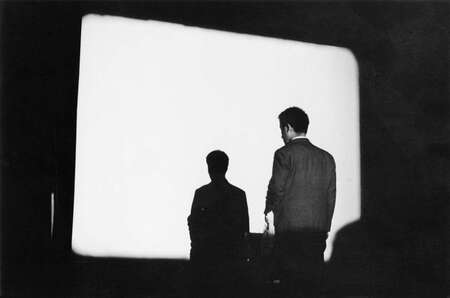
This is where Nam June Pike’s Zen video series begins: he decided not just to keep the plot component of the screen to a minimum, but to eliminate it altogether! He charged the film projector with a crumb of lit film. And the audience saw the show coming, waiting for the image to appear, and it wasn’t there and it wasn’t there. It wasn’t. Not at all. Pike turned the screen into a space for the projection of the viewer’s expectations, thoughts, and feelings, not of a moving image. Made him a mirror, looking into which we can finally see ourselves from the outside and learn something new. Photo on the left: type of «Zen for film» installation (1964)
For more information on how a boring screen image works with our consciousness and how slow the pace of the narrative helps to reveal the new dimensions of visual experience, you can learn from the following articles and lectures:
Longrides on temporality and boredom in video art