Curator
— Typification: from dishes to automobiles — Visual anthropomorphism: eyes and legs — Animation mechanics: balls and threads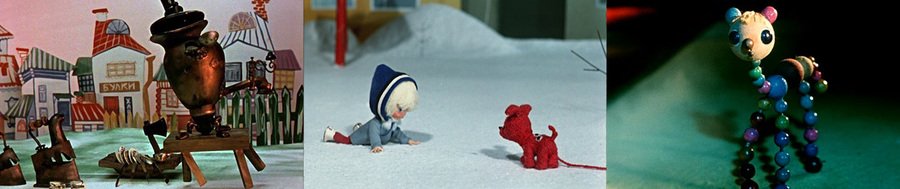
Concept
In everyday life, every object people use in their daily routine has a specific purpose and function: dishes are created for preparing and consuming food, clothing is for protection and comfort, and toys are considered an indispensable part of children’s leisure time. Typically, items are perceived first and foremost by their practical utility, and their appearance and properties are defined by the tasks for which they were designed. However, with the development and proliferation of various art forms, objects are increasingly transcending their original intended use, acquiring new artistic meanings and contexts, and becoming independent visual expressions.
Animation offers broad possibilities for this kind of depiction. Through movement, shape transformation, and various artistic techniques, animators can create new images while preserving the recognizable features of an object and fantasizing about new ones. Some of these acquire human-like traits and their own mannerisms, while others retain their familiar appearance, with their individuality revealed through interactions with their surroundings. In Soviet animation, such living object-characters appear in a wide variety of films—some were cherished from childhood, while others are recognized in adulthood.
The interest lies not only in the mere fact of animating an inanimate object, but also in how it integrates into the narrative and what role it plays within it.
The very image of an animated object, however, emerged long before it began to be utilized in domestic animation. It can be found in folklore, folk tales, musical works, and literature. This technique became one way to create fantastic narratives, allowing storytelling to engage not only with themes of space or imaginary universes but also to ground the narrative in the familiar world.
In some works, the appearance of talking end tables or plush rabbits becomes the starting point for the entire story, around which the main events are subsequently constructed. In others, they become part of an already existing narrative, complementing it and helping to unfold the inherent plot conflict. It is particularly fascinating to observe how the familiar relationship between a person and their belongings changes in this process. Objects that in real life are subordinate to the owner can gain autonomy and act according to their own interests on screen.
Soviet animation is a subject of particular interest for research due to its close connection with the audience; for several generations, films from this period became an integral part of childhood. Behind the familiar plots and characters lies a vast layer of fascinating artistic choices, which painted a magical world, filled with unusual imagery, on screen during childhood.
Typification: From dishware to automobiles.
Objects from all walks of life come to life on screen: samovars and brushes become cartoon heroes, as do stuffed bears and tin soldiers, even trains and automobiles. Moreover, the choice of object significantly influences its future character and role in the narrative.
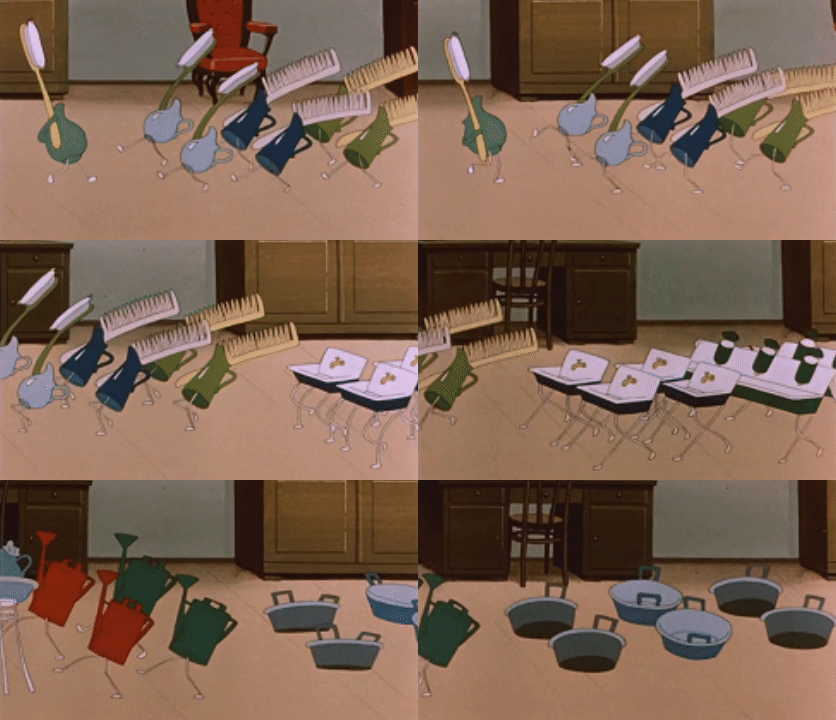
For example, in the well-known «Moidyodyr, ” personal hygiene items come to life and begin to pursue the untidy boy, refusing to tolerate his dirt. Ultimately, this peculiar chase leads the protagonist to encounter a giant, animated washbasin.
«Moydodyr, ” directed by Ivan Ivanov-Vano, 1954
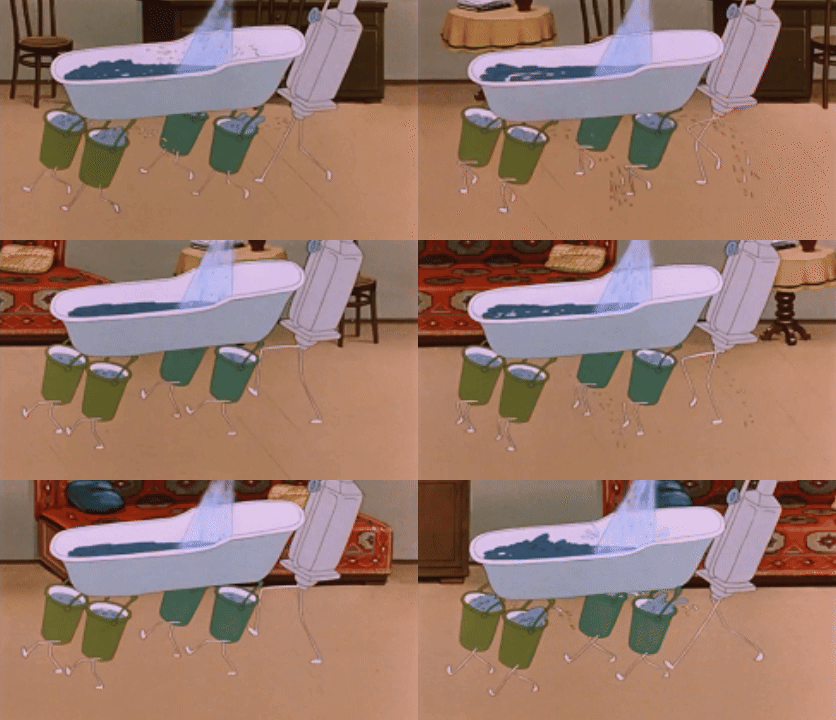
«My Goddaughter,» directed by Ivan Ivanov-Vano, 1954
Myododyr occupies a central place among the other objects not by accident; the washbasin is directly connected to the theme of cleanliness and hygiene—our every morning begins with it, and every evening ends with it. Furthermore, against the backdrop of the other characters, its figure appears significantly more massive, visually emphasizing its dominant position and lending the character an air of authority.
«My Godoydor,» directed by Ivan Ivanov-Vano, 1954
In «Fedorin Hill, ” the tableware—plates, spoons, cups, and other kitchen utensils—gains a degree of autonomy. Tired of the mess, they revolt and leave the mistress.
Here, one can also trace the image of a leader, played by the samovar. It is he who initiates the conflict and draws the other objects along with him. This can be explained by the fact that in the daily life of that era, it was considered the central fixture of family tea ceremonies. Its significance, much like in „Moydodyr, ” emphasizes its scale: it is much larger than the plates and cups, and its voice is a tone lower and rougher than the others.
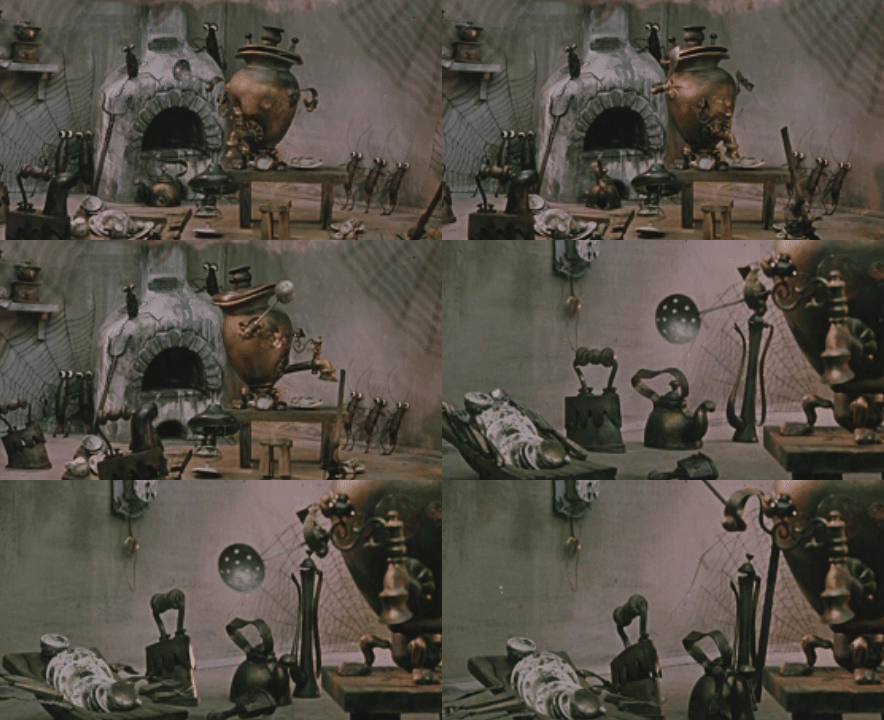
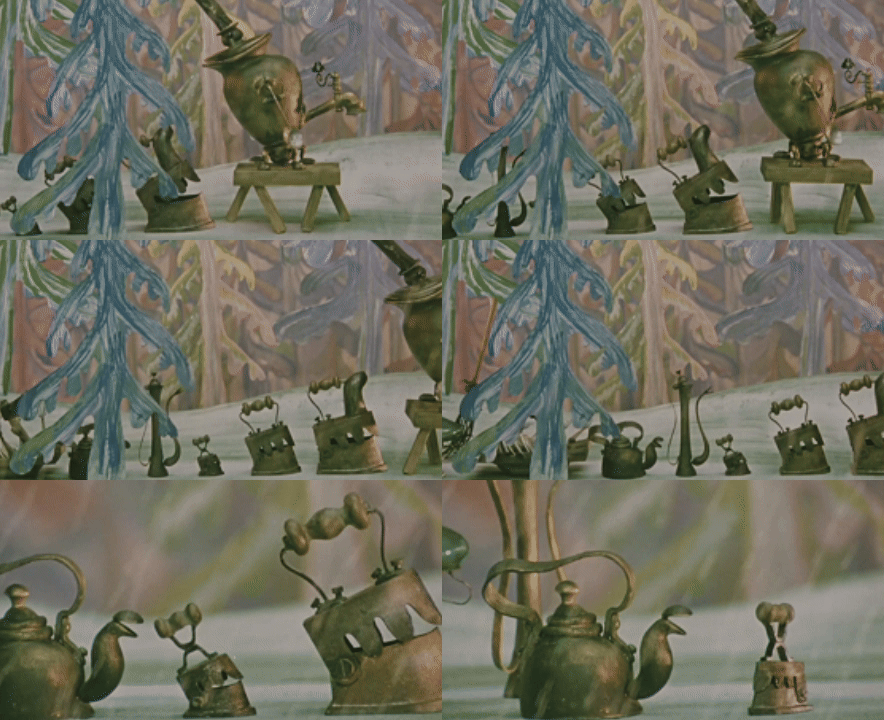
«Fedorino’s Trouble, ” directed by Natalia Chervinskaya, 1974
«Fedorino’s Sorrow,» directed by Natalia Chervinskaya, 1974
Speaking of toys, in «Mashenka’s Concert,» every resident of the children’s room comes to life. Together, they put on a concert for a new doll who needs cheering up.Unlike the objects from «Moydodyr» and «Fedorin Gorya,» the toys do not have to go beyond their original function, as they were already created for play and amusement.
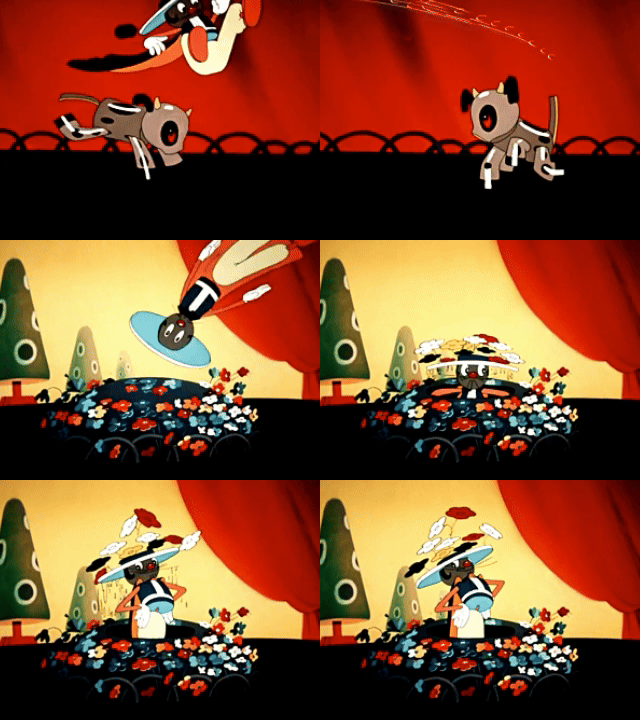
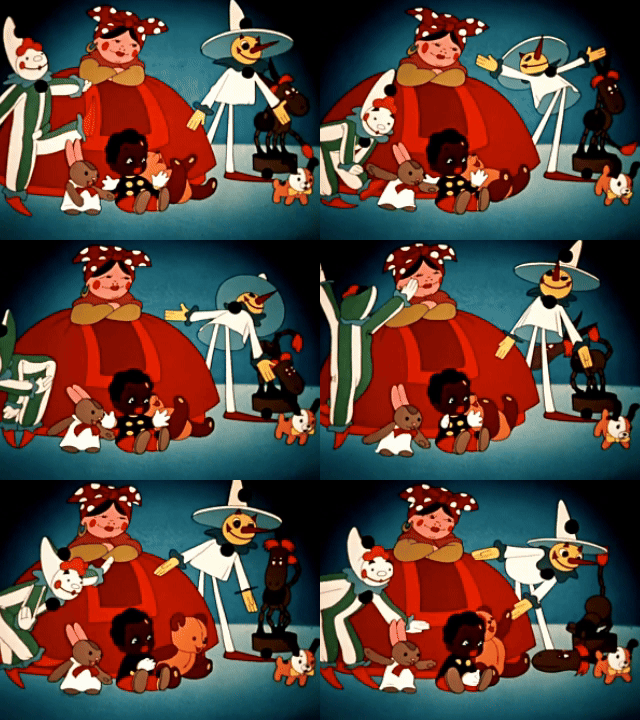
«Mashenka’s Concert,» directed by Mstislav Pashchenko, 1948
Matryoshkas, monkeys, elephants, and other characters already have their distinct looks, but their actions usually depend entirely on who is playing with them; in this cartoon, that dependency disappears. The toys invent and perform routines in the concert themselves.Here, the technique of animation allows us to unlock a world of children’s fantasies where familiar objects gain their own character and individuality, no longer needing the child’s participation.
«Mashenka’s Concert, ” directed by Mstislav Pashchenko, 1948
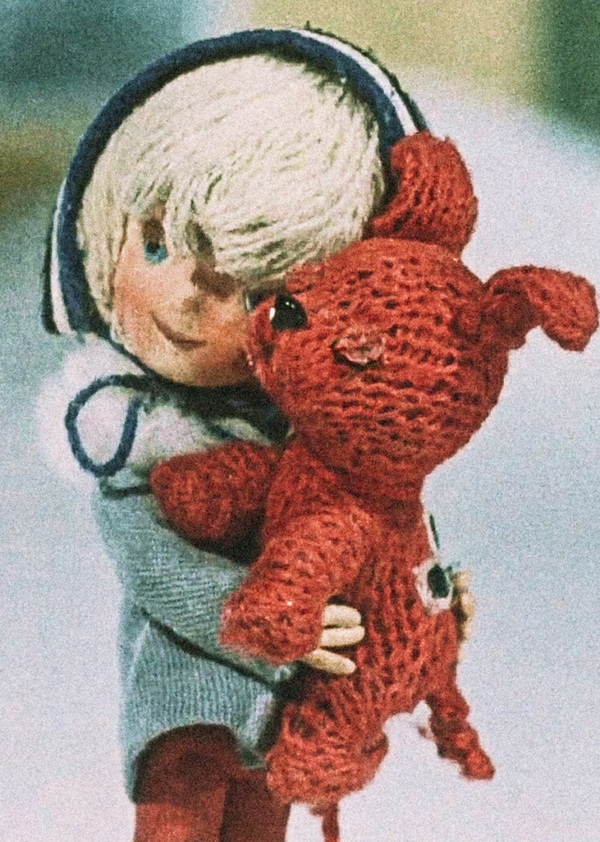
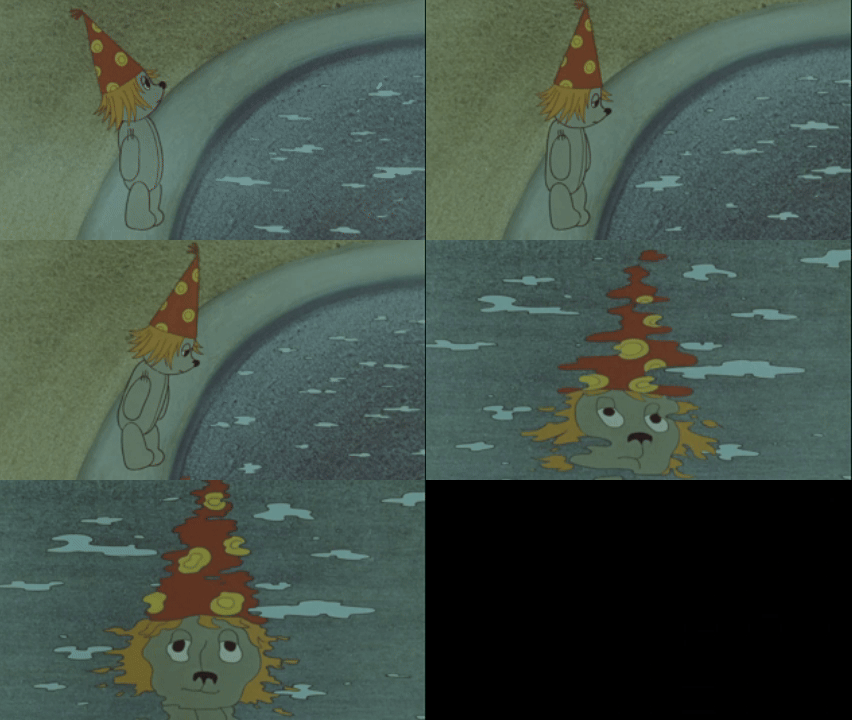
In «The Old Toy,» the animation of a plush bear allows us to see his emotions after his owner loses interest in him, preferring a new, bright clown. The bear notices that he is losing out to the new toy in appearance and tries to change his look, but the girl does not recognize him and leaves him in the rain.
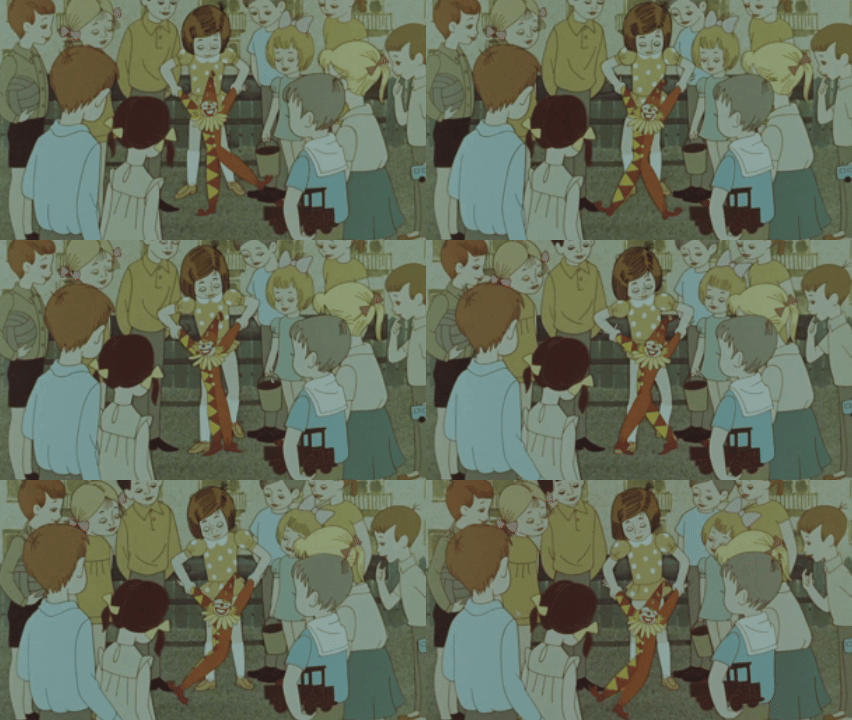
«Old Toy,» directed by Vladimir Samsonov, 1971
«Old Toy,» directed by Vladimir Samsonov, 1971
Here, liveliness serves as a metaphor: behind a familiar children’s toy might hide a character with its own feelings and desires. Through the bear cub’s story, the authors contrast the superficial appeal of something new with the emotional bond to something old, which proves far more important.
Even much larger objects can come to life. For example, in «The Train from Romashkovo, ” the main character constantly breaks the schedule. It stops to admire the surrounding world: to listen to the nightingale’s song, to see the first lilies of the valley, and to watch the sunrise.
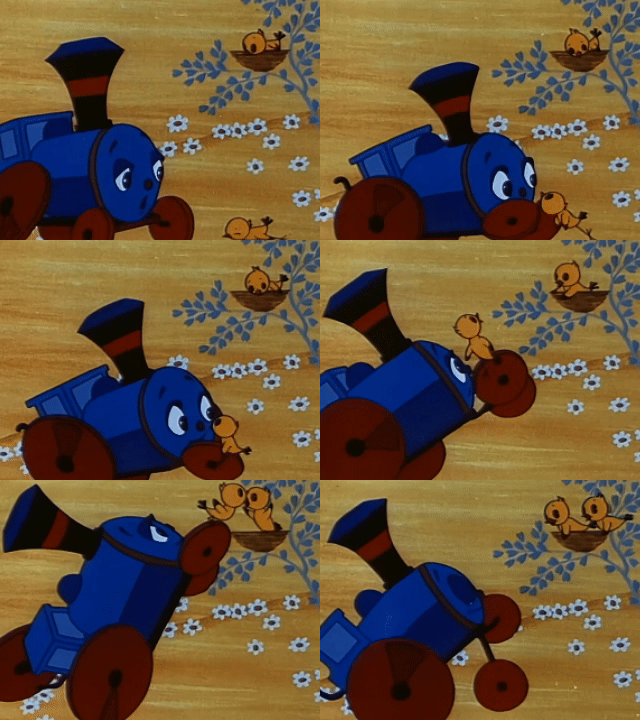
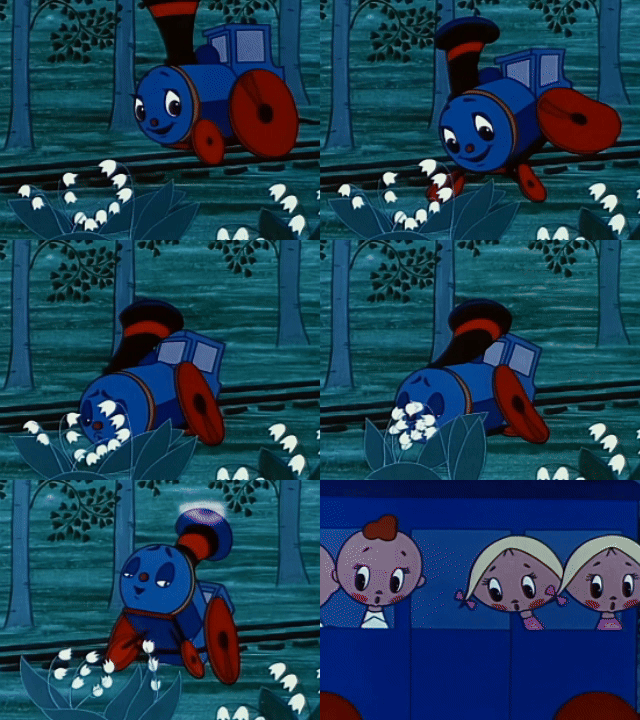
«The Little Train from Romashkovo,» directed by Vladimir Degtyarev, 1967