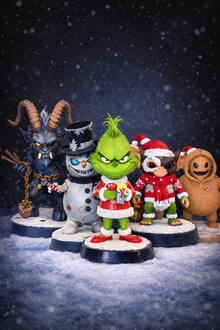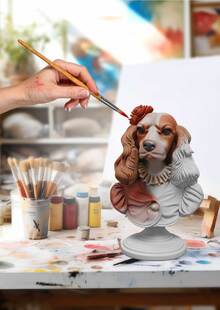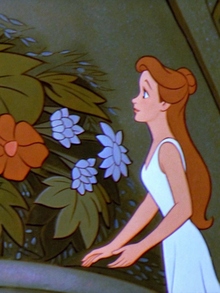
This project is based on the game Stardew Valley, developed by ConcernedApe (Eric Barone), and is not intended for commercial use. The project was created strictly for educational purposes.
Concept
Stardew Valley—a pixelated game many know, where we become farmers tired of office life. We try to settle into the cozy town of Pelican Town, earn more money, and become friends with every resident while uncovering countless secrets. In this game, everything is wonderful: the music, the gameplay mechanics, the atmosphere, the lore, and the style, of course.
I chose this particular game as the foundation for my project because I love it so much and want to experiment with models—to trace how AI tools transform pixelated 2D characters into three-dimensional collectible figures that can be printed and brought to life.
It would be wonderful to have a collection of figures featuring my favorite and most cherished characters, adorning my desk while I play, thus creating an even greater sense of immersion in the world of Stardew Valley.
Sketch Development
Initially, I focused on finding a consistent form for the figures, a unified style, and some recognizable elements. I wanted something cute and pleasing to the touch, as if molded from modeling clay.
I selected five of my favorite characters—chosen for their distinct designs—to observe how the AI would transform their various physical features and clothing.
Using the Nana Banana Pro generation tool, I developed numerous figure variants until I arrived at a cohesive chibi style featuring adorable button eyes, soft body shapes, and a gentle, matte material texture.

original character sprites and generated final sketches
After finalizing the design for each character, I asked Nana Banana Pro to create a «character turnaround sheet» with four respective views. Some of the samples were not of very high quality, so to fix the situation, I used the Upscayl image enhancement tool.


Character turnarounds
3D Model Generation
After obtaining sketches of each character from the necessary angles, I began creating the 3D models. I opted for Tencent Hunyuan 3D, where I uploaded the angle images and generated the models. I did not manually edit the resulting figures, leaving them as they were to fully evaluate the AI’s work.
Next, I checked every STL file in Anycubic Photon Workshop for any errors and for overall printability.
Finally, I created a camera rotation animation around each character in Blender to evaluate all the required perspectives.
Blender render examples
The model, Alexa, turned out to be the most successful, even though I generated all the other models several times, trying different settings.
Alex’s render in Blender
Leia’s 360° render in Blender
Alex’s 360° render in Blender
Sam’s 360° render in Blender
360° render of Haley in Blender
Shane’s 360° render in Blender
Promotional and advertising materials
Sample display with figurines
Next came the most exciting part—developing promotional materials. I returned to the beloved Nana Banana Pro to load in some references for creating posters and packaging.
I was extremely pleased with the final result.
First concept for the project cover


Final packaging iterations
To start, I generated simple images featuring all the characters to allow for an evaluation of the complete collection. I fed the character models into the neural network and incorporated references from the game itself to ensure the AI adhered to the established style.
Next, I proceeded with developing the box art, followed by the individual packaging and promotional posters.


The back of the collector’s boxes
Promotional material
Promotional Poster
Large promotional poster
Production Brief