Communication theory in the field of design
Design is not just the creation of a visual form, but a purposeful process of conveying meaning, in which each element plays a role in communication between sender and recipient. According to the theory of communication in design, this process is structured similar to the Shannon-Weaver model: information moves from a source (idea, task, brief) through an encoder (designer), who converts it into a visual signal, to a decoder (audience), which interprets this signal in a specific context. At each stage, there may be interference — cultural differences, subjective experience, visual noise, or lack of understanding that distorts the initial message.
Unlike pure art, where expressing a personal vision can be an end in itself, design is a problem solving communicative activity. His goal is not just to please, but to be understood, to elicit the right reaction, direct behavior, and convey information. This makes communication theory not just useful, but a key tool in the designer’s arsenal. It helps to consciously build meaning, manage it, and predict perception.
Communication in design is not an instantaneous act, but a continuous process that covers all stages: from user research and task analysis to product testing and use. At each stage, meanings are created and interpreted. Visual elements: shape, color, rhythm, scale become symbols bearing cultural, emotional, and functional meanings.
The two-way nature of communication is of particular importance: there is no point without the recipient. The designer puts a specific message into the product, based on the brief, brand goals and professional knowledge. But the user perceives it through a personal filter. That is why it is important to take into account the socio-cultural context, the level of literacy of the audience and the expectations of interaction.
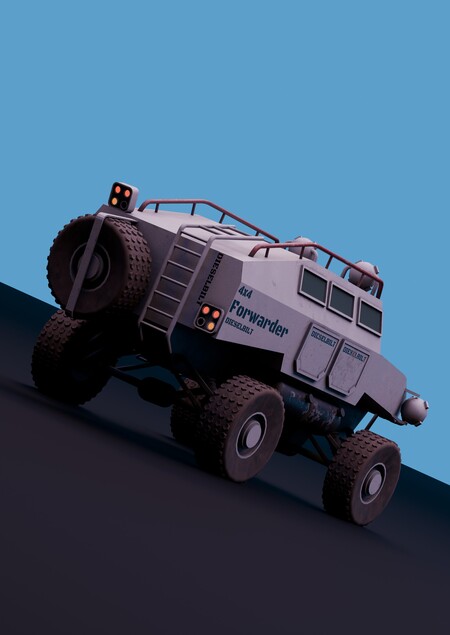
Dieselbilt is a design brand that develops high-security and cross-country vehicles. The main task of the company is to develop a culture of active tourism and provide access to places where no human has ever set foot.
The main communication role is to present the company as a symbol of safety and reliability in the wild. The artists designed the car based on the design of rally cars, which is associated with speed and reliability.
Presentation for a general audience

Dieselbilt preserves the comfort and safety of civilization in complete off-road. The simple and reliable design will not make you worry about the reliability of the machine once again.
The start colors of the cars have bright shades that convey impressions. Each user can choose a color with which to embark on an unforgettable journey.
DIESELBILT FORWARDER (Colors variations)
Dieselbilt treats its customers with care, so our engineers have prepared instructions on how to quickly fix the car in a wild environment.
DIESELBILT FORWARDER
The simplicity of assembling machines allows anyone unfamiliar with the world of motor transport to understand the design.
DIESELBILT FORWARDER
Tactical and Technical Characteristics: AWD (All-wheel drive) 120 km/h (Max speed) Body material — Aluminum 2750 kg (Weight without crew)
DIESELBILT FORWARDER
Target audience
Men over the age of 18 and young couples, families with children who are interested in a useful vacation away from civilization.
COLORS:
The designers selected bright colors based on the colors of children’s toys to emphasize the children’s desire to travel and discover new parts of the world.
When creating a Forwarder, it was important to take into account the angles of the bevel to shape a sports car that jumps over hills and climbs a hill.
A collaboration for clients who want everything to be provided
DIESELBILT FORWARDER
Dieselbilt is ready to cooperate with brands of special clothing for low temperatures or fishing equipment. The company wants the buyer to be able to buy a car and immediately be ready for a trip or a favorite hobby.
Presentation for a professional audience
Dieselbilt supports the self-expression and wishes of any future car owner, so each customer can choose any color or order a special camouflage in the loyalty program.
The girl asked to draw a place for each of the family

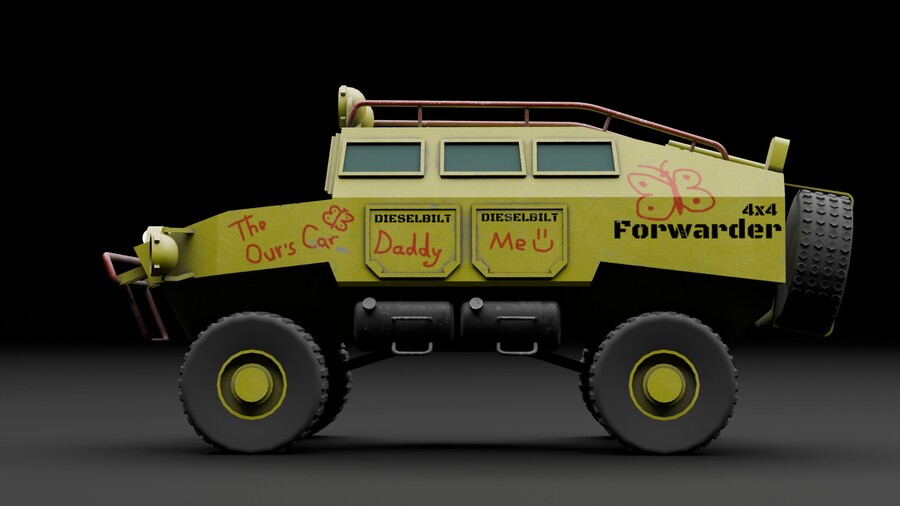
DIESELBILT FORWARDER
Coloring by customer’s order