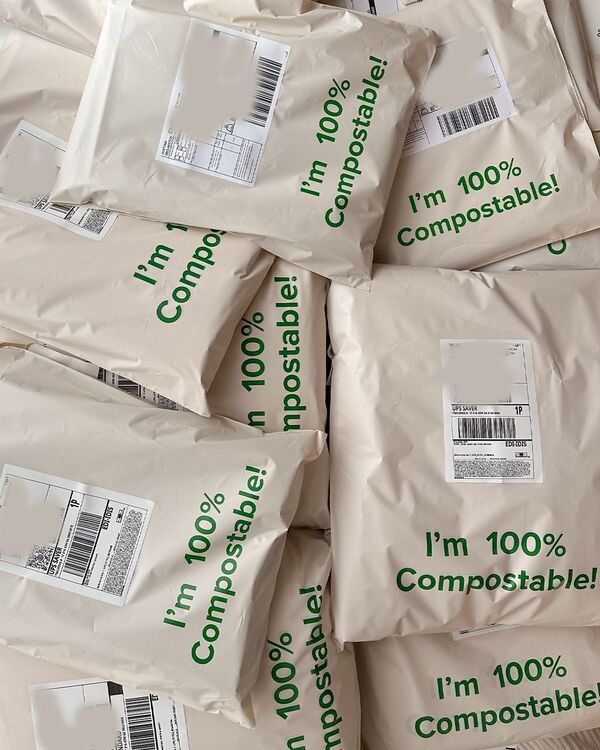
The Commercialization of Ecological Values in 21st-Century Product Design.
rubricator/
1() Concept 2() 1. Rejecting Eco-consciousness: fewer things—less impact?
Concept/
Modern consumer culture faces a contradiction: society increasingly emphasizes the need to buy less, use items longer, and be more rational with natural resources, yet the market continues to offer new products as a solution to ecological problems. Consequently, environmental responsibility has become not only a principle of production and consumption but also a distinct consumer advantage.
This contradiction is especially evident in product design. Recycled materials, natural raw ingredients, local manufacturing, repairability, and durability are transforming into characteristics through which manufacturers build product value. An eco-friendly object can be positioned as a design piece, an exclusive item, or an element of a specific lifestyle. Furthermore, its cost is often higher than that of conventional counterparts.
This raises a question: if environmental responsibility implies reducing excessive consumption, why is it becoming an argument in favor of acquiring new things?
This research topic was chosen to examine the tension between the initial idea of ecological awareness and its commercial realization in product design. Of particular interest is how environmental friendliness transitions from a practical product feature to a symbolic value tied to prestige, aesthetics, and the owner’s social status.
material selection principle/
The core material for the research will consist of industrial and collectible design objects from the 21st century, advertising imagery, interior photography, packaging, brand visual communication, and examples of alternative consumption practices.
Material selection will be based on a principle of comparison: the research will include both new goods positioned as eco-friendly and objects demonstrating an alternative approach to consumption—such as restored furniture, refurbished items, reused materials, and products designed for longevity.
Particular attention will be paid to the visual cues through which an object communicates its ecological value: natural textures, natural color palettes, visible structure of recycled materials, minimalist form, labeling, and packaging.
However, the visual image will not be automatically accepted as proof of ecological integrity. For analysis, the external characteristics of the object will be correlated with information regarding its materials, production process, lifespan, and recyclability.
The principle of rubrication/
The research will be structured around the principle of progressively revealing the conflict between ecological responsibility and commercial consumption.
The first part will focus on the initial meaning of an ecological approach: reducing excess consumption, reuse, and extending the lifespan of objects.
The second part will examine the transformation of eco-friendliness into a market advantage—how manufacturers utilize the ecological agenda to promote new products.
The third part will be dedicated to the visual language of sustainability. This section will investigate the materials, forms, colors, textures, and graphic elements that form the recognizable image of an eco-friendly product.
The fourth part will explore the relationship between sustainability and the premium segment and social status. Objects will be analyzed in terms of their cost, exclusivity, design value, and their ability to project a specific lifestyle.
The fifth part will address alternatives to new consumption: repair, refurbishment, reuse, and recycling of items. This will allow for a comparison between purchasing an eco-friendly product and the practices that genuinely reduce the need to acquire new things.
principle of selecting and analyzing textual sources/
The research foundation will be built upon scientific publications, studies in ecology, consumption economics, sociology, and design theory, as well as materials from manufacturers and design studios.
To understand the social significance of consumption, we will utilize Thorstein Veblen’s ideas on conspicuous consumption and Pierre Bourdieu’s concepts of symbolic capital and social distinction. These frameworks will allow us to examine the acquisition of eco-friendly items not merely as a practical choice, but also as a means of expressing social standing and personal values.
For the analysis of the ecological component, materials concerning the circular economy, sustainable design, product life cycle, and the concept of extending the service life of goods will be engaged. A key area of focus will be the study of research on greenwashing—the use of ecological rhetoric in marketing without sufficient evidence of genuine environmental benefits.
Sources will be selected based on credibility, thematic relevance, and applicability to product design. Particular attention will be paid to juxtaposing theoretical concepts with specific examples of products and manufacturing practices. Brand advertising materials will be treated not as objective proof of environmental soundness, but as objects for visual and critical analysis.
1. The Rejection of Eco-Friendliness: Fewer Things — Less Impact?
Contemporary ecological responsibility is largely tied to a critique of the conventional societal consumption model—one based on the continuous production and acquisition of new goods. The object is often perceived as transient: it is used until a more appealing alternative emerges, after which it ends up in a landfill.
Recycling Yard #6, Seattle, 2004 Chris Jordan, 2004, archival inkjet print, 44″ x 59″, © 2004, courtesy of the artist
An ecological approach suggests rethinking this logic. Instead of constantly buying new items, it advocates for the more rational use of existing resources—such as extending the lifespan of objects, repair, reuse, and reducing unnecessary purchases.
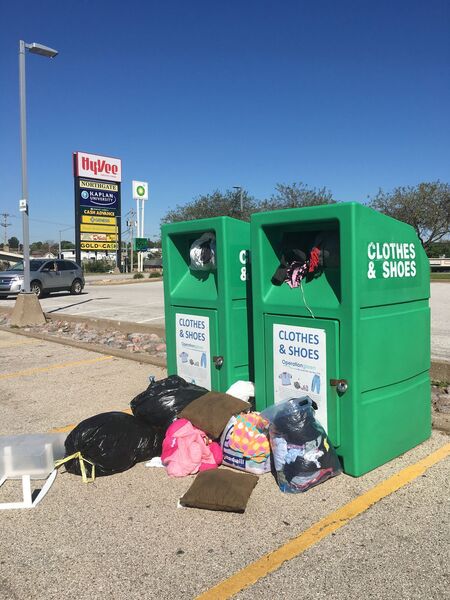
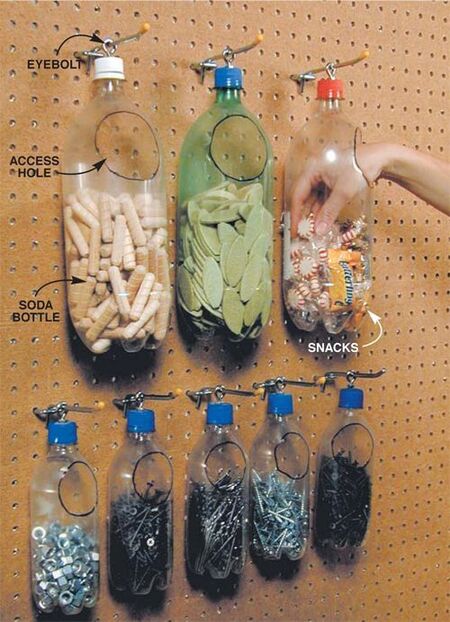
1. Source: screenshot from the video, Uncollected donations prompts Davenport Hy-Vee to move clothes recycling bins, YouTube, WQAD News 8, 2023. 2. Source: Popular Woodworking.
originally, the concept of environmental responsibility is not tied to purchasing a product marked as «eco-friendly, ” but to reevaluating one’s relationship with material consumption.
2. How Refusal Becomes a Commodity
The issue is that the market isn’t equipped to offer a rejection of consumption. It can, however, offer ways to consume in new ways—to purchase items with an ecological history.
As interest in environmental issues grows, manufacturers begin adapting their products to evolving consumer expectations. Sustainability is gradually becoming a feature that can be incorporated into product descriptions, advertising, packaging, and positioning. Instead of asking the buyer to forgo purchasing a new item, a manufacturer can offer an alternative: buying an object made from recycled materials, produced using specific technologies, or designed for longevity.
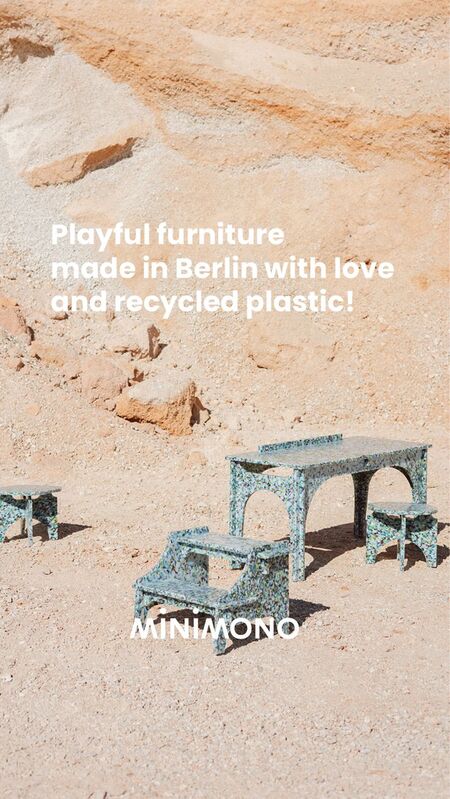
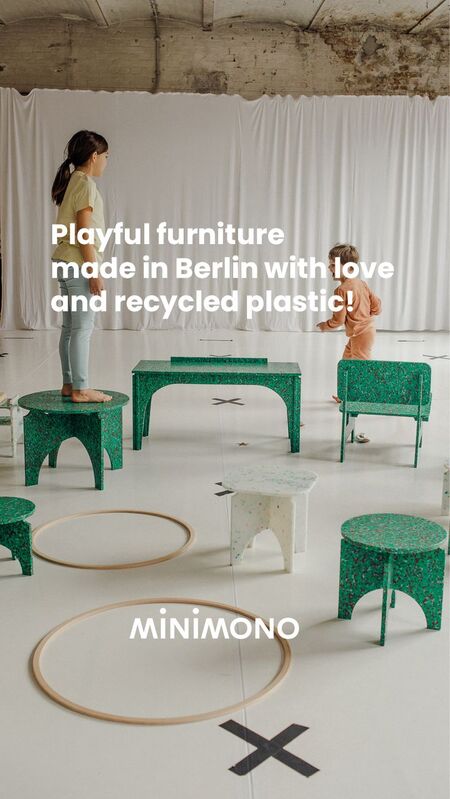

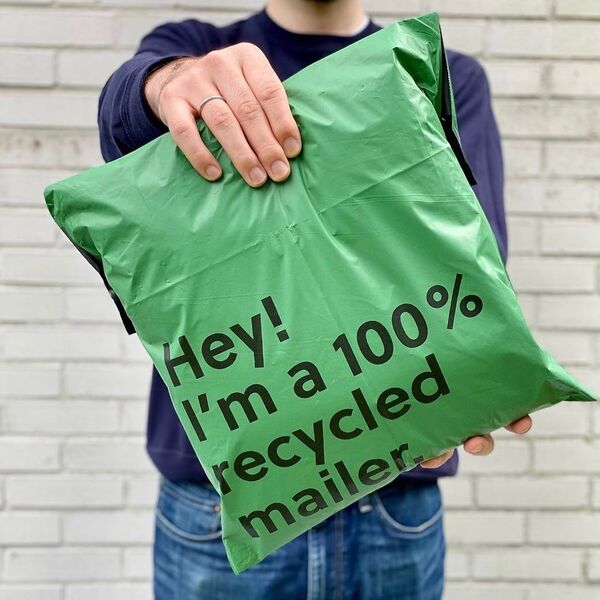
Thus, the ecological concept is integrated into the existing consumption model. The consumer still acquires a new item, but their purchase is now accompanied by an added meaning—participation in solving an environmental issue.
A telling example is the 111 Navy Chair by the American company Emeco. This model, created in 2010, is manufactured from recycled plastic bottles. The modern version of a single chair uses no fewer than 170 bottles while retaining its recognizable design and positioning itself as durable furniture in opposition to disposable consumption.In this instance, the ecological concept does not negate the production of a new item; rather, it becomes the foundation for its creation and promotion. Waste transforms into material, material into a designed object, and a designed object into a commodity.This does not imply that such a product lacks environmental benefit. On the contrary, using secondary raw materials can be a genuine advantage. However, this example prompts the question: where does an ecological initiative end and the transformation of environmental consciousness into consumer value begin?
3. The Visual Language of Sustainability: What Does Conscious Consumption Look Like?
Sustainability is not just a characteristic of the material or production process; it is also a distinct visual image that helps the buyer recognize the product as responsible.
Sustainability in product design now carries not only functional but also visual significance. A buyer cannot always independently determine the origin of the material, the production conditions, or the actual impact of the object on the environment. Therefore, the way a product visually communicates with the buyer is becoming crucially important. Modern design has developed a recognizable set of visual techniques associated with ecological responsibility—for example, prioritizing natural hues, using raw, natural materials, incorporating recycled plastic with visible elements, employing paper packaging, and maintaining a minimalist aesthetic.
Such design choices convey a sense of the object’s proximity to nature, the simplicity of its origin, and the rationality of its production. Even if the buyer lacks detailed information about the product’s life cycle, the visual image can instill a feeling of ecological integrity.
Such decisions shape the perception of a product’s closeness to nature, the simplicity of its origins, and the rationality of its production. Even if a buyer lacks detailed information about the product’s lifecycle, the visual image can evoke a sense of ecological integrity.
4. Ecology as Luxury: When Responsibility Becomes Status