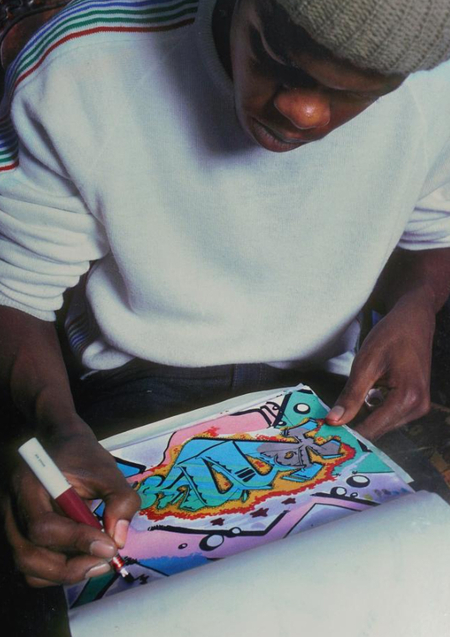
Categories
- Concept
- The City as Canvas
- Culture in Action
- The Face of Hip-Hop Culture
- Conclusion
Concept
Hip-hop is not only a musical genre but also a visual culture that developed in the urban environment of New York City in the latter half of the 20th century. Graffiti, street fashion, dance, and the methods of self-expression of community members have become integral to its recognizable aesthetic.
Of particular interest is how photography and the photobook helped preserve and present this culture. Photographs captured fleeting moments of street life, while the book form unified these moments into a visual narrative. This study examines not only the content of the images but also how the composition of the spreads, the sequence of the visuals, and the graphic design influence the perception of hip-hop culture.
The research analyzes three American photobooks: Marty Cooper and Henry Chalfant’s Subway Art (1984), Marty Cooper’s Hip Hop Files: Photographs 1979–1984 (2004), and Ernie Paniccioli’s Who Shot Ya? : Three Decades of Hip-Hop Photography (2002).
These publications were selected for their diverse approaches to depicting hip-hop culture. Subway Art focuses on graffiti and its interaction with the urban environment; Hip Hop Files showcases the daily life and collective practices of the community; and *Who Shot Ya? * explores the culture’s history through the images of its participants, their style, performances, and individuality.
The hypothesis is that photobooks do not simply document hip-hop culture; they actively shape its visual identity. The selection of photographs, the author’s perspective, and the book’s composition determine which aspects of the culture become most prominent and how they are perceived by the reader.
The three examined publications are hypothesized to offer distinct perspectives: the urban space and graffiti, the collective life of the community, individual identities, and the historical development of culture. Comparing these approaches will illuminate how photography transforms local and temporal practices into visual narratives and cultural memory.
The research will be organized by methods of visually presenting hip-hop culture, rather than by strict chronology:
- The City as Canvas—graffiti, subway cars, and the urban environment.
- Culture in Action—community members and daily life.
- The Face of Hip-Hop Culture—individuals, self-presentation, and historical figures.
The textual foundation will consist of historical materials concerning the evolution of hip-hop and graffiti, information about the photographers and publications, as well as testimonials from culture participants. The core material of the study will remain the visual analysis of the photobooks themselves.
The City as a Canvas
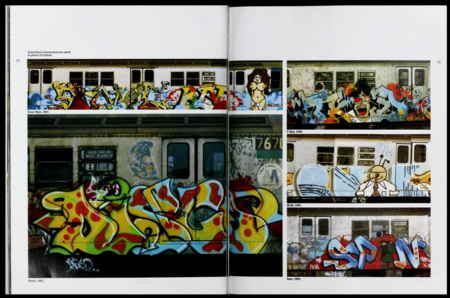
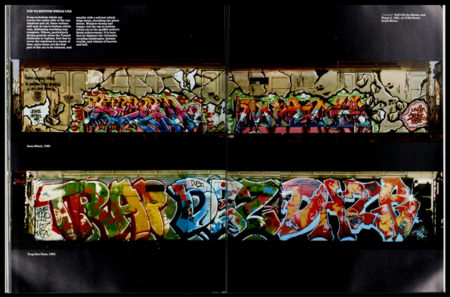
Subway Art — a photobook by American photographers Martha Cooper and Henry Chalfant, first published in 1984 by Thames & Hudson. It collects photographs of the New York graffiti scene from the 1970s and 1980s.
SUBWAY ART Martha Cooper, Henry Chalfant. 1984
In the early 1980s, graffiti became a prominent part of New York’s visual landscape. Writers—those who created the graffiti—used subway cars as mobile canvases for their art: their names, tags, and images traveled across the city, transforming the transit system into a space for self-expression. Graffiti was not just a way to assert oneself; it was a cultural phenomenon rooted in competition, recognition within the community, and the quest for a unique style.The 1984 book Subway Art by Martha Cooper and Henry Chalfant became one of the seminal publications dedicated to this phenomenon. It is often called the «Bible of graffiti”—a visual document so significant that it helped popularize and preserve this culture.
SUBWAY ART Martha Cooper, Henry Chalfant. 1984
SUBWAY ART Martha Cooper, Henry Chalfant. 1984
SUBWAY ART Martha Cooper, Henry Chalfant. 1984
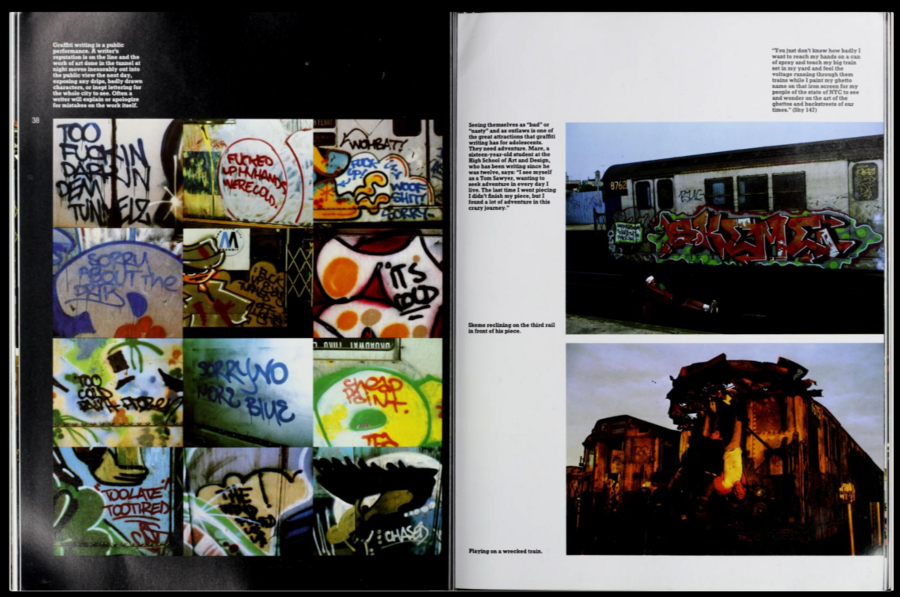
Martha Cooper and Henry Chalfant began photographing graffiti, aiming to preserve works that might disappear after another cleaning of the train cars. The shoot required constant vigilance—trains were moving, and the chance to capture a specific piece might last only a few minutes. The authors documented not just the images themselves, but also their creators, the crews, and the urban environment in which graffiti culture was forming.
SUBWAY ART Martha Cooper, Henry Chalfant. 1984
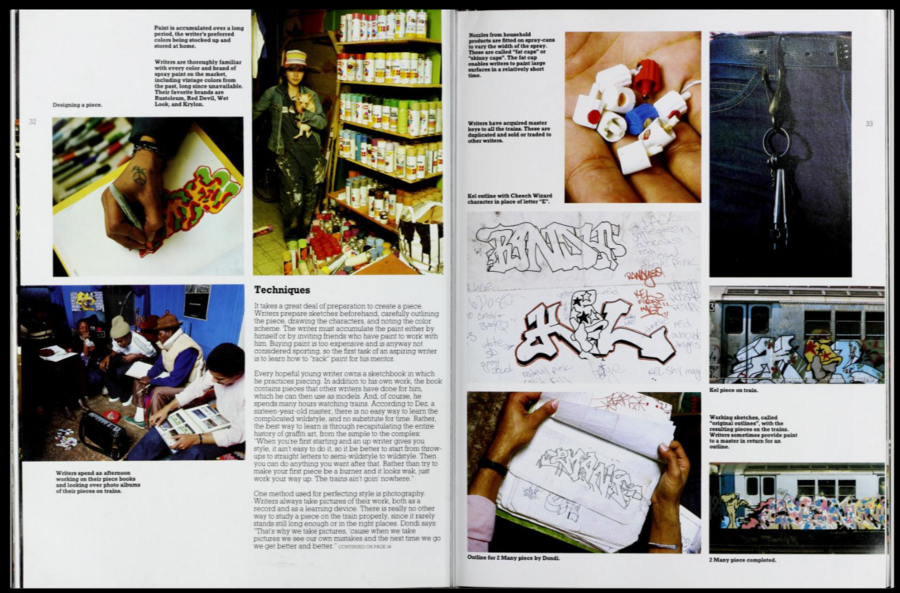
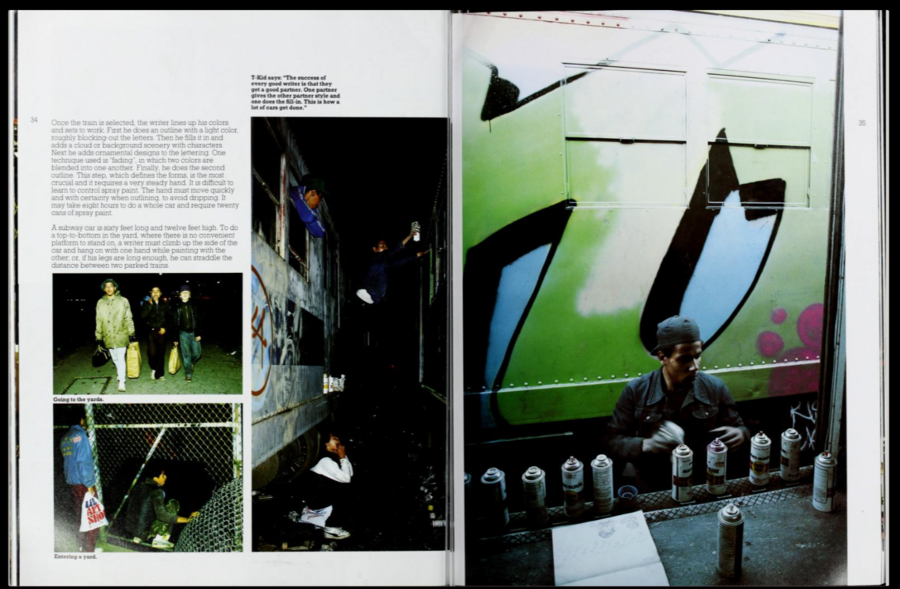
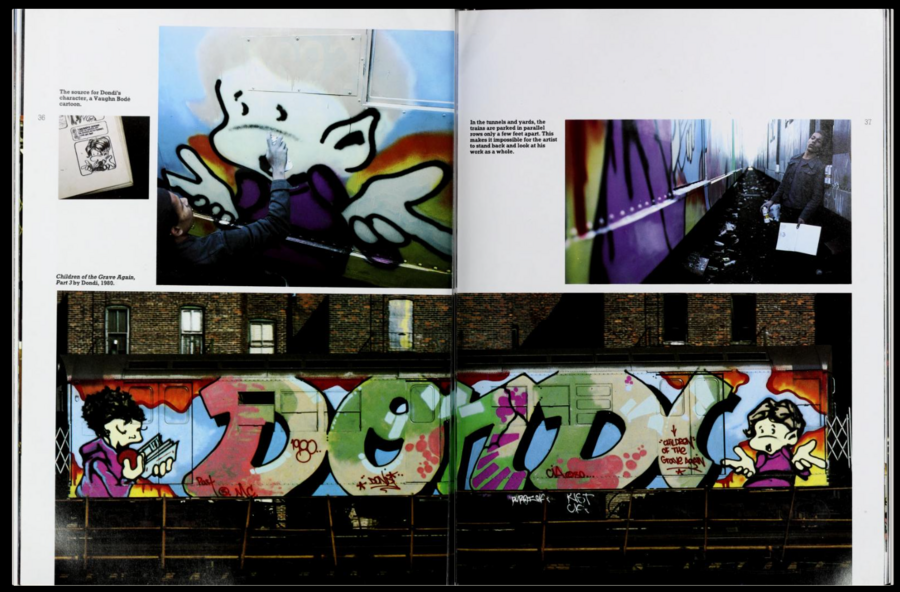
SUBWAY ART Martha Cooper, Henry Chalfant. 1984
SUBWAY ART Martha Cooper, Henry Chalfant. 1984
SUBWAY ART Martha Cooper, Henry Chalfant. 1984
The book constructs a holistic view of graffiti through thematic sections: history, metro lines, techniques, styles, characters, writers, and their crews. The sequence of images allows the reader to trace the diversity of visual devices—from complex letter compositions to characters and narrative scenes. Graffiti is presented here as an independent visual system with its own rules, symbols, and modes of communication.
SUBWAY ART Martha Cooper, Henry Chalfant. 1984
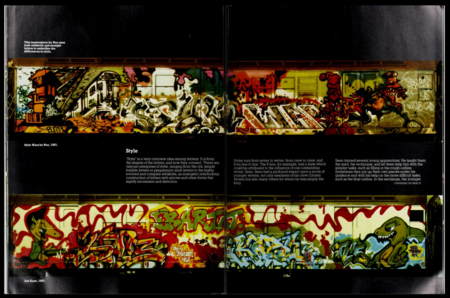
SUBWAY ART Martha Cooper, Henry Chalfant. 1984
The visual organization of Subway Art mirrors the culture it documents: panoramic images of trains coexist with large photographs of individual works, and the montage of numerous shots creates a feeling of continuous movement and visual saturation. Captions, dates, and explanatory texts supplement the photographs, transforming them into a document. Thus, temporary and unofficial street art achieves a stable archive form and becomes part of the printed history of visual culture.
SUBWAY ART Martha Cooper, Henry Chalfant. 1984
Culture in Action
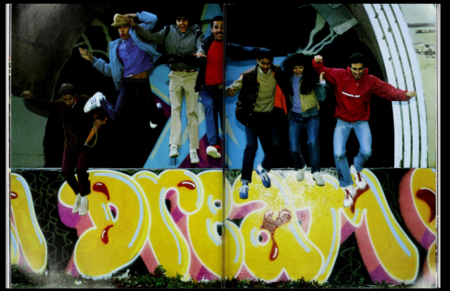
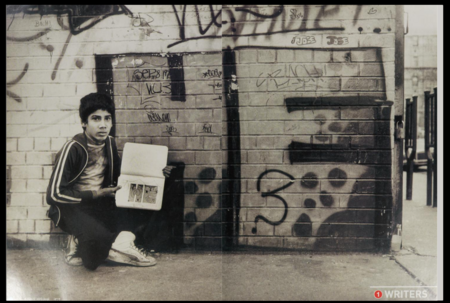
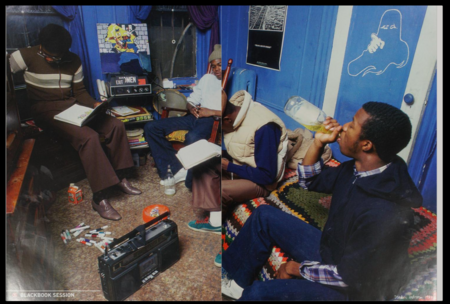
Hip Hop Files: Photographs 1979–1984 — A photobook by American photographer Martha Cooper, published in 2004 by From Here to Fame. It features photographs of the New York hip-hop scene from 1979–1984.
HIP HOP FILES Martha Cooper. 2004
The book portrays the street culture of early 1980s New York through graffiti, breakdancing, and the daily lives of youth. The thematic sections explore various facets of this community—from the creation of tags to dance performances and the mastering of urban spaces. Subway stations, cars, and courtyards become not merely backdrops, but arenas for self-expression and interaction among the culture’s participants.
HIP HOP FILES Martha Cooper. 2004
HIP HOP FILES Martha Cooper. 2004
HIP HOP FILES Martha Cooper. 2004