Navigator
- Concept
- The Emergence of Plastic in Fashion
- Material of the Future
- Clothing as an Industrial Object
- The Body in a Transparent Shell
- The Second Skin
- Disposable Clothing
- From Experiment to Everyday Life
- After the Plastic Revolution
- Conclusion
- Bibliography
Concept
In the 1960s and 1970s, plastics, PVC, and vinyl began to be widely adopted in fashion, fundamentally changing the conventional perception of clothing. Materials previously associated with industry and household goods became independent vehicles for artistic expression. The transparency, sheen, and rigidity of plastic allowed designers to experiment with clothing form and its interaction with the body. Clothing ceased to be merely a textile sheath and transformed into a standalone design object. This study examines how artificial materials altered the aesthetic of 1960s and 1970s fashion and expanded the perception of what clothing could achieve.
The goal of this research is to analyze how the appearance of plastic, PVC, and vinyl in 1960s–1970s fashion changed the perception of clothing—its material, form, and interaction with the human body—and to understand why artificial materials became a symbol of a new fashion aesthetic.
The Arrival of Plastic in Fashion
The need for waterproof and dirt-repellent clothing has always existed. In the 19th century, rubber was used for such garments, and later, in 1823, Charles Macintosh developed a method of joining two layers of fabric using rubber, creating the famous Mackintosh coat.
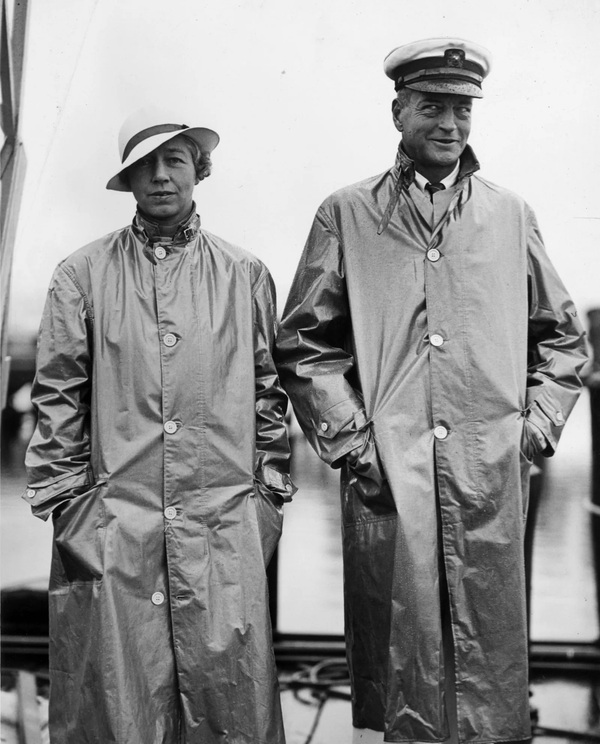
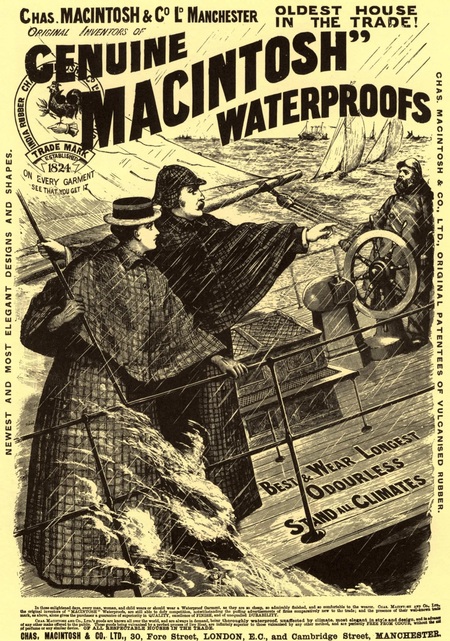
1. Truly democratic clothing: macintosh coats were worn not only by soldiers and workers, but also by very wealthy people. Here is Harold Stirling Vanderbilt (1884–1970) with his wife, standing in a park. 2. An advertisement from the Macintosh journal of the 1890s from Great Britain.
This is how plastic first became a material for clothing. It was practical and convenient.
Material of the future
1960
Sociocultural Context: The 1960s was an era fascinated by scientific progress and space exploration. The space race between the USSR and the United States, coupled with technological advancements and the popularity of science fiction, shaped the vision of the future that inspired designers.
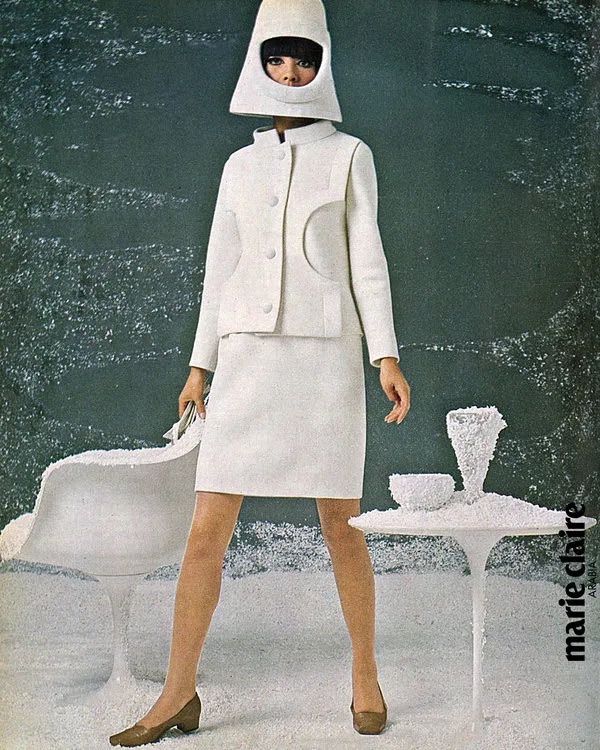
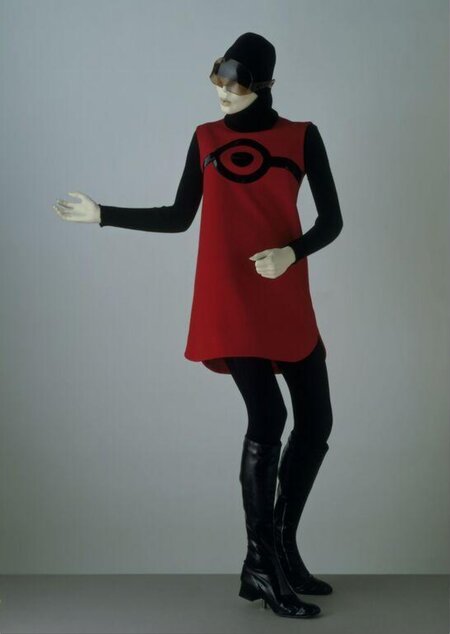
1. Pierre Cardin’s suit made of white wool gabardine, single-breasted, with an officer collar and a front panel with semi-circular cutouts. 2. Bold, futuristic outfits by Pierre Cardin. 1966
Designers have begun creating clothing reminiscent of astronaut suits: geometric silhouettes, helmets, plastic accessories, metallic surfaces, and unusual proportions. White and silver colors have become associated with technology and a new world.
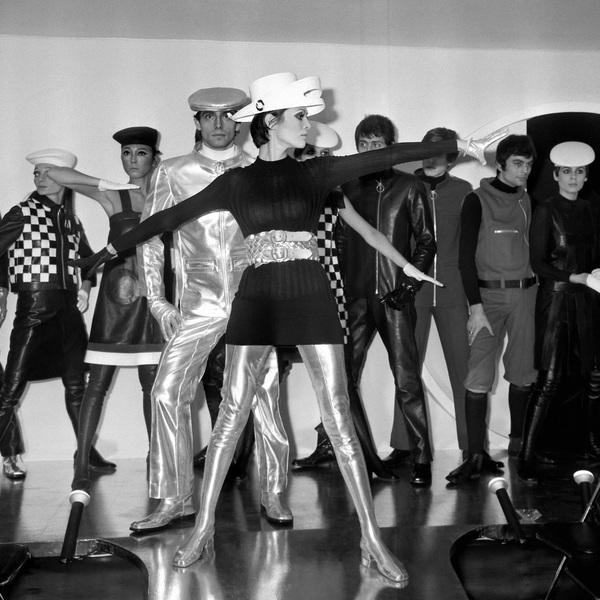
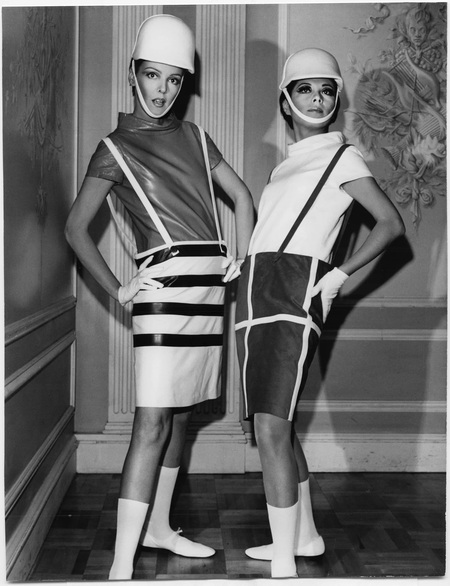
1. Pierre Cardin Cosmodesign 2. Andre Kurrej Design Universal History Archive/Getty Images
Andrey Kurrezh’s Chelsea Boots
Plastic proved to be an especially suitable material for this aesthetic. Its artificial origins, smoothness, and capacity to take on unusual forms allowed for the creation of images that deviated from traditional clothing.
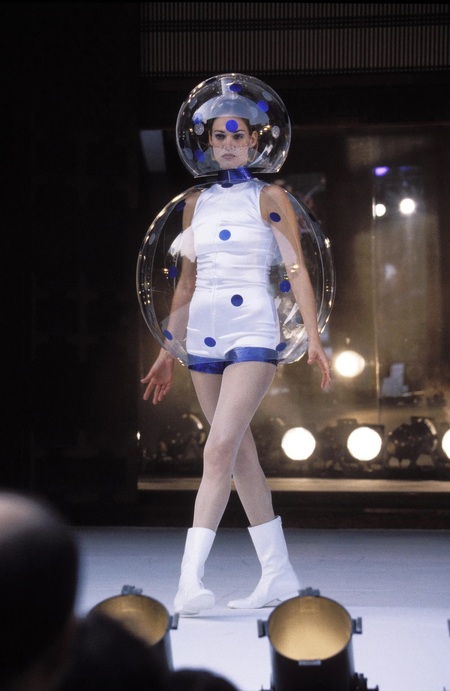
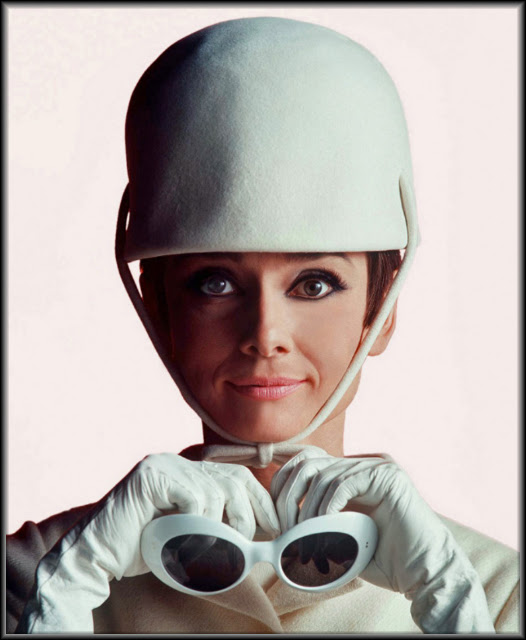
1. Design by Andre Kurrej: Kurita KAKU 2. Audrey Hepburn in Andre Kurrej’s hat, photograph by Douglas Kirkland, 1965
Clothing as an Industrial Object
In 1966, Paco Rabanne presented the collection «12 Dresses That Cannot Be Worn From Modern Materials.» Instead of traditional fabrics, he utilized plastic elements, metal rings, and other industrial materials.
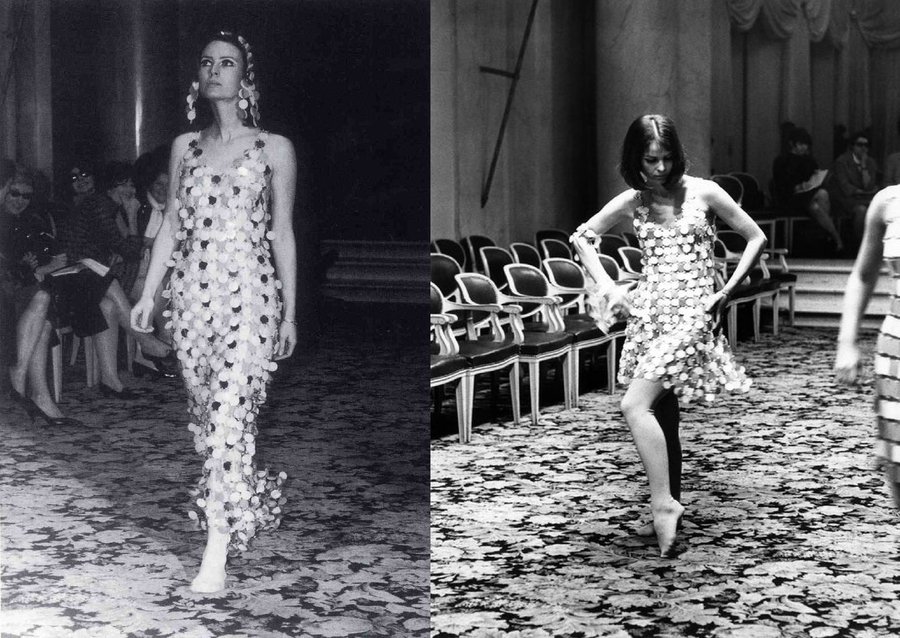
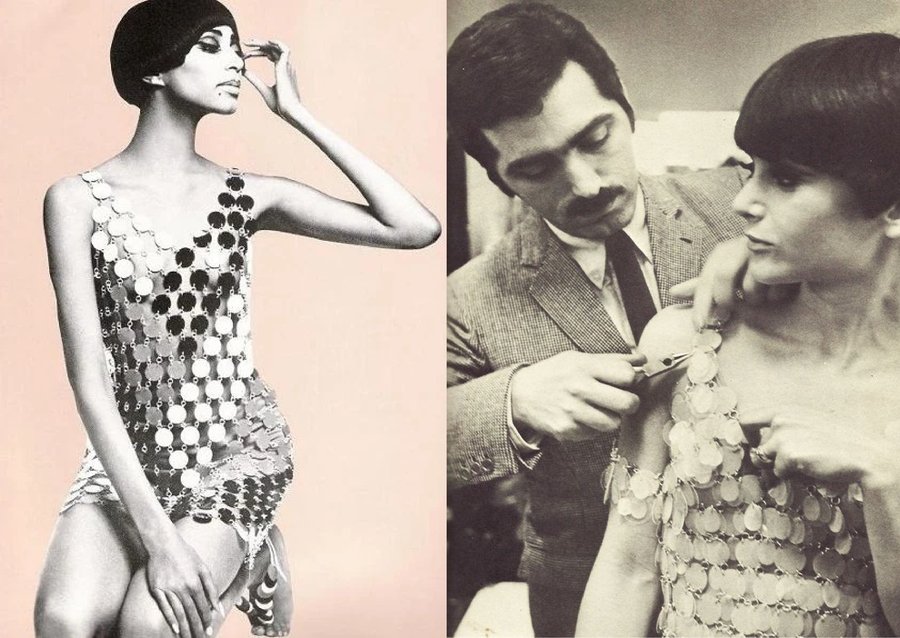
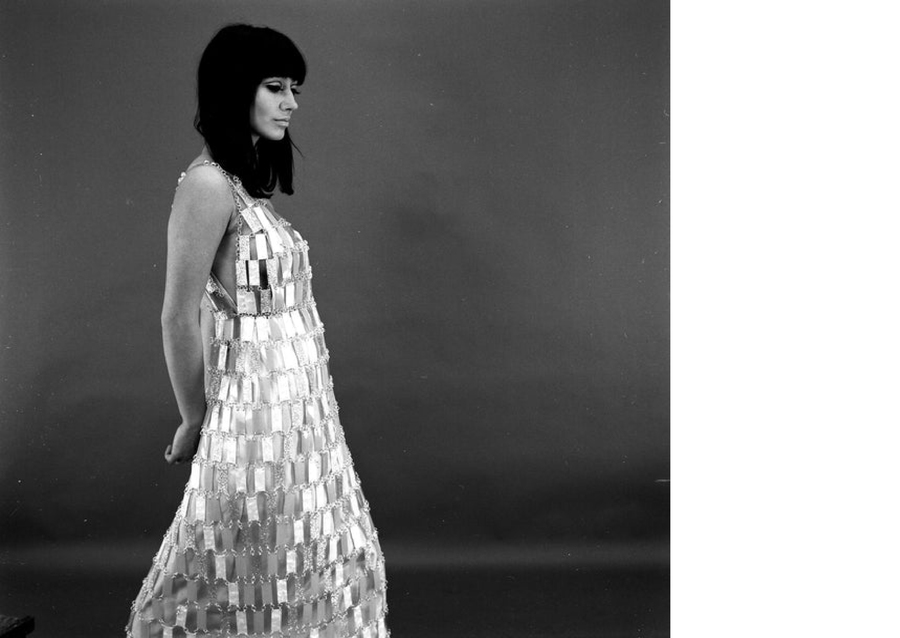
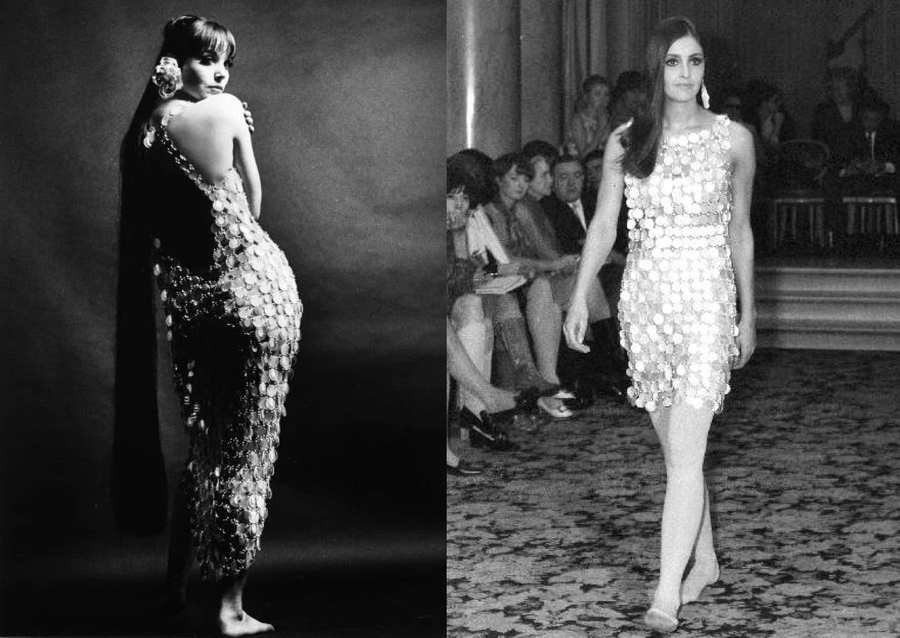
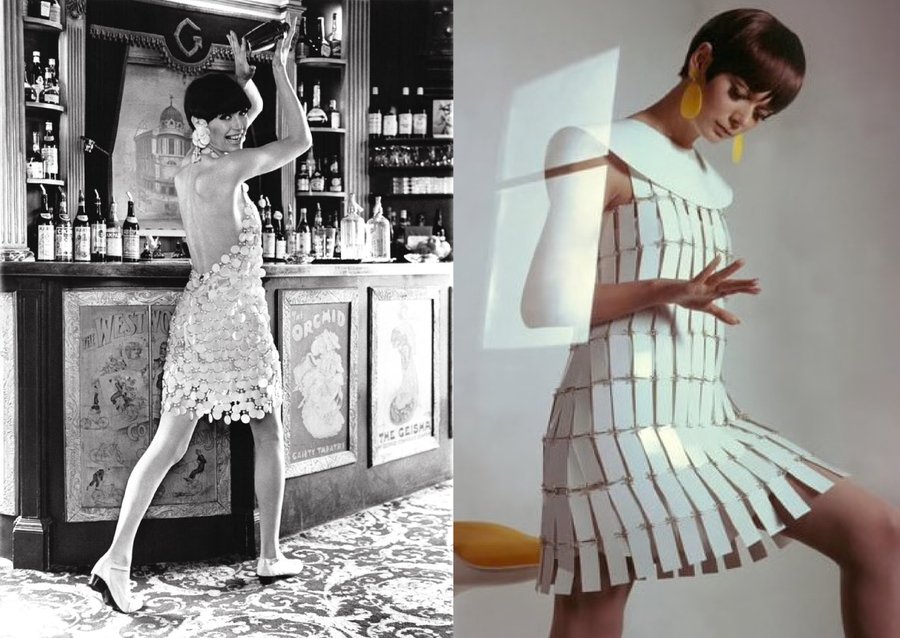
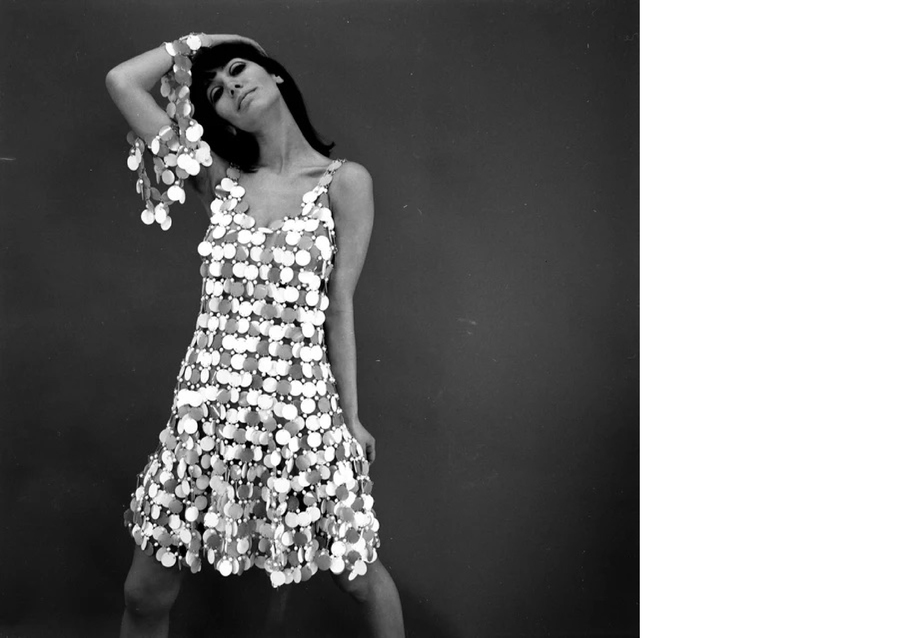
12 Paco Rabanne Dress 1966
Dresses were assembled from individual components that connected to each other, forming a mobile surface. This construction resembled chainmail or a metal mesh.
Plastic allowed the fundamental principle of garment creation to change. Instead of joining fabric pieces, an assembly of individual elements emerged. The construction became visible, transforming into an integral part of the costume’s aesthetic.
The Body Under a Transparent Shell