During the 1920s and 1930s, the city began to occupy an increasingly important place in cinema. It ceased to be merely a backdrop upon which events unfolded and became an independent element of the film. The rapid development of industry, the emergence of new architectural forms, and the changing nature of urban life attracted the attention of directors, who began experimenting with the portrayal of urban space.
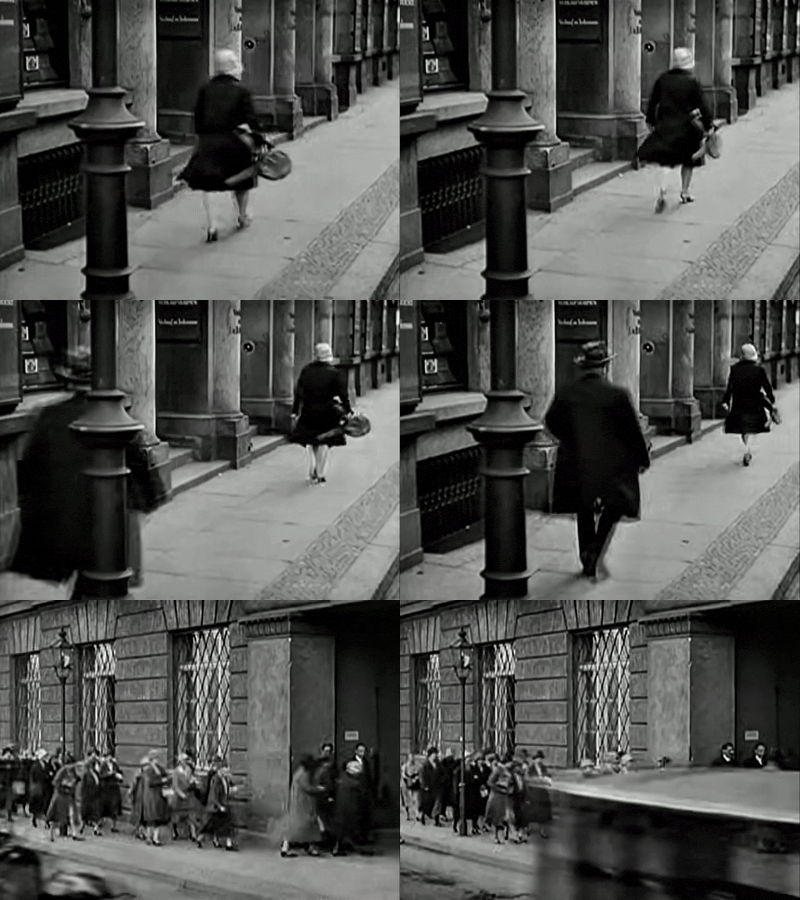
«Berlin: Symphony of a Metropolis» (Berlin: Die Sinfonie der Großstadt, dir. Walter Ruttmann, 1927). Film excerpt
However, the methods for constructing the city on screen vary noticeably. Some directors build large-scale sets and utilize architectural models, while others shoot on actual streets, buildings, and vehicles. Even when the camera captures an existing city, the viewer sees not the entire reality, but only the portion of it selected by the director and the cinematographer.
Documentary footage captures the actual space but does not preclude its artistic transformation.
This very contradiction lies at the heart of the research. Where is the boundary between a real city and a city constructed through the medium of film? One might hypothesize that this boundary depends not only on where the filming took place but also on how the space is presented on screen. Artificial sets can appear authentic, while real buildings and streets take on an entirely different character through angles, composition, and editing.
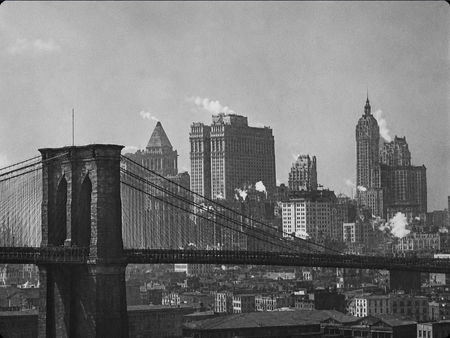
«Metropolis» (dir. Fritz Lang, 1927). Film still / «Manhatta» (dir. Paul Strand and Charles Sheeler, 1921). Film still
For this study, we have selected films that illustrate various approaches to representing the city. In Fritz Lang’s Metropolis (1927), the city is constructed using sets and models. In Paul Strand’s and Charles Sheeler’s Manhattan (1921), real buildings in New York are transformed into geometric compositions. Walter Ruttmann’s Berlin: Symphony of a Great City (1927) allows us to examine the role of montage, while Dziga Vertov’s Man with a Movie Camera (1929) offers experiments with angles and imagery. The film People on Sunday (1930) is interesting for its combination of real urban locations and staged scenes.The research focuses on specific visual techniques rather than the chronology of cinema’s development. The main attention is given to set design, location shooting, composition, scale, angles, and editing. Comparing shots from different films will help us understand how these elements influence the perception of the city and why even documentary imagery cannot be considered entirely objective.
«Man with a Movie Camera» (Dir. Dziga Vertov, 1929). Frame from the film
The City as a Construct
«Metropolis» (dir. Fritz Lang, 1927). Film fragment
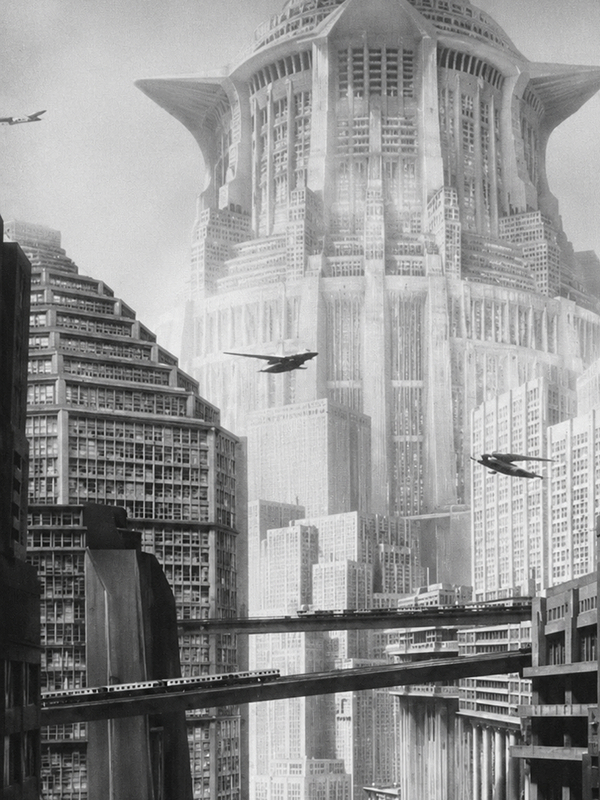
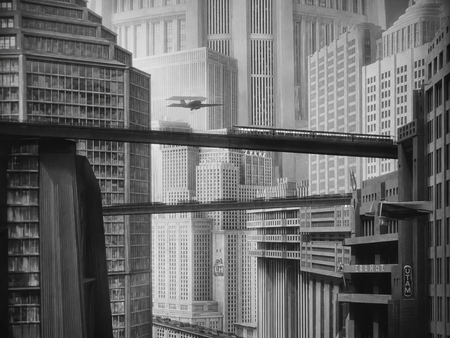
In Metropolis (1927), Fritz Lang’s city is almost entirely constructed for the film. To achieve this, the production utilized massive sets, miniature building models, and composite filming techniques. This resulted in the image of a vast, futuristic megalopolis whose architecture does not exist in reality.
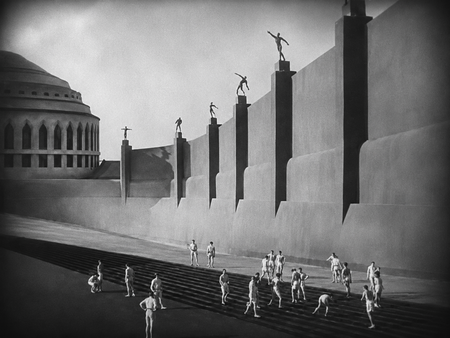
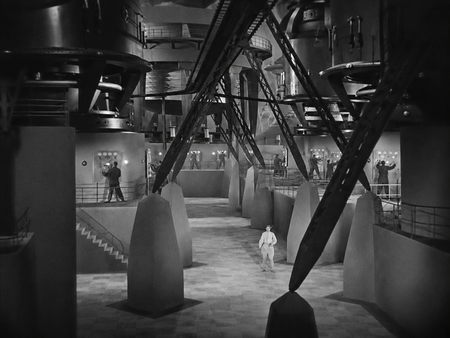
«Metropolis» (directed by Fritz Lang, 1927). Film stills
One of the city’s defining features is its vertical organization. Monumental buildings and recreational spaces occupy the upper levels, while subterranean areas house industrial facilities filled with enormous machinery. This division not only helps organize the space but also illustrates the city’s social structure.
Architecture here doesn’t just surround the characters—it helps reveal the very structure of the city itself.
«Metropolis» (directed by Fritz Lang, 1927). Film excerpt
This is especially noticeable in scenes featuring workers. Against the backdrop of massive machinery and imposing structures, human figures appear diminutive. Because of this scale relationship, the space is perceived as overwhelming, and architecture becomes more significant than the individual person.
«Sunrise: A Song of Two Humans, ” directed by F.W. Murnau (1927). Film excerpt
The set design in Friedrich Wilhelm Murnau’s Sunrise (1927) is used in a completely different manner. The city in this film was also custom-built for the shoot, but here it appears as a familiar, everyday environment. The streets, buildings, transport, and passersby create a sense of natural urban life. The audience perceives this space as real, without even considering that it was artificially constructed.Comparing these two films illustrates how varied the objectives of architectural set design can be. In Metropolis, the sets emphasize the scale and strangeness of a future city, whereas in Sunrise, they help create a convincing environment resembling an existing city.
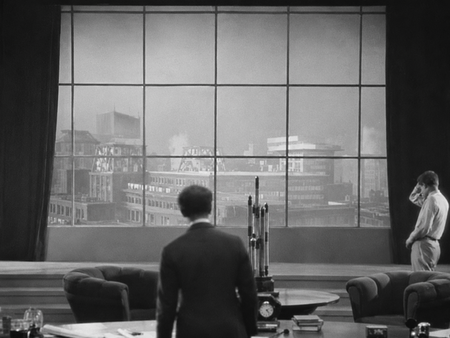
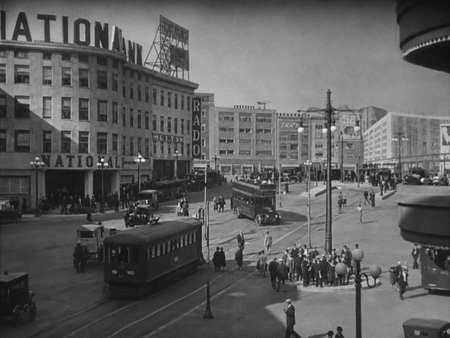
«Metropolis» (directed by Fritz Lang, 1927). Film still / «Sunrise: A Song of Two Humans» (directed by F.W. Murnau, 1927). Film still
Documentary Reality
«Berlin: The Symphony of the Metropolis» (directed by Walter Ruttmann, 1927). Film still
Unlike «Metropolis,» Walther Ruttmann’s film «Berlin: Symphony of a Great City» (1927) is based on footage of a real city. The camera captures the streets of Berlin, its transportation, buildings, industrial areas, and the daily lives of its citizens.
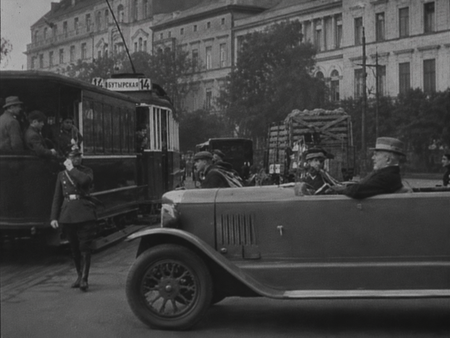
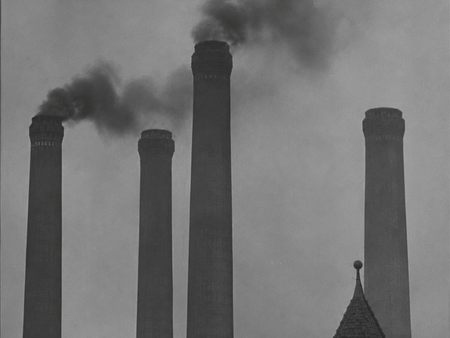
«Berlin: The Symphony of the Metropolis» (dir. Walter Ruttmann, 1927). Film stills.
However, the film does not seek to portray Berlin in its entirety. The director selects specific locations and events from which the image of a large, modern city is gradually formed. The viewer sees bustling streets, traffic, factories, and other characteristic elements of the urban environment. Furthermore, the documentary footage is not always a series of random observations. Film historian Ian Christie notes that the film’s footage of daily life, including hidden camera work, was combined with pre-planned sequences¹.
Even the documentary portrayal of a city depends on which spaces and events the director chooses.
«People on Sunday» (Menschen am Sonntag, directed by Robert Siodmak and Edgar G. Ulmer, 1930). Film excerpt.
A similar approach can be seen in the film Sunday People (1930), although here, real Berlin serves primarily as the characters' setting. Filming takes place on the streets, in cafes, and in recreation areas. These spaces were not specially created for the film, but the events that unfold within them were organized by the creators.
«People on Sunday» (Menschen am Sonntag, directed by Robert Siodmak and Edgar G. Ulmer, 1930). Frame from the film.
This is especially evident in the scenes by the lake. The location itself remains real, yet the characters' actions adhere to a specific narrative. Because of this, the staged episodes are perceived as part of ordinary city life.
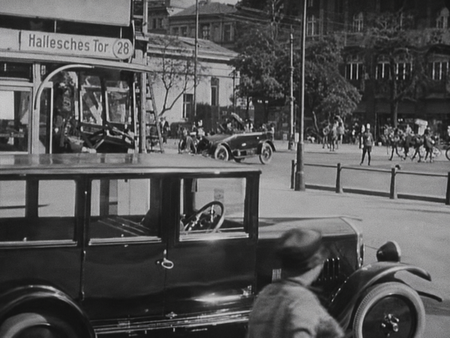
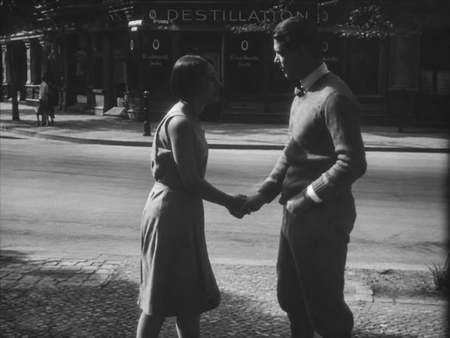
«Berlin: Symphony of a Metropolis» (Berlin: Die Sinfonie der Großstadt, dir. Walter Rottmann, 1927). Still from the film / «People on Sunday» (Menschen am Sonntag, dir. Robert Siodmak and Edgar G. Ullmer, 1930). Still from the film