In the technical description of the Gunnebo SpeedStile FL, the barrier opens after the access system signals, and if no movement is detected within a set time, it closes and returns to its original state. For me, this sequence is more important than the external similarity of the devices: permission, waiting, and the actual passage are distinct events. Between them is a person moving at a specific pace, carrying belongings, and with a particular gait. Therefore, investigating the turnstile solely as a ticket reader or a revolving barrier would be too narrow.

The SpeedStile FL documentation describes normally closed and normally open passage modes. In one case, the barriers open after a signal; in the other, the passage remains clear until an unauthorized action is detected. Light indicators and alarm states are listed separately. These are features specific to the manufacturer’s particular line, not a description of any installed device. In practice, some functions may depend on the configuration and the external system, so the document does not allow one to assume how an unfamiliar entrance is set up.
I see a behavioral model in this technical description: the system distinguishes between the expected direction, the presence of a person, and the action interval. However, based only on the sensor list, I cannot conclude how the visitor experiences the system. This requires observing actual passage attempts and gathering explanations from participants. My current conclusion is analytical: the barrier is defined not only by geometry but also by the sequence of events. Two passages of the same width may require different interactions if the confirmation, opening, and motion waiting procedures are organized differently.

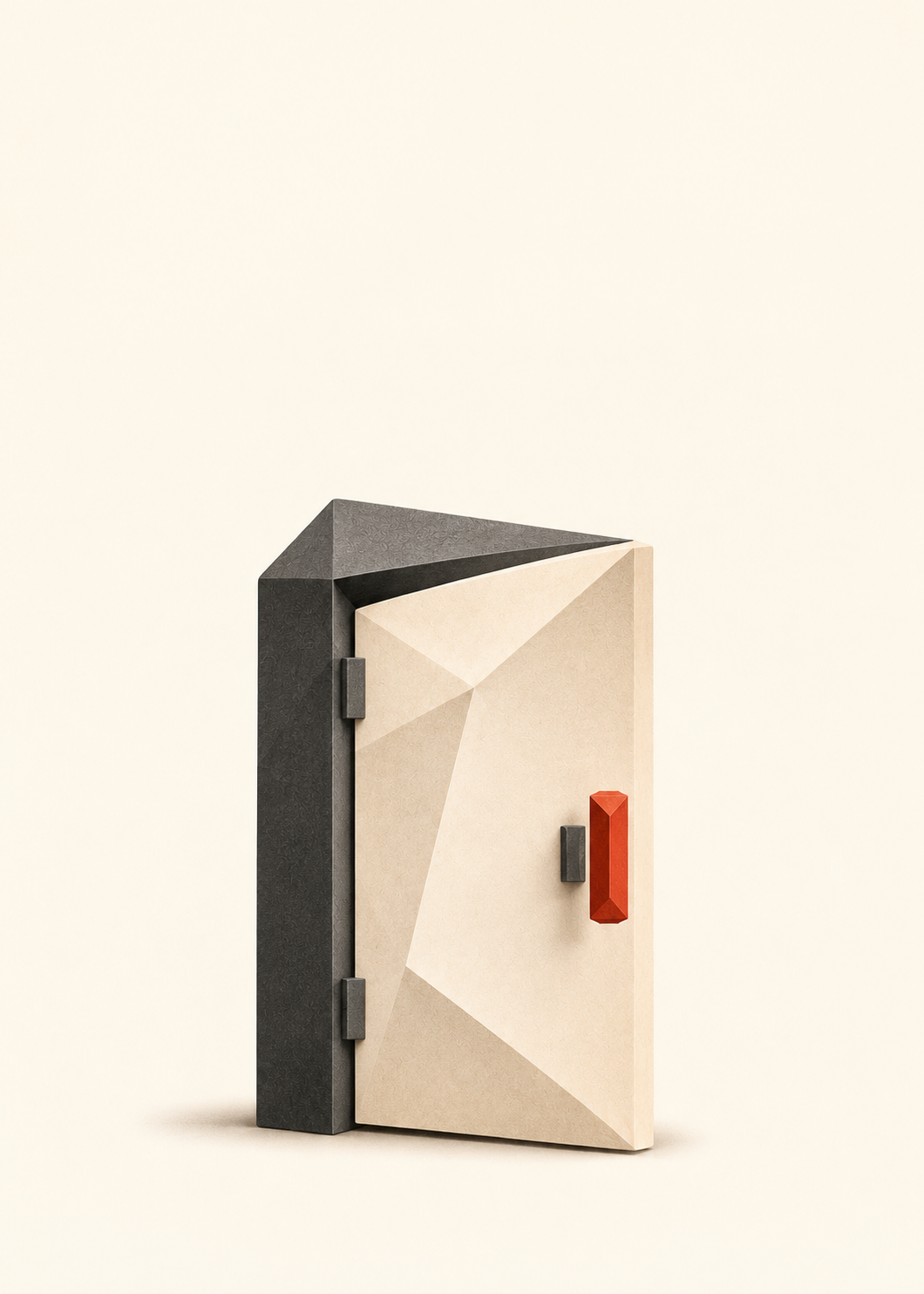
Original illustration created with AI. Conceptual reconstruction, not an image of a specific product.

In a 2008 October message from Transport for London, the installation of wide automated gates at several stations was explained. Users listed included passengers in wheelchairs, those with guide dogs, strollers, or large luggage. TfL stated that these gates allowed passage without needing assistance from staff and functioned similarly to standard automatic gates. This is a historical announcement from the operator; it does not reflect the current equipment at every station, nor is it an independent study.For my research, the shift in the role of assistance is important. In the described scenario, an individual who previously needed to ask a staff member for help gains the ability to use the automated route. I interpret this as a variable in terms of autonomy, rather than merely an increase in doorway size. However, this must be tested at a specific station: gate availability, reader functionality, and the passenger’s actual path may require separate evidence. The history of implementation helps frame the question, but it does not answer for the current visitor.

The London Underground’s Accessible Travel Policy, published in April 2026, pertains to the thirty stations listed within it, which are managed for specific rail services. The ticket gate section mentions wide passageways across all described control lines. If staff are not present, the gates must remain open according to this document. I deliberately maintain this scope limitation: the text should not be read as a universal statement about every entrance in the entire transport network.
This source expands the scope of the research. Before me is no longer just a gate, but the rule governing its operation in the presence or absence of personnel. My hypothesis is that accessibility is determined by the relationship between the equipment and the organizational decision. This is precisely why a photograph of an open gate does not prove route accessibility at all operating hours. To draw such a conclusion, data on schedules, equipment condition, and the actual execution of the procedure are required. In this article, I analyze the operator’s published commitment, rather than verifying the station’s functionality on-site.
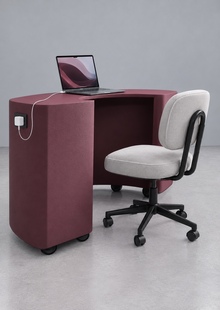
AI-generated concept illustration. A conceptual reconstruction, not a depiction of a specific product.
In U.S. ABA standards, revolving doors, revolving gates, and turnstiles are excluded from the accessible route. This provision belongs to a specific regulatory document with its own scope of application, not a legal directive for a Russian facility. For my comparative purposes, it is important as an example of a fundamental distinction: a system can control entry, but the accessible path is not obligated to pass through the same mechanism for all types of movement. The existence of an alternative becomes a separate design consideration.
I am not concluding from this that any access control device is inherently prohibited. The source speaks about a specific route and specific mechanisms. Assessing a particular building will require applicable requirements and an ingress diagram. However, as a researcher, I can separately ask where the alternative path lies, how it is found, and what is required to use it. These questions do not predetermine fault; they allow for the visitor to be considered within the full scenario of boundary passage.
My preliminary conclusion is that the entry process is better described as the harmonization of several conditions. The system grants access, the structure provides the space, and the operating protocols support the ability to use it. A single successful reader signal does not answer all the other questions. Sources present different levels of this connection—ranging from the technical mechanism to the operator’s public policy. Blending these aspects makes it easy to attribute the outcome to the equipment when, in reality, it also depends on the installation site and maintenance organization.
For my next study, I would begin with a real human path, with the participant’s consent—from selecting a passage to crossing the barrier. It would be important to discover which moment proved confusing or if assistance was required. Since this information is still being gathered, my text does not provide a reconstruction of the passenger experience. The turnstile interests me as a device where the presumed movement of the body becomes part of a formal rule; understanding this rule completely without human testimony remains impossible.