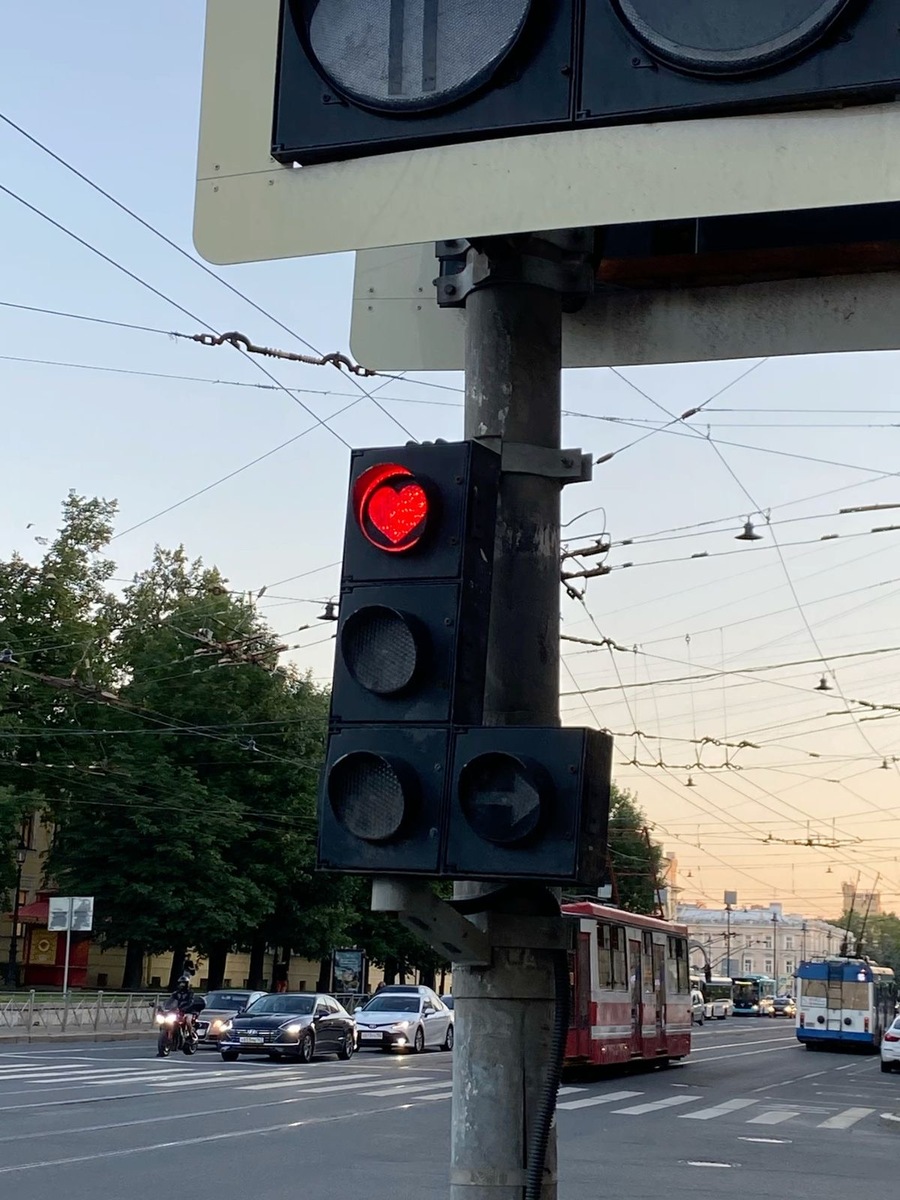
Concept

Petersburg has sounds that cannot be hung on a wall next to the city’s photographs. You don’t always notice them while living here: the clock somewhere above Nevsky Prospect, a dull thud from the fortress area, the dry click at a crosswalk. But once you stop and listen closely, the usual city noise begins to form a rhythm.
This study explores three sounds that make time audible: the chime of clock towers, the noon cannon blast, and the acoustic signals of traffic lights. At first glance, they seem unrelated. One evokes an old city, another is perceived as tradition, and the third belongs to the modern street. Yet, each one does more than just sound—it communicates something: an hour has passed, noon has arrived, it is time to cross the street. Time, which we usually represent with numbers and hands, turns out to be a vital part of our everyday soundscape.
The research was based on literary texts about St. Petersburg, historical publications, materials from city museums, and technical descriptions of modern audio equipment.
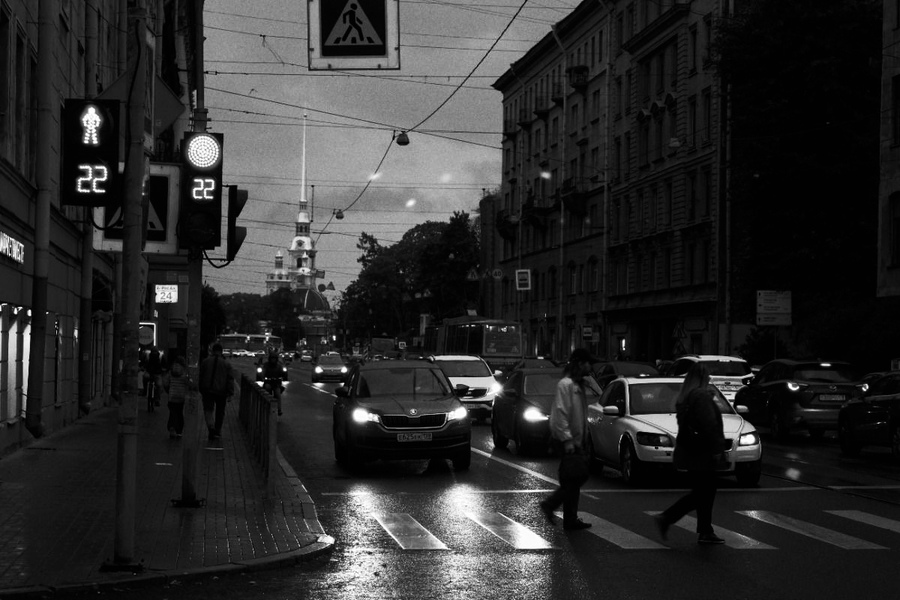
I am interested in how this invisible system of urban cues has changed. In the 19th century, tower clocks could serve as a common reference point for people, and writers wove their chimes into the events of their works. Beginning in the mid-19th century, the city started marking noon with a cannon blast. Today, short electronic signals regulate not the hours, but the seconds of waiting and movement. Furthermore, old sounds do not necessarily disappear, nor do new ones always supplant the old—they continue to sound simultaneously, even as their meaning evolves.
I pay particular attention to how repetition is structured. The hourly chime returns at regular intervals, the cannon blast divides the day into «before» and «after,» and the traffic light transforms a small stretch of road into a sequence of waiting and allowing. This results in three scales of the same phenomenon: the hour, the day, and several seconds.
For me, the question is this: when does sound cease to be a necessary instruction and become part of the city’s memory? Perhaps time in St. Petersburg is measured not only by calendars and clocks, but also by the sounds we have grown so accustomed to that we have almost stopped hearing them.
1. Time in the Sounds of Old St. Petersburg
Time in the city exists not just as numbers on a clock. Sometimes, it rings out over the street, momentarily cutting through the surrounding noise. A few metallic chimes—and you realize another hour has passed.
One of the preserved examples of urban sonic time is the clock tower of the City Duma, located on Nevsky Prospekt.The first clockwork mechanism appeared here in the early 19th century. In June 1883, a new clock mechanism was ordered from the St. Petersburg firm of Friedrich Winter. In 1884, the clock was installed on the tower and linked to the bells.
The mechanism was supposed to operate with precision. The chimes of the Duma Tower announce the time every fifteen minutes. The quarter hours are marked by a chime, and the full hour is marked by the striking of the large bell.[1]The cyclicity is particularly evident in this device. A person does not need to see the hands to understand that another quarter hour has passed.
Dumsky Watches in Literature
In Nikolai Gogol’s story, «Nevsky Prospekt» (1835), the ringing of the clock towers accompanies the night scene:
«The midnight had long passed; the tower bell chimed half-past one…» [2]
This quote appears in materials about the Duma Tower, including a publication about a St. Petersburg theater project. [3] Although the author does not specify which tower is being referenced, this episode illustrates how the clock chimes were used in the literary depiction of St. Petersburg to signify time.A direct mention of the Duma clock chimes appears in Dmitry Akhmetshin’s contemporary prose, «Hearts Under the October Rain» (2016):
«The clocks on Dumskaya Tower chimed half past two.» [4]
Thus, the sound of the tower clocks continues to resonate within the literary image of St. Petersburg—from classical depictions of urban time to works from the 21st century.
2. Sound that has survived centuries
Every day at 12:00 PM, a cannon shot rings out from the Peter and Paul Fortress. This short, loud signal marks the start of noon and is considered one of St. Petersburg’s recognizable auditory traditions. [5]
(WARNING! The sound may be loud; there is a gunshot sound in the audio)
The first noon cannon shot sounded on February 18, 1865, from the central courtyard of the Admiralty. It served as a signal for the precise time against which citizens could synchronize their clocks. In 1873, the cannon was moved to the Naryshkin Bastion of the Peter and Paul Fortress. [6]
The tradition was discontinued in 1934 because precise time was already being broadcast via radio. However, in 1957, to celebrate the 250th anniversary of Leningrad, the noon cannon shots resumed. [7]
Today, the cannon shot is no longer needed to check the time, but it continues to sound as part of St. Petersburg’s historical tradition.