Navigator
/Concept
/Hypothesis
/Origin Story
/Interaction with Other Characters
/Visual Identity
/Where Does It Exist?
/Central Conflict
/Maturation
/The Boundary Between Childhood and Adulthood
/The Yellow Baby and Mass Culture
/Conclusion
/Sources
Concept
The research concept involves contrasting the child’s world with the adult world through the figure of the Yellow Toddler. The contradiction between childhood and early confrontation with adult reality is revealed through his appearance, clothing, and environment. The Yellow Toddler presents as a child, yet he exists in a world where he must confront social problems, poverty, and, often, strange adult behavior. His image illustrates how the environment influences childhood, gradually blurring the line between carefree innocence and responsibility.
Hypothesis
The yellow toddler symbolizes the collision of childhood with adult reality.
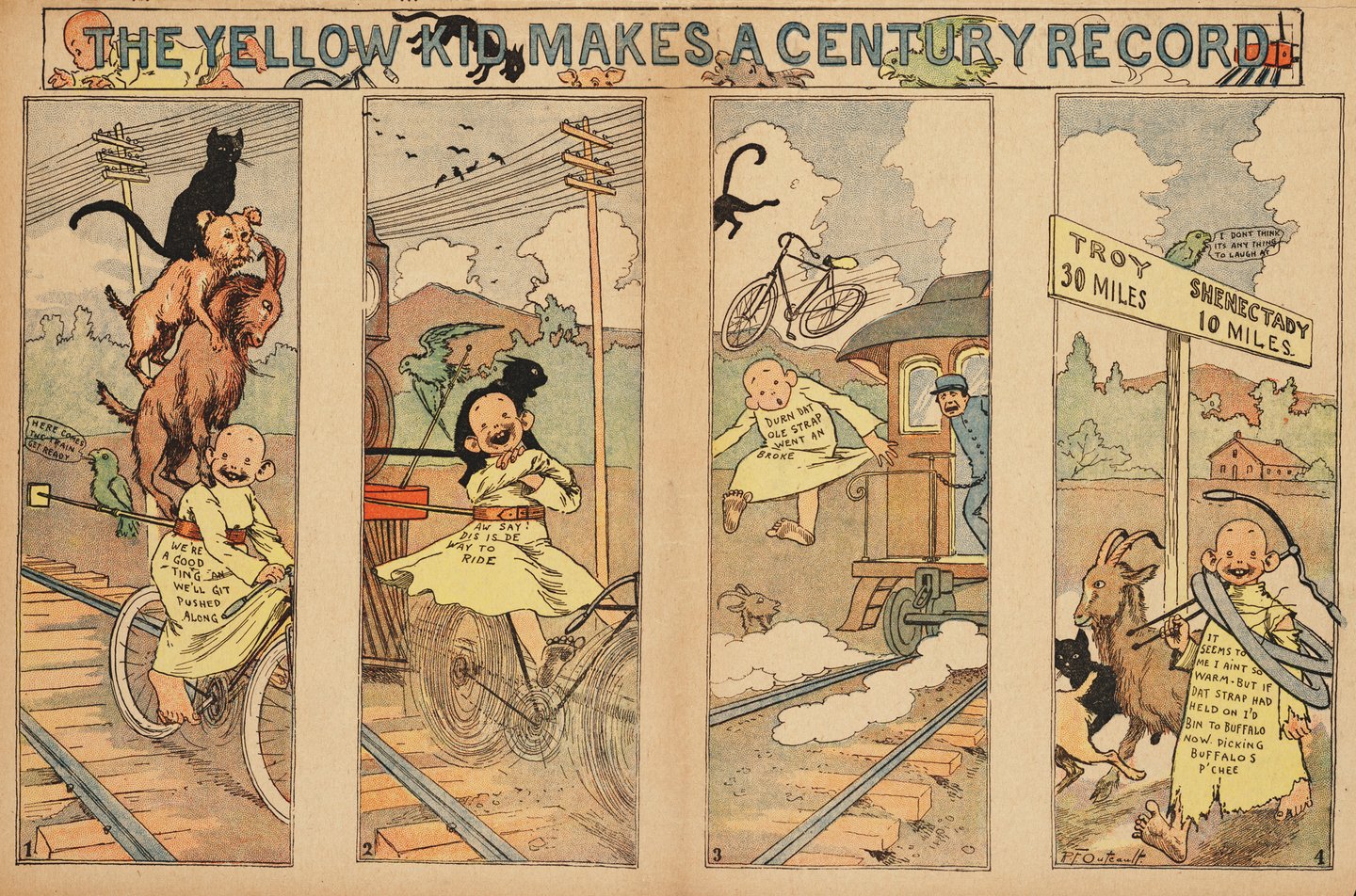
«Yellow Baby Sets Record, Completing One Hundred Meters, ” New York Journal, May 23, 1897
History of Origin
The Yellow Kid, created by Mike Duggan, is one of the first popular characters in newspaper comics. It was created by the American artist Richard Felsing Outcault. The character first appeared in 1895 in the «Hogan’s Alley» illustration series.The action took place in a poor neighborhood of New York City. The stories centered on ordinary street residents—children and adults. The artist depicted their daily lives through humor and caricature.
«Circus at Hogan’s Alley, ” 1895
American cities were rapidly expanding at the time. Industry was developing, working-class neighborhoods were growing, and immigrants were arriving in the country. Many families lived in difficult circumstances. Poverty, cramped apartments, and a low quality of life were part of daily existence.It is in this environment that Little Yellow appears. He is not like the typical hero of children’s stories. His world is far removed from fairy tales and carefree childhood. He lives on a regular street and constantly encounters the different facets of adult life.
Interaction with other characters
The Yellow Kid first appeared in a comic featuring Buster Brown, a character created by Richard Felshton Outcault, in 1907. The characters met in other issues later, including in 1910. These encounters became one of the early examples of cross-over in comic book history. Characters from different stories appeared in the same plot, interacted with one another, and became part of a shared universe.
«And this is the Yellow Baby’s cousin, ” 1902.
It’s interesting that in these episodes, Yellow Baby used standard speech bubbles for dialogue, even though his speech was usually placed directly on his yellow shirt in his own stories.
Visual Image
Cover of «The Yellow Kid» (Vol. I, No. 2), 1897
The Yellow Baby’s appearance deviates significantly from the typical depiction of a child. There are several key details in its look that make the character instantly recognizable:
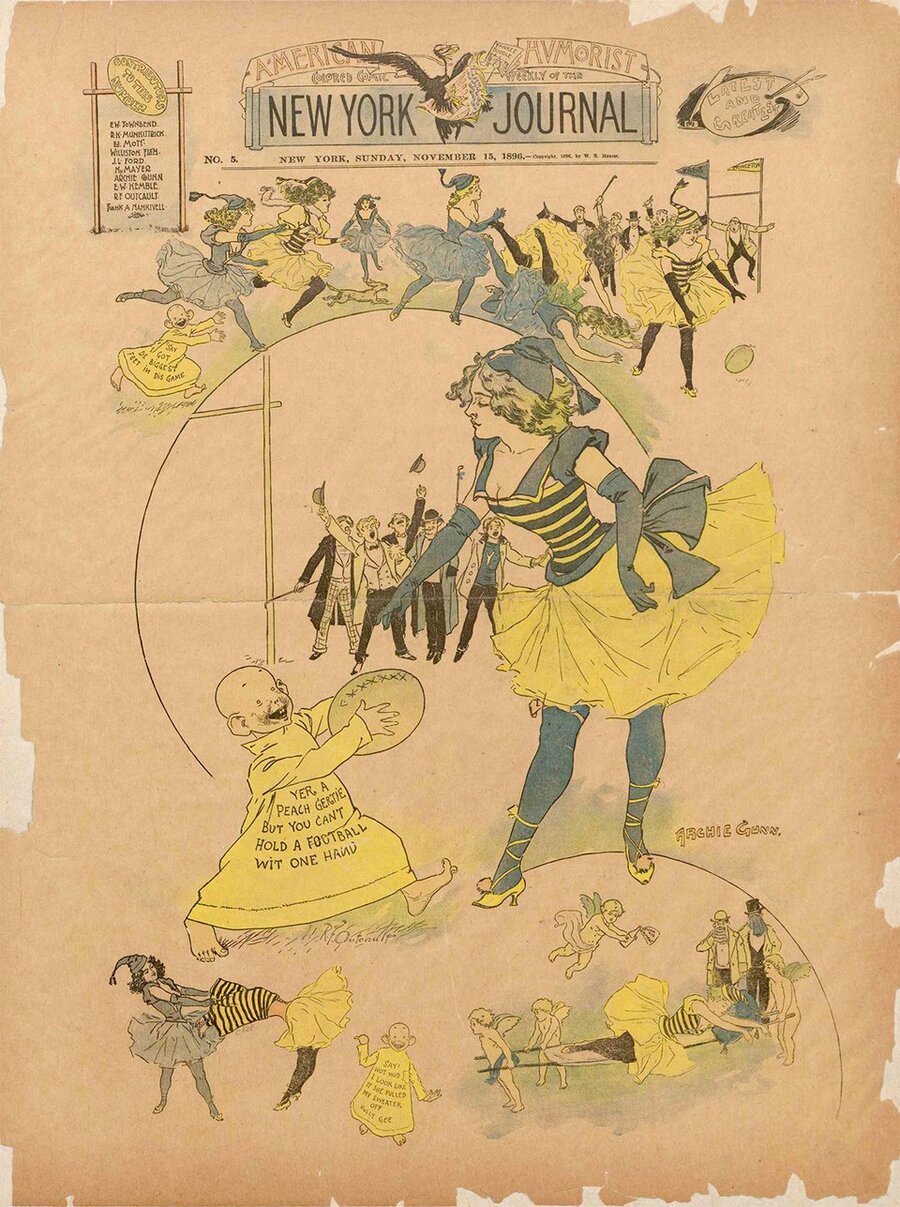
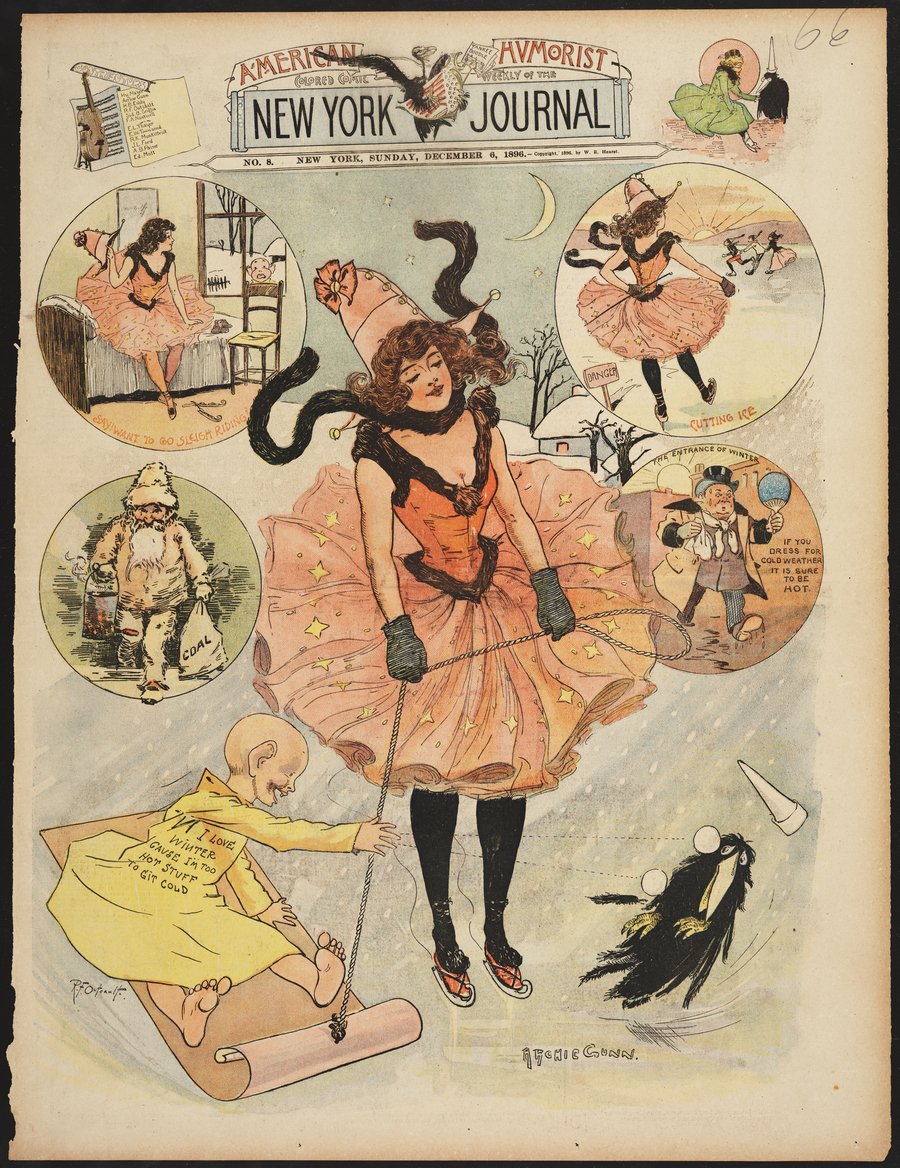
«New York Journal» magazine cover from November 15, 1896, «New York Journal» magazine cover from December 6, 1896.
Bald head and facial features
The little one has a large head, prominent ears, and a round face. His appearance is intentionally simplified and exaggerated—a hallmark of the caricatures of that era.
He does not look like a cute or idealized child. Rather, his image resembles a small adult figure. This creates the first tension between his age and his outward perception.
«The Revenge of the Yellow Boy, or How the Artist’s Son Got a Fresh New York Journal», January 9, 1898.
Yellow shirt
«Yellow Toddler and His New Phonograph, ” New York Journal, October 25, 1896.
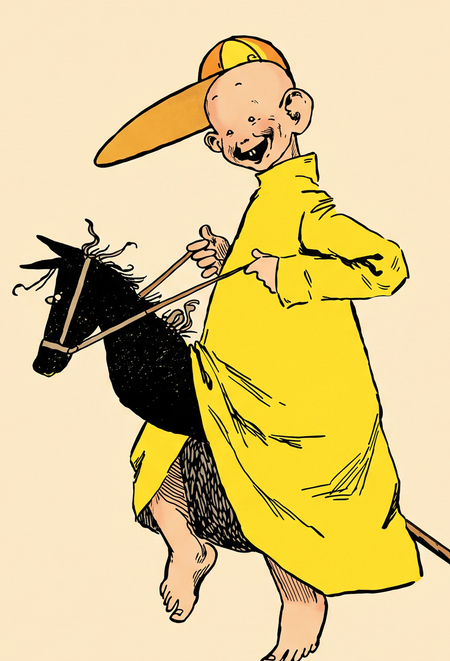
The character’s most notable feature, of course, is his long yellow shirt. In 1896, the color yellow became his defining characteristic. The shirt resembles loungewear or a nightshirt. Typically, this type of clothing is associated with comfort, home, and safety. However, the character is not at home—he is on a city street and is walking barefoot. This creates an interesting contrast between the child’s appearance and his surrounding environment. Furthermore, the shirt often features various inscriptions. It becomes a part of the narrative and helps the character express his thoughts. The clothing here serves not only a decorative function but also acts as a means of communication with the reader.
«Yellow Toddler Experiments with Wonderful Hair Tonic,» New York Journal, January 23, 1898
Posture and Behavior
The yellow child is often depicted as an active and emotional kid. He interacts with other characters, comments on what is happening, and frequently finds himself in various awkward situations. His behavior doesn’t always fit the typical portrayal of a child. At times, he resembles an adult who has a good understanding of the world around him—for example, he quits smoking. However, the character often acts in a rather direct manner.
«Yellow Infant Battles Tobacco Addiction,» New York Journal, December 27, 1896
A little yellow figure loses part of its yellow «New York Journal, ” October 31, 1897.